
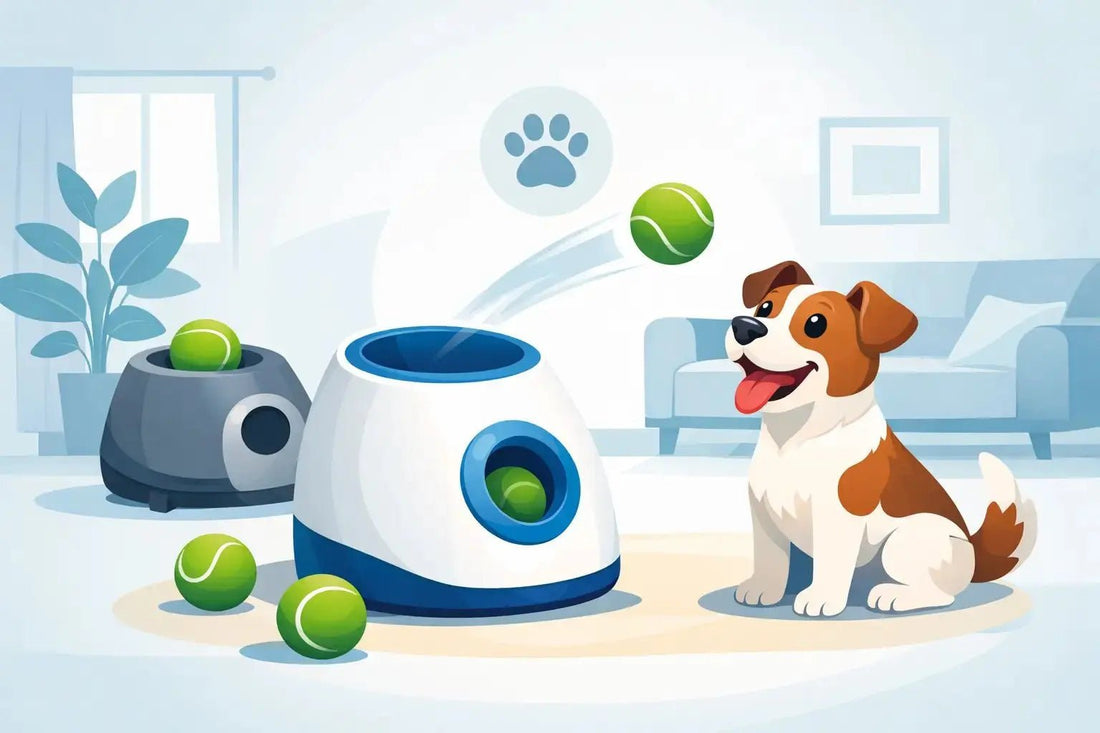
Your dog is pacing, the weather is bad, and the living room is one zoomie away from becoming a full-contact sport. That is usually the moment an automatic dog ball launcher for indoors starts sounding less like a gadget and more like a peacekeeping tool.
Indoor fetch can be a great outlet for dogs with extra energy, especially in apartments, smaller homes, or during stretches of rain, heat, or icy sidewalks. But not every launcher belongs inside a home. Some are too powerful for tight spaces. Some are too loud for nervous dogs. Some are built with little thought for furniture, flooring, or the fact that most pet parents do not want another bulky plastic eyesore parked in the corner.
If you are thinking about bringing one home, the best choice comes down to fit. Fit for your dog, fit for your space, and fit for how you actually live.
What makes an automatic dog ball launcher for indoors different?
The biggest difference is control. An indoor launcher should send the ball a short, predictable distance instead of firing it across the house like a tennis cannon. That matters for safety, but it also matters for confidence. Dogs learn faster when the game feels consistent.
A good indoor model also needs to work with smaller balls or softer fetch balls when appropriate. Standard tennis balls can be fine for some dogs, but in smaller rooms, lighter and softer options are often easier on walls, furniture, and anxious humans. If your dog has a strong bite or tends to chew between rounds, durability becomes part of the equation too.
Noise is another major factor. Many dogs love fetch but hesitate around machines. A launcher that whirs, clicks, or drops the ball with a sudden clunk can turn a fun game into a suspicious one. For indoor use, quieter operation is not a luxury. It is often the reason a dog will keep using the machine after the novelty wears off.
Then there is design. If the launcher lives in your family room or office, it should feel like it belongs there. Pet gear does not need to look clinical or chaotic to be useful.
Who benefits most from an indoor launcher?
Not every dog needs one, and that is worth saying upfront. Some dogs would rather tug, sniff, or wrestle with a plush toy than chase a ball down the hallway. Others get overstimulated by repetitive fetch and have a hard time settling afterward.
That said, indoor launchers can be especially helpful for high-energy dogs, fetch-obsessed dogs, and smart dogs that need more daily engagement than a quick walk provides. They can also help pet parents who work from home and want a structured break that burns energy without requiring a full outdoor outing.
They are often a strong fit for apartments and townhomes where outdoor play is limited by weather, schedule, or shared spaces. Senior pet parents and busy families may also appreciate the convenience. A machine does not replace interaction, but it can make frequent play easier to maintain.
If your dog is very small, older, recovering from injury, or brachycephalic, a launcher may still work, but the setup has to be gentler. Short distances, soft balls, and supervision matter more in those cases.
How to choose the right automatic dog ball launcher for indoors
The first thing to check is launch distance. Adjustable settings are ideal because indoor spaces vary so much. A long hallway may handle a moderate throw, while a studio apartment may only have room for a short roll or soft toss. More power is not better if your dog has to slam the brakes every few seconds.
Next, look at the ball size. This is a safety issue before it is a convenience issue. The ball should be large enough that your dog cannot swallow it, but light enough for the launcher to handle cleanly. Breed size matters, but so does your dog’s play style. Some medium dogs carry toys gently, while others crush and shred anything they touch.
Material quality matters more indoors because the machine is part of your home environment. You want pet-safe construction, smooth loading areas, and a stable base that does not tip when your dog bumps it. Cheap launchers can wobble, jam, or wear out quickly, which usually turns a promising enrichment tool into closet clutter.
Power source is another practical detail. Rechargeable units can be easier to place neatly without trailing cords across the floor. Plug-in models may be better for frequent use in a dedicated play zone. There is no universal winner here. It depends on whether you want portability or a more permanent setup.
And yes, appearance counts. If a launcher blends into your home instead of shouting for attention, you are more likely to keep it out and use it consistently. That is part of good design too.
Safety matters more indoors
Fetch in a backyard has one set of risks. Fetch in a home has another. Hard edges, slippery floors, lamp tables, and narrow turning space all change how your dog moves.
Before using a launcher indoors, clear a simple path. Rugs can help dogs grip better on hardwood or tile, especially around the turning point where they plant and pivot. If your dog tends to skid, shorten the launch distance right away. The goal is controlled movement, not dramatic sprints.
Supervision is still important, even with an automatic machine. Dogs can become so fixated on the return cycle that they stop paying attention to the room around them. Some also learn bad habits, like hovering over the chute or trying to bite the machine after launch. A well-designed unit helps reduce that risk, but training is still part of safe use.
It also helps to cap the session before your dog reaches the point of exhaustion. Repetitive fetch can put strain on joints, especially when the movement is fast and the stopping distance is short. Indoors, shorter sessions are usually the better choice.
Training your dog to use it without stress
The smoothest introductions happen when the machine is not turned on right away. Let your dog investigate it first. Reward calm interest. Roll the ball by hand near the launcher so it starts to feel connected to the game, not like a strange object that suddenly spits things out.
Once your dog is comfortable, use the lowest setting. Keep the first few sessions short and upbeat. If your dog startles at the sound, back up a step. Confidence grows faster when the process feels easy.
Some dogs understand the return-and-reload pattern almost immediately. Others need help learning to place the ball in the chute. That is normal. This is one of those products where patience pays off. A rushed introduction can create avoidance that is harder to undo later.
Praise matters, but so does pace. If your dog is becoming frantic, barking nonstop, or body-slamming the launcher, the game needs more structure. A short pause between throws or a cue before release can help keep excitement from tipping into chaos.
Common trade-offs pet parents should expect
The biggest trade-off is convenience versus interaction. An automatic launcher gives your dog independent play opportunities, but it should not become the only kind of fetch they get. Many dogs still want the social part of the game.
There is also a size trade-off. Machines made for strong outdoor launching can be too large and intense for indoor use, while compact indoor models may not satisfy dogs that crave long-distance chase. If your dog loves huge sprints, an indoor launcher is best seen as a supplement, not a full replacement for outdoor exercise.
Noise, ball capacity, and ease of cleaning also tend to move together. Some of the quietest units have simpler mechanics and smaller hoppers. Some higher-capacity models are bulkier. It depends on what matters most in your routine.
And while a launcher can help with boredom, it is not a cure-all. If your dog is struggling with anxiety, destructive chewing, or nonstop restlessness, fetch may help burn energy, but enrichment usually works best as part of a broader routine that includes walks, training, sniff work, and downtime.
Is it worth it for your home?
If your dog genuinely loves fetch, you have enough indoor space for safe movement, and you want a cleaner, more consistent way to keep playtime going at home, an indoor launcher can absolutely earn its spot. The best ones feel simple to use, safe around daily life, and easy to leave out in a modern space.
That is really the standard to aim for. Not just a machine that throws a ball, but one that supports better at-home routines without making your space feel cluttered or your dog feel overstimulated. Thoughtful pet products should work for both sides of the leash, which is exactly why curated options matter. If you are comparing models, Petmartopia is one place to look for designs that balance pet-safe play with a home-friendly footprint.
The right launcher will not turn every dog into a self-service fetch expert by dinner. But for the right dog in the right home, it can make rainy days easier, apartment living more enriching, and those late-afternoon energy spikes much more manageable.