
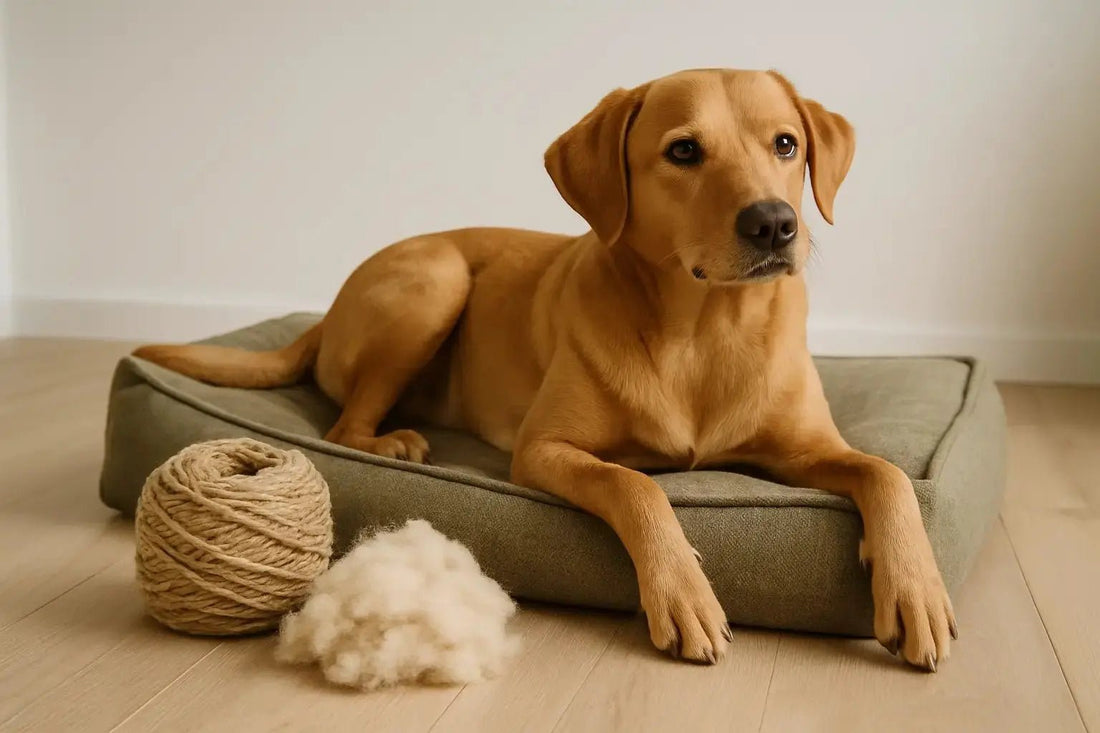
A dog bed isn’t just where your pup sleeps - it’s where muddy paws land after walks, where shed fur collects, and where anxious dogs self-soothe at 2 a.m. If you’re trying to buy better (for your home, your dog, and the planet), the material choices matter more than the shape or the trendy color. The right “eco” bed should still do the basics exceptionally well: stay comfortable, clean up easily, and hold its shape.
This guide breaks down eco friendly dog bed materials in plain English: what they are, why they’re used, what to watch out for, and which options make the most sense depending on how your dog actually lives.
What “eco-friendly” should mean for a dog bed
“Eco-friendly” gets tossed around a lot, so it helps to define what you’re really paying for. In a dog bed, sustainability usually comes from a few places: using recycled or renewable inputs, avoiding harsh chemical treatments, building something that lasts longer (so you replace it less), and choosing components that are safer around pets and people.But there are trade-offs. Some natural fibers feel amazing yet stain easily. Some recycled materials are incredibly durable yet still shed microfibers like any synthetic textile. And some “green” claims are mostly marketing unless they’re backed by a credible standard.
A simple way to think about it: the most eco-friendly bed is one your dog will actually use for years - made from materials you feel good having in your living room.
The cover: where eco meets real-life mess
The outer cover takes the daily abuse, so it’s the most practical place to be picky. You want a fabric that looks clean in a modern home and doesn’t turn into a fuzz magnet.Organic cotton (and why weave matters)
Organic cotton is a go-to for pet parents who want a softer, more natural feel. It’s breathable and comfortable, which is great for dogs who run warm or tend to “nest.” The catch is durability depends heavily on the weave and weight. A thin jersey knit can stretch, pill, and hold onto odor faster. A heavier canvas or twill style holds up better and feels more structured in your space.If your dog is a digger or you have a mouthy puppy, cotton may show wear sooner than synthetics. It can still be a smart eco choice if you prioritize comfort and are okay with replacing a cover down the road.
Hemp: tough, low-fuss, and increasingly popular
Hemp is one of the most promising eco friendly dog bed materials for covers because it’s naturally strong and tends to get softer over time. It also breathes well and can be less “clingy” with fur than some fabrics. For busy households, hemp blends can be a sweet spot: the performance of a hard-wearing textile with a more natural hand-feel.The trade-off is texture. Some hemp fabrics start out a bit crisp, which certain dogs love and others ignore. If your dog prefers plush, hemp may work best as a durable base layer with a softer topper.
Linen: beautiful, breathable, and a little high-maintenance
Linen looks elevated in a minimalist home and stays cooler than many fabrics. It’s also a natural fiber, which appeals to eco-minded shoppers. The downside is that linen can wrinkle, and depending on the weave, it can be more prone to visible wear. It’s better for gentle loungers than chewers.Recycled polyester (rPET): a pragmatic eco option
Recycled polyester made from post-consumer plastics is common in modern pet bedding because it’s tough, resists stains, and holds color well. From a home-aesthetics standpoint, it keeps that “new” look longer. It’s not biodegradable, but it can reduce reliance on virgin plastic and extends the life of existing materials.If your priority is a cover that survives frequent washing (think allergy season or rainy months), rPET can be an eco-conscious compromise. Just don’t let “recycled” distract from the basics: look for a sturdy zipper, reinforced seams, and a fabric that won’t snag the first time your dog circles.
The fill: comfort, pressure relief, and longevity
The inside of the bed determines whether it stays supportive or becomes a pancake in three months. Eco-friendly fills range from truly natural fibers to recycled synthetics, and the best choice depends on your dog’s age, weight, and sleep style.Natural latex foam: supportive and resilient
Natural latex (often from rubber tree sap) is a premium option because it bounces back, supports joints, and resists permanent flattening. For older dogs or larger breeds that need more pressure relief, latex can feel like a real upgrade.The “it depends” part: latex is heavier and often more expensive. Some dogs also prefer a softer, sink-in feel. If your dog likes plush beds, latex might be best as a supportive core with a softer top layer.
Recycled foam: waste-reducing, but quality varies
Recycled foam can mean different things. Sometimes it’s clean, consistent foam made with recycled content; other times it’s shredded “regrind” that shifts around and creates lumpy spots. Done well, it’s a smart way to keep material out of landfills while still delivering structure.If you’re considering recycled foam, focus on construction. A single molded piece will usually feel more even than loose fill. And a removable cover matters because foam holds onto odor if the outer fabric isn’t washable.
Recycled polyfill (rPET fiber): plush and lightweight
Recycled polyfill is a common eco fill because it’s soft, washable-friendly, and inexpensive to produce. It’s a nice fit for smaller dogs, dogs who like to burrow, or households that want a “guest bed” option in multiple rooms.The downside is compression. Polyfill tends to pack down faster than foam or latex, especially under heavier dogs. If you’re buying for a 60+ pound dog, you’ll likely want a denser core or a bed designed specifically to keep loft.
Kapok: plant-based fluff with a learning curve
Kapok is a natural fiber harvested from seed pods. It’s airy and has a cozy, cloud-like feel that many dogs enjoy. It’s also naturally water-resistant, which sounds perfect for pet life.But kapok can clump if it isn’t compartmentalized, and it may need occasional “refluffing.” If you love the idea of a plant-based fill, look for designs that prevent shifting or combine kapok with another stabilizing material.
Wool: temperature regulation with some caveats
Wool can help regulate temperature - warmer in winter, cooler than expected in summer - and it has natural odor resistance. For dogs who run anxious or have trouble settling, the steady, dry warmth of wool can feel grounding.The trade-offs: wool can felt or compress over time, and it’s not ideal for households that need frequent hot-water washing. Some dogs with sensitivities may do better with a different fill. It’s also worth considering sourcing and animal-welfare standards if that’s part of your personal definition of “eco.”
The hidden materials: liners, waterproofing, and grippy bottoms
The most questionable materials in dog beds often aren’t the visible ones.Water-resistant liners can be incredibly helpful for puppies, seniors, or dogs that drool, but they sometimes rely on chemical treatments you may not want near your pet’s skin. If a bed advertises waterproofing, look for clarity about how it’s achieved. A removable waterproof liner that you can wipe clean is usually better than a mystery coating applied directly to the fabric.
Non-slip bottoms are another area where “function” meets “stuff I’d rather not think about.” Grippy dots or rubberized panels keep beds from sliding on hardwood, which is a real safety win for older dogs. If you want an eco-leaning option, prioritize durability here - a bottom that flakes or cracks early means the whole bed gets replaced sooner.
Certifications and claims that actually help you shop
You don’t need to become a materials scientist to buy a safer bed, but a few standards can cut through vague marketing.If you see GOTS for cotton, that points to organic fiber and tighter rules around processing. For foams, CertiPUR-US is a common signal that the foam is made without certain harmful chemicals and has lower emissions. OEKO-TEX can indicate the fabric has been tested for a list of harmful substances.
No certification is perfect, and not every good product will carry one. Still, when a brand is willing to be specific, it’s usually a better sign than a bed that’s only described as “green” or “non-toxic” with no details.
Matching materials to your dog (and your home)
The best eco bed material is the one that survives your dog’s habits.If your dog sheds heavily or you live with seasonal allergies, a tightly woven cover (like canvas cotton, hemp, or performance-grade recycled polyester) plus a fully removable, washable cover will save your sanity. If your dog is a chewer, prioritize thick fabrics, strong stitching, and a fill that won’t explode into a snowstorm if punctured.
For senior dogs, durability is nice, but support is everything. A resilient core like latex or a well-constructed foam base helps joints more than extra fluff does. For small dogs that love softness, recycled polyfill or kapok can deliver that “nest” feeling, especially if you choose a bed with bolsters.
And for modern homes where the bed sits in the open, texture matters. Linen and hemp look elevated and intentional, while a high-quality recycled fabric can keep a clean silhouette through frequent washes.
A quick word on the most eco choice: keeping it longer
A bed that lasts three years is usually greener than a “natural” bed you replace every six months. Look for replaceable covers, sturdy zippers, and fills that can be refreshed or re-stuffed. If the brand offers a clear guarantee and easy returns, that also reduces the risk of buying something that ends up unused.If you want curated, design-forward options that prioritize pet-safe construction and modern aesthetics, you can browse bedding choices at Petmartopia.
Choosing eco friendly dog bed materials is really about aligning comfort, cleanup, and longevity - and then picking the version of “eco” that fits your dog’s real life, not an idealized one.