
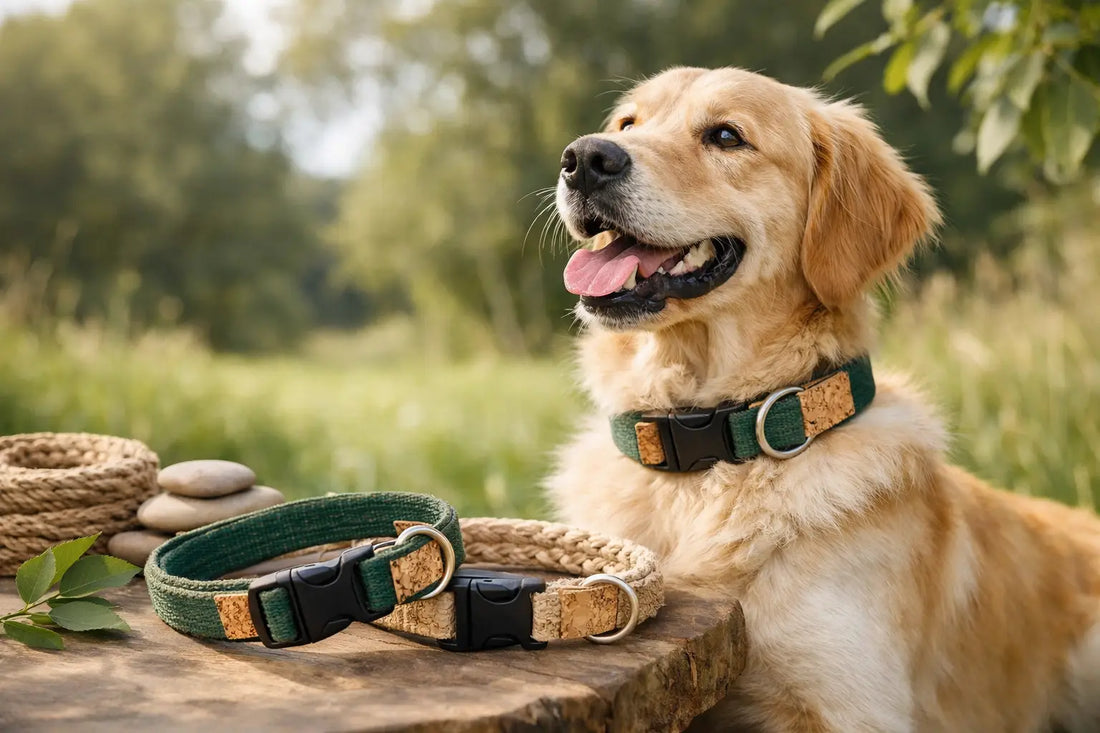
A dog collar gets handled every single day, which makes it one of the easiest places to shop more thoughtfully. If you're looking at eco friendly dog collars, you're probably trying to balance a few things at once: comfort for your dog, materials you can feel good about, and a look that doesn't clash with the rest of your home and routine. The good news is that you do not have to settle for a stiff, scratchy, earthy-looking collar just to make a better choice.
What makes a dog collar eco friendly?
The label sounds simple, but it can mean a few different things. Some collars use recycled materials, such as webbing made from repurposed plastic bottles. Others lean on renewable fibers like hemp or organic cotton. Some brands focus on lower-impact dyes, reduced packaging, or hardware designed to last longer so the collar stays out of the trash for years instead of months.
That last part matters more than many people realize. A collar that wears out fast, frays at the edges, or loses its shape after a few wet walks is not a great sustainability story, even if the material sounds impressive on paper. In real life, durability is part of the eco equation.
For most pet parents, the best option is not the one with the longest list of green claims. It is the one that combines safer materials, everyday comfort, and enough durability to handle your dog's actual lifestyle.
The best materials for eco friendly dog collars
Not all materials perform the same way, and that is where smart shopping makes a difference.
Recycled polyester
This is one of the most practical choices for active dogs. Recycled polyester webbing often feels similar to standard nylon, but it gives existing plastic a second life instead of relying entirely on virgin material. It tends to hold color well, dries quickly, and works nicely for dogs who walk in rain, play hard, or love muddy parks.
The trade-off is feel. Some recycled webbing collars are soft and flexible, while others can feel a little slick or stiff depending on the weave. If your dog has sensitive skin or thin fur around the neck, texture matters.
Hemp
Hemp has a lot going for it. It is a natural fiber, generally softens over time, and has an easy, relaxed look that fits well in a modern, natural home. Many pet parents like it for everyday wear because it can feel gentler than rough synthetic straps.
The trade-off is that hemp may not be the best match for every high-energy dog. It can absorb more moisture than synthetic materials and may show wear sooner if your dog swims often or pulls hard on leash.
Organic cotton
Organic cotton collars can be soft and comfortable, especially for small dogs or dogs with sensitive skin. They often appeal to owners who want a natural, low-irritation feel.
Still, cotton is usually better for lighter-duty use. It can stain, stay wet longer, and lose structure faster than sturdier webbing options. For a couch-loving companion who takes calm neighborhood walks, that may be perfectly fine. For a trail dog, probably not.
Cork and plant-based alternatives
Some newer collars use cork blends or other plant-based materials for trim or exterior detailing. These can look elevated and design-forward, which is a real plus if you care about pet gear blending into your space instead of looking overly sporty.
Performance varies a lot here. Some are surprisingly durable, while others are better suited to occasional wear than rough daily use. If a collar uses alternative materials, it helps to look closely at the stress points, especially around the D-ring and buckle.
Safety should always come first
A sustainable collar still has to do the basic job well. That means holding up reliably on walks, fitting properly, and staying comfortable during long wear.
Start with construction. Strong stitching, reinforced hardware, and a secure buckle matter more than trendy branding. If the collar stretches too much, feels flimsy near the hardware, or has decorative details that could loosen over time, move on.
Then look at fit. You should be able to slide two fingers between the collar and your dog's neck. Too tight can cause rubbing and discomfort. Too loose can let a dog slip free, especially if they spook easily or back out when startled.
For dogs with sensitive skin, seams and edge finishing matter almost as much as material. A collar can be made from recycled or natural fibers and still irritate the neck if the edges are rough or the hardware sits awkwardly.
How to choose eco friendly dog collars for your dog's routine
The right collar depends on how your dog lives, not just how the product looks in photos.
If you have a strong puller or a larger dog, prioritize durable webbing and sturdy hardware first. Recycled polyester is often the easiest win here because it combines lower-impact sourcing with dependable daily performance. If your dog is smaller, older, or generally gentle on gear, hemp or organic cotton may be more appealing for comfort.
If your dog gets wet often, think carefully about absorbent fibers. Natural materials can be lovely, but they may need more drying time and a little more upkeep. If your dog spends weekends hiking, beach walking, or charging through sprinklers, quick-drying materials will save you hassle.
And if aesthetics matter to you, that is not shallow. A collar is part of your home life. It sits by the entryway, hangs on a hook, and shows up in photos. Clean colors, simple hardware, and thoughtful design make it easier to choose pieces you actually keep using instead of replacing on impulse.
What to avoid when shopping
Some collars sound greener than they really are. Watch for vague claims like "natural," "clean," or "earth-friendly" without any explanation of what the collar is made from or why it is better. Clear material details are a better sign than broad feel-good language.
It also helps to be cautious with collars that focus heavily on style but say very little about strength, testing, or pet-safe construction. A beautiful collar is great. A beautiful collar that frays in a month is not.
Another red flag is hardware that feels too light for the size of the dog it is intended for. This is especially important with metal coatings, painted hardware, or mixed-material buckles that may chip or weaken over time.
Care matters more than people think
Even the best collar lasts longer with basic care. That is good for your budget and better for reducing waste.
Wipe down dirt and oils regularly, especially if your dog wears the collar all day. Let wet collars dry fully before storing them. Check the stitching and D-ring area every so often, because those stress points tend to show wear first.
If the collar is machine washable, use a gentle cycle and let it air dry unless the care instructions say otherwise. High heat can weaken fibers, warp trims, or shorten the life of elastic and coated details. A little maintenance goes a long way.
Why design and sustainability belong together
There used to be an assumption that eco-minded pet products had to look plain or overly rustic. That is changed. The best collars now pair lower-impact materials with clean lines, modern colors, and hardware that feels considered instead of bulky.
That mix matters because products that look good and work well tend to stay in rotation longer. You are less likely to replace them just because they feel dated, cheap, or awkward with the rest of your dog's gear. Good design is not separate from sustainability. In many cases, it supports it.
For pet parents who care about both home aesthetics and pet comfort, that is where the smartest choices live. A collar should feel soft against your dog's neck, hold up to daily use, and look like it belongs in your life.
Is the most eco friendly option always the best one?
Not necessarily. Sometimes the lowest-impact material on paper is not the best fit for your dog. A natural fiber collar that wears out in six months may create more waste than a well-made recycled collar that lasts for years.
That does not mean sustainability claims are meaningless. It just means context matters. A better choice is usually the one that fits your dog's habits, avoids unnecessary replacement, and uses materials that are safer and more thoughtfully sourced than the standard alternative.
At Petmartopia, that balance is what modern pet essentials should do well - support comfort, safety, and everyday ease without asking you to compromise on style.
When you shop for a collar, think beyond the label. Look at the material, the stitching, the hardware, the feel, and the life your dog is going to put it through. The right pick is the one you trust on the walk, appreciate at home, and do not need to replace anytime soon.
Ready to find a collar that lasts? Browse our full range of dog collars, harnesses, and leads in the Safe Walks & Outdoor Control collection.