
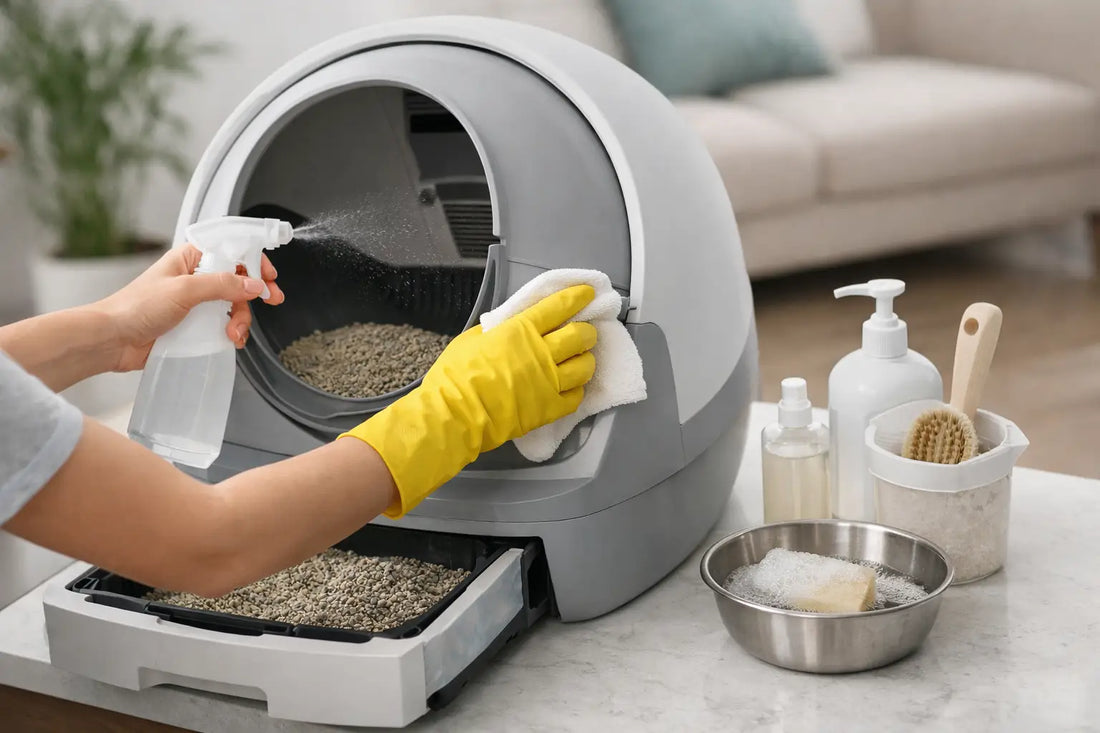
A self-cleaning litter box saves time right up until it starts smelling off, misses clumps, or leaves dusty buildup around the rake. That is usually the moment people realize that learning how to clean self cleaning litter box systems properly is what keeps them actually convenient.
The good news is that maintenance is usually simple. The less fun news is that “self-cleaning” does not mean “never needs cleaning.” These boxes still collect residue, trap dust in sensors, and develop odor if waste drawers and interior surfaces are ignored for too long. A quick routine keeps the box working better, your cat more willing to use it, and your home a lot fresher.
How to clean self cleaning litter box without damaging it
The biggest mistake is treating every model the same. Some have rakes, some rotate, some use liners, and some rely on sensors that can be knocked out by moisture or dusty buildup. Before you clean anything, unplug the unit and check the manufacturer care notes for parts that should never be soaked or sprayed directly.
In most cases, you only need a few basics: disposable gloves, a soft cloth or sponge, mild unscented soap, warm water, paper towels, and a small brush for corners or tracks. Skip harsh cleaners, bleach, strong fragranced sprays, and anything abrasive. Cats are sensitive to smell, and strong chemical residue can make a litter box less inviting.
If the unit has removable parts, take them apart first. Waste drawers, litter trays, grates, and liners are usually easier to clean separately than trying to wipe around everything while assembled. That also gives you a better look at hidden buildup, which is where odors tend to linger.
Start with the waste drawer and litter area
The waste compartment is usually the first place odor takes hold. Empty it fully, remove any liner if your model uses one, and wipe the interior with warm soapy water or a pet-safe cleaning wipe. If there is caked-on residue, let a damp cloth sit on the area for a minute instead of scraping aggressively.
Next, empty the main litter chamber if your model allows for it. Some self-cleaning boxes need the litter removed before deep cleaning, while others only need a partial dump. If the litter still looks fairly clean but dusty, you may not need a full replacement every time. If it smells stale, has a lot of small broken clumps, or leaves sticky spots behind, start fresh.
Wash the tray with mild soap and warm water, then dry it completely. That last part matters more than people think. Damp surfaces can cause fresh litter to clump prematurely and can interfere with sensors or moving parts if moisture gets where it should not.
What to do about stuck-on litter
Even high-quality clumping litter can leave a thin film over time. If litter is stuck to the base or corners, avoid metal tools that can scratch the interior. Scratches make future buildup worse because waste has more texture to cling to.
A better approach is warm water, a soft sponge, and patience. For stubborn spots, a pet-safe enzyme cleaner can help, but only if the surface is rinsed and dried thoroughly afterward. The goal is a clean tray without any lingering scent or cleaner residue.
Clean the rake, comb, or rotating mechanism carefully
This is the part many owners rush through, and it often causes the next round of problems. Whether your litter box uses a rake, comb, sifting screen, or rotating drum, these mechanisms collect hair, dust, and sticky debris that can slow movement or cause jams.
Use a dry paper towel or soft brush first to remove loose litter and fur. Then wipe the mechanism with a lightly damp cloth. Do not drench it. If your box has motorized sections or electrical housings nearby, keep moisture controlled and targeted.
Look closely at crevices where waste can harden. A cotton swab or small soft brush can help in tight spaces. If the rake teeth are bent or the rotating part is struggling even after cleaning, it may be wear rather than dirt. Cleaning helps performance, but it will not fix a damaged component.
Pay attention to sensors
Many self-cleaning litter boxes rely on motion, weight, or timing sensors. Dust and litter fines can interfere with them over time, especially in covered models. If your unit is cycling at odd times or not cycling when it should, dirty sensors may be part of the issue.
Wipe sensor areas gently with a dry or barely damp microfiber cloth. Avoid spraying cleaner directly onto them. If the sensor cover is cloudy with dust, removing that film alone can improve reliability.
How often should you clean a self-cleaning litter box?
It depends on the box, the litter, and how many cats use it. A one-cat household using a well-designed unit may only need a quick wipe-down weekly and a deeper clean every few weeks. Two cats sharing one box usually means faster waste drawer fill, more dust, and more frequent odor buildup.
As a practical routine, empty the waste drawer every few days or sooner if it is near full. Wipe visible residue from interior surfaces once a week. Plan a deeper clean every two to four weeks, which means disassembling removable parts, washing the tray, cleaning the mechanism, and refreshing litter fully.
If your cat has soft stool, long hair, or a habit of high-spraying, you may need to clean more often. Self-cleaning boxes reduce scooping, but they do not eliminate the reality of cat messes.
The litter you use affects how clean the box stays
A lot of maintenance complaints are really litter compatibility issues. If the litter is too dusty, too lightweight, or forms weak clumps, the box gets dirtier faster and the cleaning mechanism has to work harder.
Most self-cleaning models perform best with a consistent, hard-clumping litter that does not break apart easily. Crystal or pellet litter may work in some units but not others. Using the wrong type can lead to smeared waste, half-formed clumps, or excess dust collecting on tracks and sensors.
It is also worth watching litter depth. Too little litter can leave waste exposed on the bottom of the tray. Too much can strain the rake or block rotation. Staying within the fill line is one of the easiest ways to keep cleaning manageable.
Don’t forget the exterior
If the outside of the unit looks clean, it is easy to overlook. But litter dust settles on the lid, around the entry, and on nearby floors or mats. Cats also leave nose marks, paw prints, and occasional streaks on the entrance lip.
Wipe the exterior with a damp cloth and dry it right away. Vacuum or shake out the litter mat. If your box sits in a tight corner, pull it away from the wall once in a while and clean behind it. Odor can linger in the surrounding area even when the box itself is not the only source.
For homes where design matters, this small step makes a real difference. A sleek litter box still feels messy if the area around it is dusty or scattered with tracked litter.
Common cleaning mistakes that make things worse
One of the most common issues is using scented cleaners to chase odor. That tends to backfire. Cats often dislike strong artificial fragrances, and layering perfume over waste smells does not actually solve the source.
Another mistake is reassembling the unit before every part is fully dry. That can create muddy litter, trap odor, and in some cases affect the box’s electronics or movement. Rushing is understandable, but a few extra minutes of drying time prevents a lot of frustration.
It is also easy to wait too long between deep cleans because the machine is still technically working. If the box is cycling but smells stronger than usual, leaves residue behind, or your cat starts hesitating before entering, those are signs the box needs attention even if the motor still runs.
When a full reset is the better move
Sometimes a quick wipe is not enough. If the box has a sour odor that returns immediately, if urine has reached seams or hidden compartments, or if your cat had an accident that spread beyond the normal waste area, do a full reset.
That means emptying all litter, disassembling every removable component, washing what is washable, cleaning sensors and mechanisms carefully, drying everything completely, and starting with fresh litter. It takes longer, but it often restores the box to near-new performance.
If odor still lingers after that, check for worn liners, scratched plastic, or waste trapped in non-removable areas. At a certain point, persistent smell can be a material issue rather than a cleaning issue.
A self-cleaning litter box should make daily life easier, not become another fussy appliance you resent. Keep the routine simple, use gentle pet-safe products, and clean a little before you need to clean a lot. Your cat notices the difference, and so does everyone who walks into your home.