
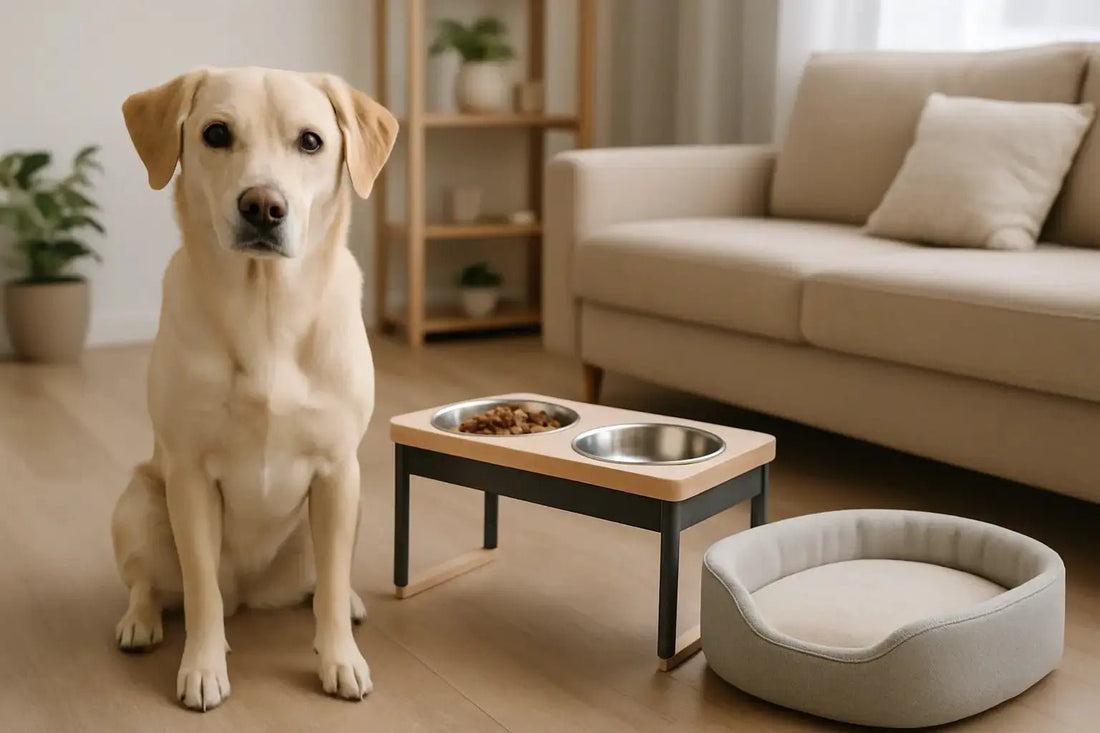
You know the moment: you finally get the living room feeling calm and pulled together - then a neon plastic bowl, a fraying scratch post, and a bulky bed take over the corner.
The good news is you do not have to choose between a home that feels like yours and a home that works for your pet. The best modern pet accessories are designed to do both: support comfort and enrichment for dogs and cats while staying visually quiet, easy to clean, and safe to live with every day.
What “modern” actually means in a pet-friendly living room
Modern is not a single look. In practice, modern pet accessories for living room spaces share a few non-negotiables: materials that feel at home next to your furniture, shapes that read intentional (not temporary), and maintenance that fits real life.
That usually means neutral colors, warm wood tones, matte finishes, and textiles that can handle fur and frequent washing. It also means fewer visual “pet signals” - no loud logos, no bulky plastic, no awkward proportions.
There is a trade-off to keep in mind: the more design-forward an item is, the more you should double-check the basics. Is it stable on hardwood? Does it use pet-safe finishes? Can you clean it quickly when life happens? A modern look only works if it holds up.
Start with zones, not products
If your living room feels overrun, it is rarely because you own too many pet things. It is because everything is floating. A modern setup starts by giving pet gear a purpose and a place.
Think in three zones: rest, eat and drink, and play or scratch. When each zone has a defined footprint, the room instantly looks more intentional. It also helps your pet understand where to settle, where to look for water, and where scratching is actually allowed.
For small apartments, you might combine zones. For larger homes, you can spread them out. Either way, the goal is the same: fewer random objects, more cohesive placement.
Living room pet beds that blend in (and actually get used)
A bed is the biggest visual anchor you will add, so choose it like furniture. Look for clean silhouettes, structured bolsters if your pet likes to lean, and fabrics that match the textures already in your room.
If shedding is the main issue, tighter weaves and performance-style fabrics tend to trap less hair than fuzzy plush. If accidents or muddy paws are part of your reality, prioritize removable covers that can go in the wash and inserts that do not collapse after a month.
It depends on your pet’s sleep style. Dogs that sprawl often do better with a lower profile, mattress-style bed. Dogs that curl and cats that knead usually prefer a cozier perimeter. Older pets may need more orthopedic support, but you can still keep the look streamlined - supportive foam does not have to look bulky.
Placement matters as much as design. Tuck the bed where it feels “protected” (near a wall or sofa) rather than in the middle of foot traffic. The calmer the spot, the more likely your pet will use it instead of your favorite chair.
Elevated bowls and drink stations that do not scream “pet corner”
Bowls are one of the fastest ways to break a clean aesthetic, mostly because they are often mismatched, lightweight, and constantly sliding.
For a modern feel, consider a low-profile feeder with a stable base and stainless steel or ceramic inserts. The base should be easy to wipe down and heavy enough that it does not scoot across the floor. If you have hardwood or tile, a feeder with a non-slip bottom is not just a convenience - it protects your floors.
For water, a fountain can be a living room-friendly upgrade, especially for cats that prefer moving water. The key is choosing one that is quiet, easy to take apart, and simple to clean. A beautiful fountain that is a pain to maintain will not stay beautiful for long.
One real-world consideration: fountains and minimalist bowls look best when you commit to the area around them. A small, washable mat underneath keeps drips contained and helps the whole setup feel deliberate.
Scratchers and cat furniture that look like decor
Cats need to scratch. The design win is not trying to stop it - it is giving them a better option than your sofa.
Modern scratchers tend to do three things well: they use neutral materials (sisal, jute, wood tones), they hold their shape, and they offer the scratching angle your cat actually prefers. Some cats love vertical posts, others want a horizontal pad, and many need both.
If your cat is going after the couch arm, place a vertical scratcher near that exact spot. This is one of those “it depends” moments where aesthetics follow behavior. The most beautiful scratcher in the wrong location is just decor.
For cat trees, look for cleaner lines and fewer dangling parts if your goal is a living-room-first look. A good modern tree gives your cat height and a view without looking like a carpeted tower. Stability matters more than ever here - a sleek profile still needs a wide base so it does not wobble when your cat launches onto it.
If you have the space and an energetic indoor cat, a cat exercise wheel can be a surprisingly elegant statement piece when it is done in a minimalist finish. Just plan placement like you would a chair: allow clearance, keep it off tight pathways, and choose a finish that complements your flooring and wood tones.
Toy storage that keeps enrichment accessible (without the mess)
The living room is where pets want to be because it is where you are. That is also why toys end up everywhere.
A simple storage solution can keep your space calm without limiting play. A lidded basket or a structured bin that matches your decor makes the room feel tidy in seconds. For dogs, rotating toys (keeping a few out and storing the rest) reduces clutter and keeps interest high. For cats, a small tray with a couple of favorites can look intentional, like a little “cat shelf” rather than a pile.
One trade-off: open baskets look better day-to-day, but they invite your pet to self-serve and scatter. If your dog treats storage like a mission, go with a lid.
Litter solutions that respect your living room
Not everyone can keep the litter box tucked away in a laundry room. If the living room is the only workable option, you can still make it feel clean and discreet.
Modern litter setups usually rely on either a furniture-style enclosure or a higher-tech self-cleaning box. Enclosures help visually, but you will still need to manage odor with regular scooping and the right litter. Self-cleaning boxes reduce daily effort and can keep the area consistently fresher, but they come with two realities: they take up space, and they need proper maintenance to stay reliable.
For either option, focus on airflow and cleaning access. A setup that is hard to reach will get cleaned less often, and that is when the living room starts to feel like a compromise.
Pet-safe materials: where design and safety meet
A modern look is only worth it if it is safe. In a living room, pets are in constant contact with fabrics, finishes, and small parts.
Prioritize pet-safe construction: stable bases, chew-resistant components for dogs who gnaw, and finishes that are made to be around animals. If your cat chews strings or your dog eats anything within reach, skip decorative tassels and loosely attached pieces. The cleanest look is often the safest anyway.
Eco-friendly materials can be a strong fit here, not as a trend, but because they often align with better everyday living: fewer harsh smells, more durable natural fibers, and materials that age gracefully instead of cracking.
Keeping the living room clean with less effort
Modern pet accessories should reduce the amount of time you spend cleaning, not increase it.
If you are choosing between two similar items, pick the one with easier maintenance: removable covers, wipeable surfaces, parts you can disassemble without tools. For high-shed pets, a grooming tool you actually like using can be the difference between “fur is everywhere” and “fur is manageable.” A quick brush session a few times a week often keeps the couch and rugs looking significantly better.
And do not underestimate the value of a designated towel or paw-cleaning routine near your entryway. It is not a living room accessory, but it protects your living room accessories.
A simple way to pull it all together
If your living room currently feels like a mix of pet items and human items, aim for consistency in three decisions: color palette, materials, and silhouettes.
Choose a palette that matches your home (warm neutrals, cool grays, black and wood, whatever you already love) and stick to it across beds, bowls, and storage. Repeat materials on purpose - for example, one wood tone and one metal finish. Then choose shapes that feel related: rounded corners, clean rectangles, or soft curves, but not all at once.
When you shop this way, even practical upgrades like fountains, litter solutions, and grooming tools feel like part of a cohesive home system, not random add-ons. If you want a curated place to start, Petmartopia focuses on pet-safe, eco-conscious essentials that are designed to look right at home in modern spaces.
A living room that works for pets does not have to look “pet-focused.” It just has to be honest about what your pet needs - then choose pieces that meet those needs with the same care you use for everything else you bring into your home.