
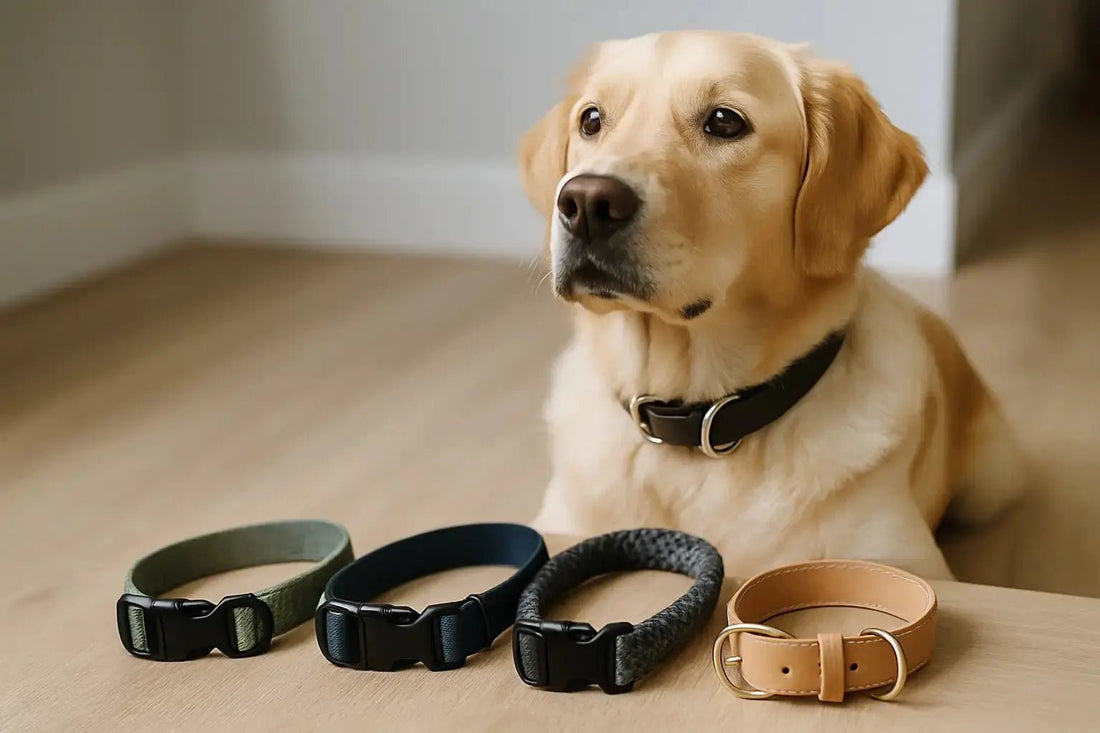
That itchy neck scratch your dog does right after you clip on a collar is easy to shrug off. Sometimes it really is just excitement. But if you have ever found a red patch under the buckle, a damp-smelling strap that never quite dries, or a cat who suddenly refuses their collar, the material is usually the reason.
Collars sit in a high-friction, high-contact zone. They rub, trap moisture, collect skin oils, and get tugged during walks or play. So when people ask about style or color first, we gently steer them back to the basics: pet safe materials for collars are the difference between “wear it and forget it” comfort and a nagging irritation that builds over weeks.
What “pet-safe” really means for collar materials
“Pet-safe” is not one single label. It is a bundle of practical, real-life traits that reduce risk during everyday wear.
First is skin compatibility. A collar should not cause chafing, hot spots, or allergic reactions, especially in short-coated dogs and cats where the strap directly contacts skin. Second is chemical safety. Dyes, tanning agents, coatings, and adhesives all matter because collars spend all day near your pet’s mouth and nose. Third is structural safety. Materials that stretch, crack, or fray can fail at the worst moment, while overly rigid materials can press on the throat.
Finally, pet-safe includes hygiene. A collar that holds odor, stays damp after rain, or traps grime can irritate skin even if the material itself is “non-toxic.”
Pet safe materials for collars: the main options
There is no single perfect material for every pet. The right choice depends on coat type, lifestyle, and how you use the collar (ID only, daily walks, outdoor adventures, water play).
Nylon webbing
Nylon is popular for a reason. It is lightweight, affordable, and strong for its thickness. A well-made nylon collar with smooth edges can be comfortable for everyday wear, and it works especially well for pets who are in and out of a harness.
The trade-off is moisture and odor. Nylon can hold smells and stay damp longer than you want, which can contribute to irritation in dogs who swim often or have sensitive skin. Printing and dye quality also matters. A collar that bleeds color when wet or feels stiff out of the box is more likely to rub.
If you choose nylon, look for tight, smooth weaving and clean edge finishing. The “feel test” is real here: if it feels scratchy to your hand, it will feel worse on a neck.
Polyester webbing
Polyester often gets grouped with nylon, but it behaves a little differently. It tends to resist UV fading better and can be slightly less absorbent, which helps with odor and that perpetually damp feeling after a rainy walk.
The downside is that low-quality polyester can feel rigid. The best versions soften with use without becoming limp, and that sweet spot is what you want. If your pet has a dense coat, polyester can be a solid everyday choice because it glides over fur without grabbing.
Biothane and coated webbing
For water-loving dogs or anyone tired of “wet collar smell,” coated webbing (often called Biothane-style) is a strong contender. It looks clean, wipes down easily, and does not soak up moisture the way traditional webbing does. It is also less likely to harbor bacteria and grime, which can be a game changer for sensitive skin.
It does have trade-offs. Some coated straps can feel a bit more structured, which is great for durability but not always ideal for tiny dogs or cats with delicate necks. In hot weather, a non-breathable strap can also trap warmth, especially on thick-coated pets. If your dog spends hours outside in summer, pay attention to how the collar area feels when you take it off.
Leather (including vegetable-tanned)
Leather is classic for a reason: it can be durable, comfortable once broken in, and naturally less “plasticky” against the coat. A good leather collar can last for years and often looks better over time, which fits nicely in a modern home where you do not want loud, worn-out gear.
Where people get tripped up is finishing and tanning. Some leathers are treated with heavy coatings or use chemical tanning methods that can irritate sensitive pets. Vegetable-tanned leather is often preferred by pet parents who want a more natural approach, but it still needs quality control and safe dyes.
Leather also does not love water. If your dog swims, splashes in creeks, or gets frequent baths, leather can stiffen, crack, or develop odor if it is constantly wet. In that case, leather can be your “city collar” for dry days, while a coated option handles the messy outings.
Hemp and cotton canvas
Hemp and cotton-based collars appeal to eco-conscious pet parents, and when done well they can feel soft and breathable. For pets with mild sensitivities, that softer hand-feel can reduce rubbing.
The practical reality is that natural fibers can absorb moisture and stains, and they may not hold up as long for strong pullers. They can also stretch over time. If your dog is a calm walker and mostly indoors, these can be a comfortable, lower-impact choice. If you have a powerful dog or a pet who plays hard, you may prefer something with higher tensile strength.
Metal-free and fabric breakaway options for cats
Cats are a special case. Safety is not just about the strap material, it is about escape ability. Most cats should wear breakaway collars so they can slip free if caught on furniture or a branch.
Material-wise, lightweight nylon or soft fabric tends to work best. Some cats are sensitive to the sound and weight of tags and hardware, so a slimmer, softer collar can reduce fussing. If your cat is prone to chin acne or skin irritation, keeping the collar clean and dry matters as much as the fiber choice.
Hardware matters as much as the strap
A collar can be made from a great material and still be a problem if the hardware is poorly chosen.
For dogs, look for buckles that feel smooth with no sharp edges and D-rings that do not show rough seams. Stainless steel hardware is generally a solid choice for corrosion resistance, especially if your dog gets wet often. Some plated metals can flake over time, and those rough spots can irritate skin or snag fur.
For cats, breakaway buckles are the priority. Avoid anything that feels bulky under the chin. If your cat is sensitive, even a slightly oversized buckle can make them freeze and “statue walk.”
How to spot irritation and material sensitivity early
Skin issues under collars tend to creep up. A quick weekly check takes seconds and can prevent a full-on hot spot.
Look for redness, thinning hair, dandruff-like flakes, or a damp patch that smells “sour” even after grooming. If your dog scratches more right after you put the collar back on, that is a clue. With cats, watch for constant pawing at the neck or sudden refusal to wear the collar.
If irritation shows up, the fix is usually a combination of switching materials and improving hygiene. Even the safest collar material will cause trouble if it is never cleaned.
Choosing the right material for your lifestyle
If your dog is an occasional walker and spends most of the day indoors, comfort and softness may matter more than maximum weather resistance. A smooth nylon, polyester, or well-finished leather can be ideal.
If you have an adventure dog that swims, hikes, or gets muddy, coated webbing is hard to beat for cleanliness and durability. If you love the look of leather, consider keeping leather for dry outings and using a wipe-clean collar for water days.
If your pet has sensitive skin or allergies, prioritize smooth textures, minimal coatings, and easy cleaning. Sometimes the best “hypoallergenic” move is simply choosing a collar that does not stay wet and does not trap grime.
If you are shopping for a cat, start with a lightweight breakaway collar and focus on low-profile comfort. Material matters, but safety release matters more.
Care tips that keep any collar safer
Most collar problems blamed on “bad materials” are really a mix of sweat, dirt, and friction.
Wash fabric collars regularly using mild, fragrance-free soap, then dry them fully before putting them back on. Wipe coated collars with soap and water and check the edges for wear. For leather, keep it dry when you can, wipe it clean, and condition it occasionally so it does not crack.
Also consider rotation. Having a backup collar makes it easy to wash one and use one, which keeps the collar area healthier without adding hassle.
A quick note on buying from a curated retailer
When you are comparing collars, you are not only choosing a material, you are trusting the details: edge finishing, dye stability, buckle quality, and how the collar holds up after real use. A curated shop that filters for pet-safe construction and design-forward materials can save you from trial-and-error. If you want options that prioritize safety and modern aesthetics, Petmartopia is built around that “natural comfort” standard.
A collar is one of the few things your pet can wear every day for years. Choose a material that matches their life, then keep it clean and properly fitted. The best sign you got it right is simple: your pet forgets it is even there.