
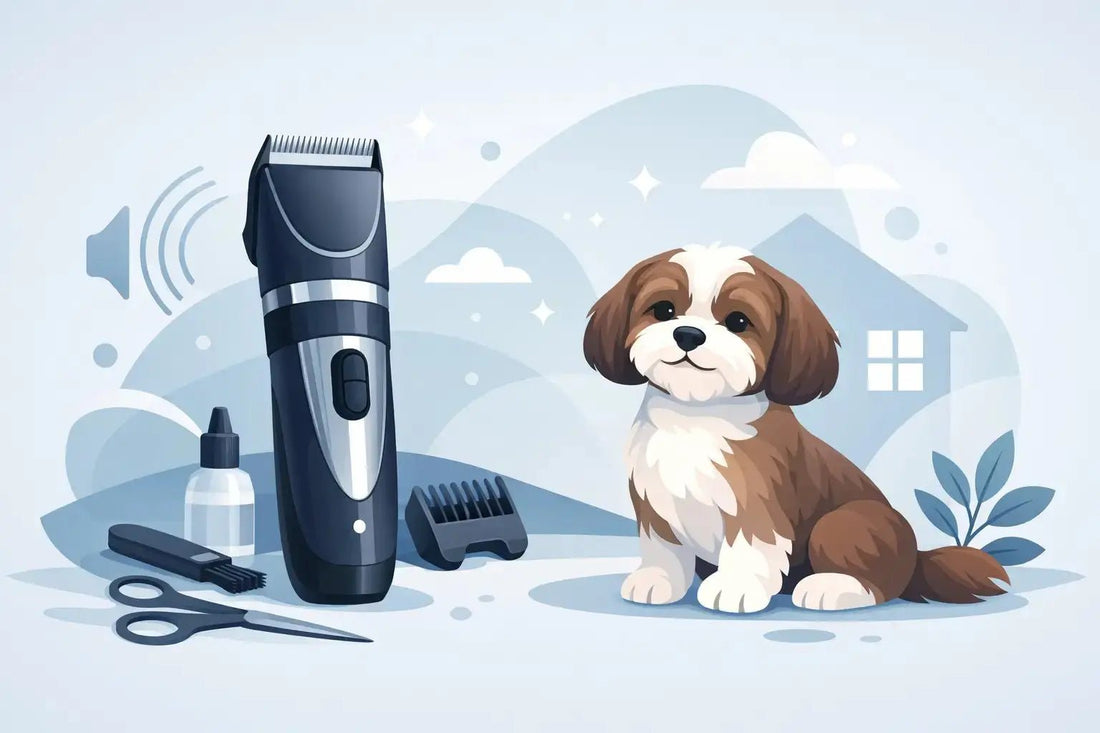
The sound usually gives it away before the clipper even touches the coat. Your dog hears the buzz, backs into a corner, and suddenly a simple trim turns into a full negotiation.
That is exactly why quiet cordless dog grooming clippers matter. For many dogs, especially puppies, seniors, and naturally anxious breeds, noise and vibration are the difference between a calm at-home groom and a stressful one. And for pet parents, cordless models solve a second problem just as fast - no dragging cords across the bathroom floor or trying to keep a nervous dog still while you work around an outlet.
Why quiet cordless dog grooming clippers are worth it
A quieter clipper does not just make grooming more pleasant. It can help your dog tolerate the process long enough for you to be safe and precise. When a dog is tense, every pass becomes harder. Mats pull more, legs jerk unexpectedly, and sensitive areas around the face, ears, and paws become much riskier.
Cordless use adds another layer of control. You can move around your dog naturally instead of repositioning them around a cord. That matters in smaller homes and apartments, where grooming often happens in tight spaces like bathrooms, laundry rooms, or kitchen corners.
The trade-off is that quiet does not always mean powerful, and cordless does not always mean long-lasting. Some ultra-quiet clippers are great for light touch-ups but struggle with dense coats or heavy matting. The best choice depends on what kind of dog you have and how much grooming you actually plan to do at home.
What actually makes clippers feel quiet to a dog
Most shoppers focus on motor noise, which makes sense, but dogs react to more than volume alone. Vibration matters just as much. A clipper can sound fairly soft to you and still feel intense in your hand and on your dog’s skin.
Blade quality also changes the experience. Sharp, well-made blades cut cleanly instead of snagging. When blades tug, dogs often respond as if the clipper itself is the problem, even when the bigger issue is friction and pulling.
Weight matters too. A lighter cordless clipper is easier to handle around delicate spots, which helps you stay relaxed. Dogs pick up on that. If you are gripping a heavy tool awkwardly, your movements get choppy and your dog gets more suspicious.
Heat is another overlooked factor. Some clippers start quiet but warm up quickly. Once the blade gets hot, your dog may flinch or resist, even if the motor noise stays low. For longer sessions, temperature control is not a bonus feature. It is part of comfort and safety.
How to choose the right clipper for your dog’s coat
This is where many pet parents buy the wrong tool. They choose the quietest option they can find, then wonder why it stalls halfway through a doodle mix or leaves uneven patches on a double coat.
If your dog has a fine or silky coat, or you only need to trim sanitary areas, paws, and light overgrowth, a low-noise cordless clipper can be ideal. You get easier handling, less stress, and enough cutting power for routine maintenance.
If your dog has a thick, curly, or fast-growing coat, you will need a stronger motor and better blade system, even if that means a little more sound. In those cases, the goal is not absolute silence. It is the quietest clipper that can still move through the coat cleanly without dragging.
For heavy matting, even the best quiet cordless dog grooming clippers have limits. Clippers are not a magic fix for severe tangles close to the skin. Forcing them through compacted mats can hurt your dog and damage the blade. Sometimes the gentlest option is professional grooming, followed by a better home maintenance routine between appointments.
Features that matter more than marketing claims
Battery life is a real quality-of-life feature, not just a technical detail. If the clipper dies midway through a trim, your dog has to start the process all over again later. Look for enough runtime to finish your typical session in one go, especially if you have a medium or large dog.
Adjustable speeds can be useful, but only if they are practical. A lower speed may feel less intense around the face or belly, while a higher speed can help with thicker sections of coat. If you mostly do quick touch-ups, one reliable speed may be all you need.
A detachable or easy-clean blade system is worth having. Grooming tools stay pet-safe longer when they are simple to maintain. Hair buildup affects performance fast, and clippers that are difficult to clean rarely stay in top shape.
Guard combs can help, but they are not a substitute for blade quality. On clean, well-brushed coats, guards are helpful for keeping length even. On coats with tangles, they often catch and skip. If your dog’s coat tends to mat, prep matters more than any accessory.
How to make quiet clippers work even better
Even the best clipper cannot do all the work for you. Your dog’s experience starts before the motor turns on.
Brush first. Always. Clean, detangled fur is easier to clip, less painful to work through, and much less likely to jam the blade. If your dog hates brushing, break it into short sessions before grooming day instead of trying to do everything at once.
Let your dog inspect the clipper while it is off. Then turn it on nearby without using it right away. Give treats, keep your voice calm, and let the sound become background noise before the first pass. This step can feel slow, but it often saves time later.
Start with low-stakes areas. The back or sides are usually easier than the face, feet, or tail. Once your dog realizes the sensation is not scary, you have a better chance of getting through the trickier spots without a fight.
Keep sessions short, especially in the beginning. A partial groom that stays calm is better than a full groom that pushes your dog past their limit. You can always finish the next day.
Common mistakes to avoid
One of the biggest mistakes is expecting quiet cordless clippers to replace every professional tool. Home grooming can absolutely help you stay on top of coat care, but there is a difference between maintenance trimming and full breed-standard grooming.
Another mistake is clipping a dirty coat. Dirt dulls blades faster, and trapped debris increases friction. If your dog needs a bath, make sure the coat is fully dry before clipping unless your tool is specifically designed for that kind of use.
Going too fast is another common issue. Quick passes often lead to uneven results and more repeated strokes, which can irritate your dog. Slow, steady movement usually gives a cleaner finish and feels gentler.
And then there is the temptation to keep going when the blade gets warm. Stop and check it. A cool blade keeps the experience comfortable and helps build long-term trust with your dog.
When quiet cordless dog grooming clippers are the best fit
They are a smart choice if your dog is noise-sensitive, if you handle routine touch-ups at home, or if you want a grooming tool that is easier to store and use in a modern living space. They are especially helpful for paw trims, sanitary trims, light body maintenance, and dogs who get overwhelmed by louder grooming equipment.
They are also a good fit for pet parents who want more control over upkeep between grooming visits. A calm five-minute touch-up every couple of weeks is often easier on both you and your dog than waiting until the coat is overgrown and tackling a big reset.
If you are shopping with comfort, safety, and everyday convenience in mind, focus less on the loudest promises on the box and more on how the clipper fits your dog’s coat, your space, and your grooming routine. That is usually where the best results come from. At Petmartopia, that same idea guides every product choice - practical comfort for pets, and a cleaner, simpler routine for the people who love them.
A good clipper should not make grooming feel like a battle. It should help turn it into one more care ritual your dog can learn to trust.