
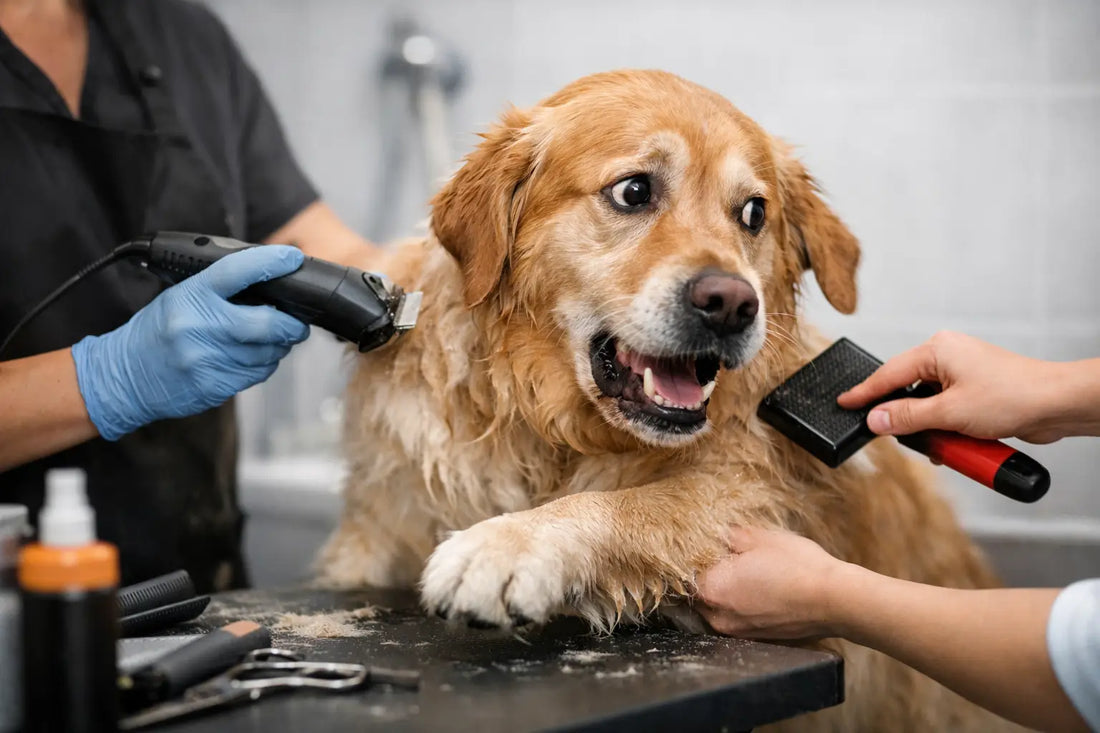
Your dog may happily sprint through muddy grass, roll on the carpet, and sleep upside down on the couch — then suddenly act terrified the second the brush or clippers appear.
If you’ve ever wondered why dogs hate grooming, the answer is usually not stubbornness or bad behavior. Most dogs react to grooming because it feels unfamiliar, noisy, physically uncomfortable, or emotionally overwhelming.
- Restraint
- Strange sounds
- Unfamiliar tools
- Sensitive body handling
- Slippery surfaces
- Unpredictable movement

Why Dogs Get Stressed During Grooming
Dogs experience the world through routine, scent, touch, and sound. Grooming disrupts all of those at once.
A brush may tug on tangled fur. Nail clippers apply pressure near sensitive nerves. Water sounds echo in bathrooms. Clippers vibrate against the skin. Even a gentle grooming session can feel intense from a dog’s perspective.
Dogs also don’t naturally understand the purpose of grooming. They don’t know brushing prevents mats, nail trims support posture, or coat maintenance improves comfort. Instead, they experience unfamiliar sensations while being asked to stay still.
Some Dogs Are More Sensitive Than Others
Not every dog reacts the same way. Grooming stress can depend on breed, coat type, age, pain sensitivity, past experiences, personality, and rescue history.
A doodle with painful mats may fear brushing because brushing hurts. A senior dog with arthritis may dislike baths because standing becomes uncomfortable. A rescue dog may panic during paw handling due to previous trauma or poor early socialization.
The better question is not “Why do dogs hate grooming?” It is “What part of grooming is stressful for my dog?”
Why Dogs Get Stressed During Grooming
1. Handling Sensitive Areas
Many dogs dislike touching around the paws, ears, tail, belly, and face. Nail trims are especially stressful because dogs feel restraint and pressure near the quick.
2. Noise and Vibration
Some dogs tolerate brushing but panic around clippers or dryers. Loud tools can trigger fear quickly, especially in cautious dogs.
3. Slippery Surfaces
Bathrooms and tubs can feel unstable. When a dog feels off balance, stress and resistance increase.
4. Restraint and Loss of Control
Being lifted, held, repositioned, or restrained can make a dog feel trapped. Some dogs freeze, shake, or try to escape.
5. Past Negative Experiences
Dogs remember stressful grooming sessions. If grooming repeatedly involves pain, fear, or forced restraint, they may panic before the session even begins.
Quick Summary: Why Dogs Hate Grooming
- Loud sounds and vibration
- Slippery grooming surfaces
- Painful mats or brushing
- Sensitive paws and ears
- Fear from past experiences
- Feeling restrained or trapped
Why Brushing, Bathing, and Nail Trims Feel Different
Brushing
Brushing is usually tolerated best when the coat is healthy, the right brush is used, and sessions stay short. It becomes stressful when mats form or tools pull excessively.
Bathing
Bathing combines water, movement, temperature changes, handling, and drying sounds. That sensory overload is why many dogs dislike baths more than brushing.
Nail Trims
Nail trims are uniquely stressful because they involve precise handling and pressure on sensitive toes. Dogs also notice owner nervousness immediately.

How to Groom an Anxious Dog at Home
The goal is not to force tolerance. The goal is to create predictability, comfort, trust, and gradual confidence.
Start Before the Grooming Session
Leave the brush nearby during calm moments. Let your dog sniff it, reward calm interaction, touch briefly, and stop. Short positive exposure works better than long stressful sessions.
Improve the Grooming Environment
Use non-slip mats, warm rooms, soft towels, calm lighting, and organized tools. A stable environment helps dogs feel safer before grooming even begins.
Use the Right Grooming Tool
Many grooming problems come from using the wrong tool for the coat type. A harsh brush or loud trimmer can turn basic grooming into a stressful experience.
Quiet, low-vibration tools are often easier for sensitive pets to tolerate. Explore Petmartopia’s Professional Pet Hair Trimmer Kit designed for low-stress grooming at home.
Reward During Grooming — Not Just After
Reward calm standing, paw handling, relaxed posture, and quiet cooperation. This teaches your dog that calm behavior makes grooming easier.
When Grooming Resistance Signals a Bigger Problem
Sudden grooming sensitivity should not be ignored. Pain-related issues may include ear infections, arthritis, dental pain, skin irritation, injuries, or severe matting.
- Growling or snapping
- Trembling or heavy panting
- Trying to escape aggressively
- Loss of bladder control
- Sudden sensitivity after previously tolerating grooming
Some dogs need slower desensitization, veterinary support, professional grooming help, or cooperative care training.
Why Patience Works Better Than Force
Many grooming struggles worsen because owners try to finish no matter what. That may feel efficient in the moment, but it often creates stronger fear next time.
Dogs remember stressful endings. Shorter sessions, calmer repetition, positive experiences, and gradual trust-building usually work better than forcing the full grooming session.
Calm Grooming Starts With The Right Tools
Ultra-quiet grooming tools can make a major difference for anxious pets. Low vibration, calmer handling, and quieter operation help reduce stress during home grooming sessions.
At Petmartopia, we focus on grooming essentials designed around real pet comfort — not just convenience for humans.
Shop Calm Grooming Tools- Low-noise grooming
- Stress-free home grooming
- Designed for anxious dogs and cats
- Trusted by 12,000+ pet owners
Some dogs may never love grooming completely. That’s okay.
The goal is not perfection. The goal is helping your dog feel safer, calmer, more comfortable, and less fearful — because grooming should support your pet’s wellbeing, not become something they dread every time the brush comes out.