
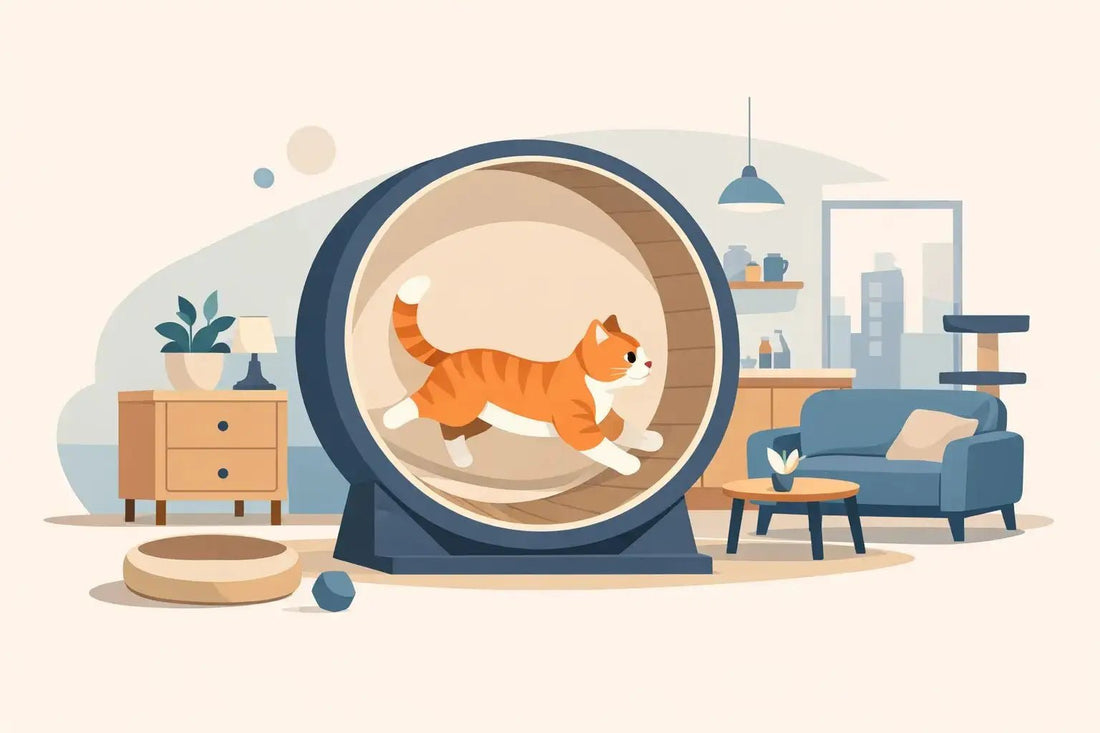
A zoomie at 2 a.m. hits differently when your living room is also your office, dining area, and yoga studio. If you share a smaller home with an energetic indoor cat, you already know the challenge: they need more movement, but you do not have room for bulky pet gear that takes over the space.
That is why a cat exercise wheel for small apartment living can make real sense. The right one gives your cat a safe outlet for running, helps reduce boredom, and fits into your home without looking like a piece of garage equipment. The wrong one, though, becomes a giant obstacle your cat ignores.
Is a cat exercise wheel for small apartment living worth it?
Sometimes yes, sometimes no. It depends on your cat’s energy level, confidence, age, and how much floor space you can realistically give up.
A wheel tends to work best for active indoor cats, younger cats, Bengals and other high-energy breeds, or any cat that gets restless and starts inventing trouble. If your cat sprints down the hallway every evening, paws at cabinets, or treats your sofa like a climbing wall, a wheel can redirect that energy into something healthier.
If your cat is older, less mobile, or generally uninterested in toys that require effort, a wheel may not become their favorite thing. It can still offer enrichment, but it should not be your only plan for exercise. Window perches, climbing furniture, teaser play, and food puzzles still matter.
For apartment living, the biggest benefit is controlled movement. A good wheel gives your cat a dedicated place to run without sending them across hardwood floors or onto furniture. That can mean fewer chaotic bursts in a small space and a calmer daily routine overall.
What actually matters in a cat exercise wheel for small apartment homes
Size matters, but not in the way most people think. Many pet parents focus only on whether the wheel fits the room. That is important, of course, but your cat also needs enough running surface to move comfortably. A wheel that is too small can feel awkward or strain the body, especially for larger cats.
The sweet spot is balance. You want the most compact footprint possible without sacrificing a comfortable running diameter. Before buying, measure the floor area you can truly dedicate to the wheel, not the imaginary area you hope to clear later. Then compare that with your cat’s size and stride.
Noise is another major factor in an apartment. Even the most beautiful wheel will become frustrating if it rattles against the floor or makes a constant grinding sound. Look for designs that emphasize quiet rolling, stable bases, and smooth track construction. This is especially helpful if you have downstairs neighbors, thin walls, or a cat who prefers late-night cardio.
Material quality matters more in small homes too, because the wheel is always visible. Cheap plastic can look out of place fast, and flimsy construction tends to wobble, wear down, and collect scratches. A better-built wheel with pet-safe materials and a clean, modern finish blends more easily into your space and usually lasts longer.
Then there is traction. Cats need enough grip to feel secure while running, but the surface should not be rough on paws. A padded or textured running track often works better than slick material. Removable or easy-clean liners are a plus, especially if your cat sheds heavily or tracks litter everywhere.
How much space do you really need?
This is where expectations need to be honest. A cat wheel is never invisible. Even a more apartment-friendly model is still a piece of equipment, not a small toy you tuck under a console table.
That said, it does not have to dominate the room. In smaller apartments, placement usually works best in a corner of the living room, along a wider hallway, or in an unused nook near a window. Some pet parents make the wheel part of a cat zone with a tree, scratcher, and bed so it feels intentional instead of random.
Leave clearance around the wheel so your cat can get on and off comfortably. A cramped setup can make the wheel less inviting. If the only available spot forces it against furniture on both sides, your cat may hesitate to use it.
You will also want to think about visual weight. Open-frame designs and neutral finishes tend to feel lighter in a room. If home aesthetics matter to you, a wheel with a cleaner silhouette will be easier to live with day after day.
Safety features you should not skip
A wheel should feel stable the moment your cat steps onto it. Wobbling, tipping, or obvious gaps are red flags. Your cat needs to trust the movement, and you need to trust the construction.
Look for a solid base, enclosed or protected moving parts, and a running surface that does not pinch paws or tails. The wheel should rotate smoothly without sudden resistance or jerking. If assembly is required, it should fit together securely with no loose sections after setup.
Weight capacity matters too. Even if your cat is not especially large, a sturdier frame usually means better long-term stability. In a compact apartment, that peace of mind matters because the wheel may sit near your main living area where it gets used and seen every day.
Will your cat actually use it?
This is the question that determines whether the purchase feels smart or frustrating. Some cats hop on a wheel within days. Others stare at it like you brought home a spaceship.
Most cats need a gradual introduction. You cannot place the wheel in the room and expect instant cardio. Start by letting your cat investigate it while it is still. Reward curiosity with treats, praise, or a favorite toy. Once they are comfortable stepping onto it, encourage short movements rather than trying to get a full run right away.
Play helps a lot here. A feather wand or treat lure can guide them into a few natural steps. Keep sessions short and positive. If your cat seems nervous, stop before it becomes a stressful experience. The goal is confidence, not speed.
Some cats learn quickly when the wheel is part of their usual play window, especially in the evening when energy peaks. Others take weeks. Patience matters more than technique.
Apartment-friendly features that make life easier
Easy cleaning is a bigger deal than it sounds. In a small apartment, pet gear is close to everything. Hair, dust, and litter buildup become noticeable fast. A wheel with wipe-clean surfaces or removable traction pads is easier to keep fresh.
A design that feels at home with modern interiors also matters. If you are thoughtful about your furniture, storage, and finishes, you do not want one oversized pet product making the whole room feel cluttered. Modern designs that blend into your home are easier to commit to, which means they are more likely to stay in use.
It is also worth paying attention to assembly. A complicated setup with dozens of parts can be annoying in any home, but it is worse in a small apartment where you do not have a lot of open floor space to spread everything out.
When a wheel is the right choice and when it is not
A wheel is a strong fit if your cat is indoor-only, high-energy, easily bored, or active when you are busy working from home. It can also help if your apartment limits traditional play space and you want one dedicated exercise outlet that works year-round.
It may not be the best fit if your cat dislikes new objects, has mobility issues, or already gets plenty of exercise from climbing and interactive play. It is also not ideal if you are trying to squeeze one into a truly tiny layout where every inch already has a purpose.
The best results usually come when the wheel is part of a fuller enrichment setup. Think of it as one helpful tool, not a total replacement for play, scratching, climbing, or one-on-one attention.
How to choose without regretting it
Start with your cat, then your floor plan, then the product details. That order matters.
If your cat is likely to benefit from more running, measure your available space carefully and look for a wheel that prioritizes quiet operation, sturdy construction, pet-safe materials, and a look you can live with. Reviews can be helpful for real-life insight on noise and stability, especially from other apartment dwellers.
If you are shopping for something that feels considered rather than bulky, Petmartopia focuses on solutions that support pet comfort without making your home feel like a pet store aisle. That balance matters when a product is going to live in plain sight.
A good wheel should make your cat’s day better and your space easier to share. If it feels safe, fits the room, and suits your cat’s personality, it can be one of the few big pet purchases that actually earns its footprint.
Your apartment may be small, but your cat’s need for movement is not. Choosing the right setup is less about squeezing in one more product and more about making room for a calmer, happier life together.