
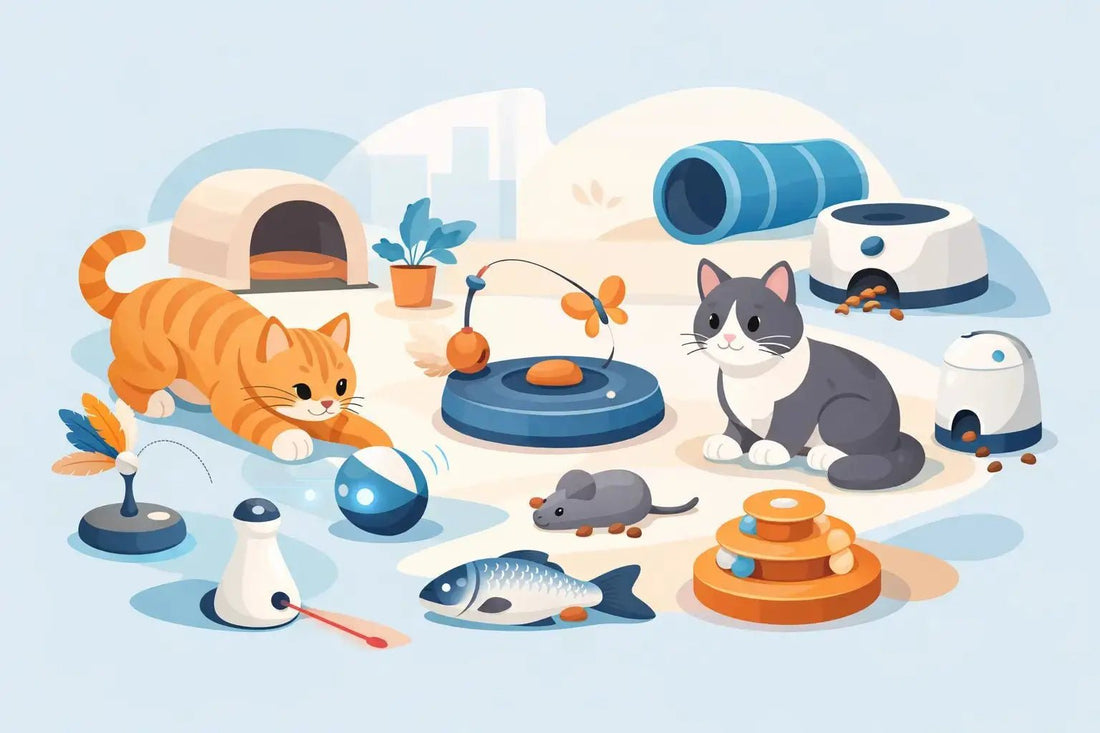
A bored indoor cat rarely keeps that boredom to themselves. It shows up as midnight zoomies across the hallway, relentless meowing during meetings, shredded furniture corners, or that fixed stare from the kitchen counter that says, very clearly, entertain me.
The right toy can help, but not every interactive toy works for every cat. Some cats want to stalk and pounce. Some want to chase. Some would rather solve a food puzzle than sprint after a feather. If you're trying to find the best interactive toys for indoor cats, the smartest approach is to match the toy to your cat's play style, energy level, and your space.
What makes an interactive toy worth buying?
Interactive toys do more than keep a cat busy for ten minutes. The good ones tap into natural behaviors like stalking, batting, hunting, climbing, and problem-solving. That matters for indoor cats, especially in apartments or smaller homes, where the environment can get predictable fast.
A toy is worth bringing home if it checks three boxes. First, it should encourage movement or mental work. Second, it should be pet-safe, with durable construction and no loose parts that can come off easily. Third, it should fit your routine. A toy that needs constant setup may sound great, but if it stays in a closet, it is not solving much.
There is also a design factor that pet parents care about more than they used to. If a toy is going to live in your living room, it helps when it does not look loud, flimsy, or disposable. Well-made cat essentials should work for your pet and blend more naturally into your home.
The best interactive toys for indoor cats by play style
Wand toys for cats who love the hunt
If your cat crouches behind chair legs and launches at moving ankles, a wand toy is usually the best starting point. These toys mimic prey movement in a way that feels satisfying to cats. You control the speed, direction, and pauses, which makes the game more realistic than a toy that just spins in circles.
Wand toys are especially useful for cats that need more exercise but lose interest quickly. You can vary the session every time - slow drags across the floor, quick darting movements, or short jumps over furniture. The trade-off is obvious: this is interactive in the true sense, so it requires you to participate. For many cats, though, that shared play is exactly why it works so well.
Look for options with secure attachments, durable cords, and non-toxic materials. Feathers can be exciting, but some cats destroy them quickly, so fabric lures or reinforced plush attachments may last longer.
Automatic motion toys for solo bursts of play
For cats that need entertainment while you work or handle the dinner rush, motion-activated toys can help fill the gap. These include rolling balls, spinning teaser toys, and battery-powered gadgets that move unpredictably under a cover or across the floor.
The best ones mimic erratic prey movement rather than repeating the same track over and over. Cats tend to lose interest fast when the pattern is too obvious. A toy that pauses, changes direction, or responds to touch usually gets more repeat use.
This category works well for independent cats, but it depends on your cat's personality. Bold, curious cats often love it. Shyer cats may watch from a distance for three days before deciding it is acceptable. Noise matters too. A toy with a loud motor might bother sound-sensitive cats and pet parents alike.
Puzzle feeders for food-motivated cats
Some cats are not especially toy-driven until treats get involved. That is where puzzle feeders shine. Instead of eating from a standard bowl in two minutes, your cat has to nudge, paw, or roll the toy to earn kibble or treats.
Puzzle toys are one of the most practical choices for indoor cats because they work the brain and slow down eating at the same time. They can also help redirect attention from boredom-based begging. If your cat shadows you into the kitchen an hour before every meal, adding a puzzle feeder can make the day feel more engaging.
Start simple if your cat is new to this kind of enrichment. A puzzle that is too difficult can backfire and create frustration. Once they understand the game, you can rotate in more challenging options.
Track toys for repeatable, low-mess play
Track toys with captive balls are not the flashiest option, but they earn their place for a reason. They are tidy, easy to leave out, and good for cats that like batting and swatting more than full-speed chasing.
These toys are also useful in multi-cat homes because more than one cat can join in without much setup. They will not replace a vigorous hunting session with a wand toy, but they can provide low-effort enrichment throughout the day. If your cat likes to entertain themselves between naps, this is often a solid fit.
Choose a stable design that will not skid all over hard floors. A toy that stays put is more satisfying for the cat and less annoying for you.
Kick toys for wrestlers and bunny-kickers
Some cats do not just pounce. They grab, kick, and wrestle with full commitment. Long plush kick toys are ideal for that style of play. Many can be paired with catnip or silvervine, which adds another layer of interest.
Kick toys help redirect rough play away from your hands, blankets, or couch arms. They are especially helpful for younger cats and energetic adults that need a physical outlet. The limitation is that they do not usually create much cardio on their own, so they work best as part of a toy rotation rather than the only option.
Laser toys with one important rule
Laser toys can be excellent for high-energy cats that love to chase fast movement. They encourage sprinting, sharp turns, and intense focus, which makes them useful for short play sessions in smaller spaces.
But there is a catch. Lasers can frustrate some cats because there is nothing tangible to catch. The fix is simple: always end the session by directing your cat to a real toy or a treat so they get the satisfaction of a successful hunt. Without that finish, the game can feel unfinished.
Used thoughtfully, laser toys can be part of the best interactive toys for indoor cats. They just should not be the only kind of play your cat gets.
How to choose the right toy for your cat and your home
Start with your cat's natural habits. If they watch birds from the window and crouch low before pouncing, choose prey-style toys like wands and motion toys. If they wake up hungry and stay food-focused all day, start with puzzle feeders. If they are constantly grabbing your arm during play, add a kick toy.
Age matters, but not in a simple way. Kittens usually want speed and variety. Adult cats often benefit from a mix of chase and mental stimulation. Senior cats may still love interactive play, but they may prefer slower movements, easier puzzles, and toys that do not require high jumps.
Your space matters too. In a small apartment, a compact track toy or puzzle feeder may get more use than a large rolling gadget that bumps into every chair leg. If you care about visual clutter, it makes sense to choose a few well-made toys you do not mind seeing every day rather than a basket full of bright plastic that never leaves the corner.
A few safety details that matter more than marketing
The best toy is not the one with the most features. It is the one your cat can enjoy safely and consistently. Check for loose strings, glued-on decorations, sharp edges, weak battery compartments, and pieces small enough to chew off.
Supervision depends on the toy. Wand toys and anything with cords should usually be put away after play. Track toys and sturdy puzzle feeders are often safer for independent use. If your cat is a dedicated chewer, inspect soft toys often and replace them sooner than you think you need to.
Material quality counts here. Pet-safe fabrics, durable stitching, and solid construction are not luxury details. They are part of what makes a toy last and part of what makes it trustworthy in a real home.
Rotation beats quantity every time
One reason cats seem bored with toys is not that they hate toys. It is that every toy is available all the time. Rotation keeps things fresh. Put a few toys out, store the rest, and swap them every week or so.
This approach saves space, cuts clutter, and makes old toys feel new again. It also helps you notice what your cat actually loves instead of what looked good on the product page. A curated setup usually works better than buying everything at once.
If you are building a smarter play routine, Petmartopia offers modern pet essentials designed for comfort, safety, and homes that do not want to look overrun by pet gear.
A good interactive toy does not have to be complicated. It just has to make your cat feel like an indoor life still has things worth chasing.