
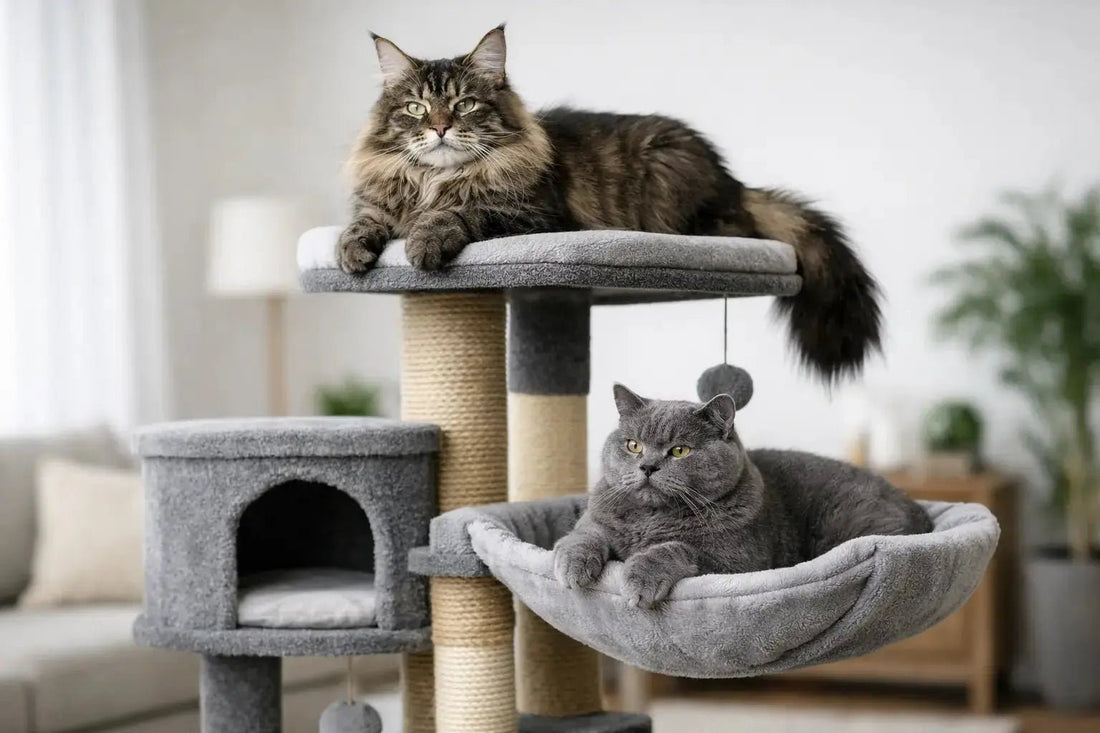
A flimsy cat tree lasts about as long as your big cat’s first full-speed launch to the top perch. If you live with a Maine Coon, a big-boned rescue, or simply a cat who treats furniture like a jungle gym, size alone is not enough. You need something that feels secure under real weight, gives your cat room to stretch out, and still looks right in a modern home.
That is where a large modern cat tree for big cats earns its place. The best ones do two jobs at once. They support climbing, scratching, napping, and lookout duty for heavier cats, while blending into your space instead of turning your living room into a carpeted obstacle course.
What big cats actually need from a cat tree
A bigger frame is the obvious starting point, but the details matter more than many pet parents expect. Large cats put more force on every jump, landing, and scratch. A tower that works fine for a 9-pound cat can wobble fast under a 16-pound cat with long limbs and a habit of taking corners at full speed.
The first thing to look for is stability. A wide, weighted base matters more than extra height. Tall cat trees can be great for confident climbers, but if the base is narrow, your cat will feel the sway. That often means they stop using the top levels, which defeats the whole point.
Platform size also changes everything. Big cats do not curl into tiny perches neatly. They sprawl, hang a paw over the edge, and shift positions often. A perch that looks roomy in product photos can feel cramped once your cat actually settles in. Beds, hammocks, and condos should give them enough surface area to lie flat without balancing.
Scratching posts need to be taller and thicker too. Bigger cats want a full-body stretch when they scratch. Short posts force awkward posture and usually send them back to your sofa. Posts wrapped in durable sisal or another pet-safe textured material tend to hold up better than thin carpet coverings.
How a modern cat tree fits your home better
A modern design is not just about looks. It often reflects better material choices, cleaner construction, and smarter proportions. For many pet parents, that means wood finishes, neutral fabrics, and shapes that work with current interiors rather than fighting them.
That said, modern style should never come at the cost of function. Some sleek-looking towers are better as decor than actual enrichment. If the perches are too shallow, the ramps are too narrow, or the surfaces are slippery, your cat may ignore it no matter how attractive it looks next to the credenza.
The sweet spot is a tree that feels visually light but structurally solid. Think clean lines, easy-to-clean cushions, and colors that blend into your room, paired with features your cat will use every day. If you want one piece to live in your main living area, this balance matters.
Choosing the right size without going overboard
A large modern cat tree for big cats should match both your cat’s body and your available floor space. Bigger is not always better if it overwhelms a room or creates awkward traffic flow. In smaller apartments, a vertical design with a compact footprint can work well, as long as each level is still roomy and easy for a larger cat to access.
In a larger home, you have more flexibility, but placement still matters. A tree near a window often gets used more because cats naturally want sunlight, activity, and a good viewing angle. If your cat is social, placing the tree in a room where the family spends time usually works better than tucking it into a quiet corner.
For senior big cats or less agile cats, accessibility matters as much as size. Wide steps, staggered platforms, and lower jump distances can make the difference between daily use and total rejection. A towering structure with dramatic height may look impressive, but it is not ideal for every cat.
Materials that hold up and feel safer
If you are investing in a larger tree, material quality is worth paying attention to. Pressed wood and weak fasteners tend to show wear quickly under a heavier cat. Solid engineered wood, reinforced joints, and thick support posts usually perform better over time.
Fabric matters too. Plush surfaces may feel cozy, but they can trap fur and show wear fast, especially in multi-cat homes. Tighter woven fabrics, removable cushions, and surfaces that wipe clean are often easier to live with. This is especially true if the tree sits in a visible room and you want it to keep that clean, modern look.
Pet-safe finishes should be non-negotiable. Cats rub, scratch, chew, and nap on these surfaces daily. Natural-feeling materials and sturdy construction are not just nice extras. They are part of what makes a cat tree feel like a long-term piece rather than a disposable one.
Features worth paying for and features you can skip
The most useful features are usually the simplest. Oversized top perches, deep lounging baskets, tall scratching posts, and stable multi-level platforms tend to deliver the most day-to-day value. These are the things cats return to repeatedly.
Condos can be useful, but only if they are large enough. Many enclosed cubbies look appealing to pet parents and are ignored by bigger cats because the opening is too small or the interior feels cramped. If your cat likes tucked-away naps, a spacious condo can be great. If not, open platforms may get more use.
Built-in toys are usually less important than brands make them seem. A dangling pom-pom might get attention for a week. Structural comfort and usability matter much more in the long run.
Extra height is another feature that depends on the cat. Some big cats love a tall lookout point. Others prefer broad, sturdy mid-level lounges. If your cat is cautious or older, stability and easy access should win over dramatic height every time.
How to tell if a cat tree will actually get used
A good cat tree matches your cat’s habits, not just your wishlist. If your cat loves to survey the room from the highest shelf possible, prioritize elevated perches. If they are a committed scratcher, focus on post height and material. If they nap most of the day near a window, give them a comfortable lounging platform with a view.
It also helps to think about how your cat moves. Big cats often need more turning room and more forgiving landing areas. Tight spacing between levels can make a tree feel awkward, especially for long-bodied breeds. Generous spacing and wider pathways make the whole structure more inviting.
Reviews can be useful here, especially when they mention cat size, behavior, and long-term durability. A tree that looks beautiful on day one but loosens after a month is not a good value, no matter how stylish it is.
Making it work in a modern living space
If you have avoided cat trees because most of them look bulky or dated, you are not alone. The appeal of modern pet furniture is that it respects the room it lives in. Neutral tones, cleaner silhouettes, and less visual clutter make a bigger piece easier to integrate.
It helps to treat the cat tree like furniture, not an afterthought. Place it where it complements the room, with enough breathing space around it. Match warm wood tones to nearby furniture if possible, or choose soft grays, creams, or natural shades that blend with your existing palette.
This is also where easy maintenance matters. A stylish cat tree stops looking stylish fast if it constantly collects fur or stains. Washable cushions and smoother surfaces help it stay presentable with less effort.
When one cat tree is not enough
For multi-cat homes, one large tree can work, but only if it offers real territory. Multiple roomy perches, more than one scratching area, and enough separation between resting spots help reduce competition. Big cats especially need personal space. A tree that technically fits two cats may still create tension if the top perch becomes the only desirable seat.
If your cats have different ages or energy levels, it may make sense to choose a lower, wider structure instead of a very tall one. That gives playful cats room to climb while keeping comfortable lounging spots accessible for older companions.
At Petmartopia, this is the kind of balance we think matters most - pet-safe materials, built-to-last construction, and modern designs that blend into your home without asking your cat to compromise on comfort.
The right cat tree should feel less like a pet accessory and more like part of your home: solid, comfortable, easy on the eyes, and ready for the daily chaos of life with a very big cat.