
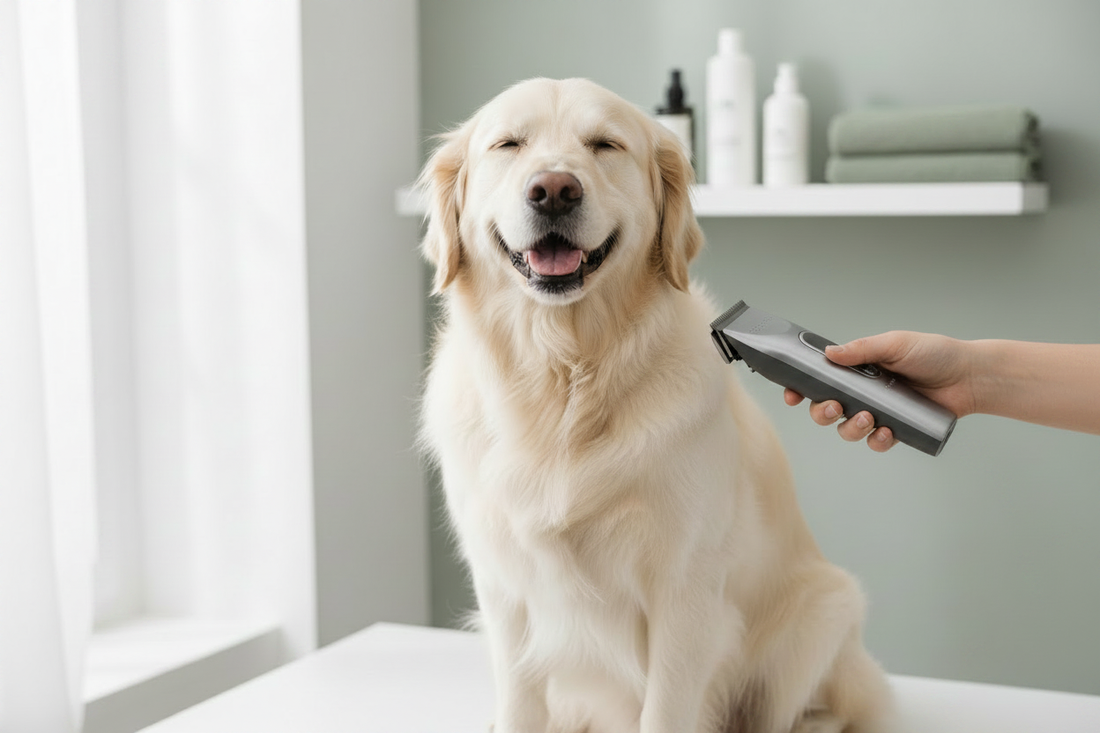
Why Your Dog Panics During Grooming (And How to Fix It)
If your dog hides the moment you reach for the clippers, you're not alone. Noise anxiety during grooming is one of the most common complaints from pet owners — and the solution is simpler than most people think.
The problem isn't grooming itself. It's the sound and vibration of the tool.
Standard pet clippers run at 70–85 dB — roughly as loud as a vacuum cleaner or busy traffic. For a dog with sensitive hearing (which is most dogs), that's genuinely startling. Their instinct is to flee.
What the Experts Recommend: Below 60 dB
Vets and professional groomers consistently recommend clippers that operate below 60 dB for anxious, reactive, or noise-sensitive dogs. At that level, the hum is closer to a quiet conversation — present, but not alarming.
The difference in your dog's reaction can be dramatic. Many pet owners report that switching to a sub-60 dB clipper was the single change that made home grooming possible.
"My dog used to panic every time I brought out the trimmer. With this, he actually stays calm. Grooming went from stressful to easy." — Lucas T., verified buyer
What to Look for in a Low-Noise Dog Clipper
When shopping for a quiet clipper for an anxious dog, here's what actually matters:
- Noise level below 60 dB — always check the spec sheet. If it's not listed, assume it's loud.
- Low-vibration motor — noise and vibration are separate triggers. A good quiet clipper minimises both.
- Cordless design — cords create unpredictable movement that can startle pets mid-groom.
- Ceramic or stainless steel blades — ceramic blades stay cooler, preventing the heat that can surprise your dog's skin.
- Multiple guide combs — so you can work on different areas (face, paws, body) without switching tools.
The "Turn-On Trick" That Changes Everything
Even with a quiet clipper, introducing it correctly makes a huge difference. Here's the technique professional groomers use:
- Turn the clipper on across the room — not near your dog.
- Give your dog a high-value treat the moment it turns on.
- Repeat daily, gradually moving the running clipper closer over 3–5 sessions.
- Let your dog sniff the clipper while it's running before you touch them with it.
- Only begin trimming once your dog shows no stress response to the sound.
Most dogs relax within a week using this method — especially when paired with a genuinely quiet tool.
How Often Should You Groom at Home?
For most breeds, a light trim every 4–6 weeks keeps coats manageable between professional visits. Dogs with fast-growing coats (Poodles, Shih Tzus, Doodles) may need more frequent touch-ups around the face and paws.
With a quiet clipper and a calm introduction routine, many pet owners find they can eliminate salon visits entirely — saving $60–$120 per session.
Our Recommendation for Anxious Dogs
At Petmartopia, our Low-Noise Cordless Pet Clipper Set operates below 60 dB with a low-vibration motor specifically designed for anxiety-prone pets. It includes multiple guide combs, runs for 120 minutes on a single charge, and works on dogs, cats, and rabbits.
Rated 4.0★ from verified buyers — and backed by our 30-day comfort guarantee.
→ Shop the Low-Noise Pet Clipper Set
At Petmartopia, we craft pet essentials where comfort meets thoughtful design — ensuring every pet feels secure, loved, and at home.