
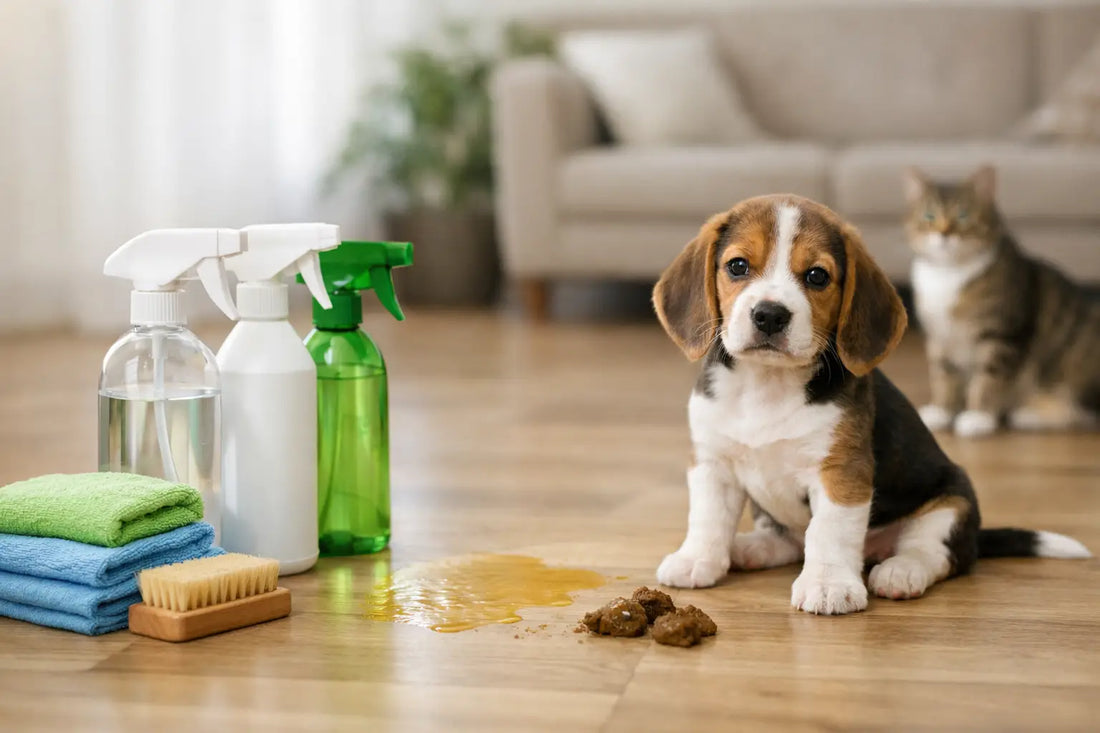
The mess usually happens fast. One minute your dog is pacing by the door or your cat is avoiding the litter box, and the next you are blotting the rug with paper towels, hoping whatever you spray next is actually safe. That is why pet safe cleaning sprays for accidents matter so much - not just for stain and odor control, but for the surfaces your pets nap on, lick, and walk across every day.
A good accident spray should do three things well. It should clean the visible mess, help neutralize the odor that draws pets back to the same spot, and leave behind as little risk as possible for sensitive paws, noses, and skin. The problem is that many cleaners only do one or two of those jobs. Some smell fresh to humans but do very little for urine proteins. Others cut through grime but rely on ingredients you may not want near a curious puppy or a cat that grooms obsessively.
What makes pet safe cleaning sprays for accidents actually safe?
"Pet-safe" is one of those labels that sounds reassuring but can mean different things depending on the formula. In practice, safety comes down to how a cleaner works, what it leaves behind, and how likely it is to irritate your pet during normal daily contact.
In most homes, the safest choice is a spray that avoids harsh ammonia, chlorine bleach, phenols, and heavy artificial fragrance. Ammonia is a poor fit for urine accidents because its smell can mimic urine and encourage repeat marking. Bleach can be useful in very limited disinfecting situations on hard, non-porous surfaces, but it is rarely the best everyday option around pets. Phenolic compounds are especially problematic for cats, whose livers process certain chemicals differently than dogs and humans do.
That does not mean every natural-looking label is automatically better. Some essential oils are heavily marketed as clean alternatives, yet certain oils can be irritating or even toxic to pets, especially cats. Tea tree, pine, wintergreen, clove, and strong citrus oils are worth extra caution. A cleaner does not need a strong botanical scent to be effective.
The best formulas tend to be straightforward. Look for sprays made for pet households, with clear ingredient transparency and surface directions. If a brand is vague about what is inside, that is a reason to keep looking.
The two main types of accident cleaners
Not every mess needs the same chemistry. This is where many pet parents end up disappointed with a spray that looked promising on the label.
Enzyme cleaners for urine, vomit, and organic messes
For most pet accidents, enzyme-based sprays are the better tool. These formulas use enzymes or helpful bacteria to break down the organic compounds that cause lingering odors. That matters because if your dog or cat can still smell the accident, even after you think the area is clean, they may return to it.
Enzyme cleaners are especially useful for urine spots on rugs, upholstery, bedding, and other absorbent surfaces. They can also help with vomit and feces, though results depend on how quickly you treat the area and how deep the mess has soaked in. The trade-off is speed. Enzyme sprays often need dwell time to work properly, so they are not always the quickest option if you expect instant results.
General pet-safe surface cleaners
If the accident is on tile, sealed floors, plastic, metal, or around a litter box exterior, a general pet-safe spray may be enough. These are better for surface-level cleanup and everyday freshening. They are often faster and easier to wipe away than enzyme products.
The downside is that general cleaners usually do not solve deep odor issues in soft materials. If your puppy had an accident on a washable dog bed, for example, a surface spray might clean the cover but still leave odor trapped in the fill if the mess seeped through.
How to choose the right spray for your home
The best cleaner depends less on marketing and more on your actual household habits. A cat owner in a small apartment with one litter issue has different needs than a dog owner managing puppy training and muddy paws in a busy family room.
Start with your surfaces. For carpets, rugs, mattresses, and upholstery, choose an enzyme spray labeled for porous materials. For hardwood, look carefully at the manufacturer directions. Too much liquid can damage wood, even if the cleaner itself is gentle. On sealed floors, a light application and quick wipe-down usually works best. On stone surfaces, some formulas are safer than others, so surface compatibility matters just as much as pet safety.
Next, think about scent level. Many people want a home that smells clean, but heavy fragrance is not the same as true odor removal. If you live with a cat, lower-fragrance options are usually a smarter choice. Cats tend to be more sensitive to strong smells, and overpowering scents can create their own stress around litter areas.
Finally, think beyond the accident itself. If your pet has allergies, skin sensitivity, asthma-like symptoms, or a habit of licking floors and fabrics, a low-residue formula is worth prioritizing. A cleaner that works beautifully in one home may still be a poor fit for a pet with sensitivities.
Ingredients and claims worth a closer look
Some label language is genuinely useful, and some of it is just there to sound reassuring. "Non-toxic" is broad and not always enough on its own. More helpful claims include whether the product is free from bleach, ammonia, and harsh solvents, whether it is made for use around dogs and cats, and whether surfaces need rinsing after application.
It also helps to be realistic about disinfecting claims. A spray designed to remove pet stains and odors is not always the same as a disinfectant. If your pet is healthy and the issue is a routine accident, cleaning and odor removal are usually the priority. If you are dealing with illness-related accidents, parasite concerns, or contamination in a veterinary recovery situation, you may need a more specific cleaning approach. In those moments, safety and sanitation have to be balanced more carefully.
How to use pet safe cleaning sprays for accidents correctly
Even an excellent cleaner can underperform if it is used too lightly or wiped up too soon. The first step is always blotting, not scrubbing. Press firmly with paper towels or a clean cloth to remove as much liquid as possible before spraying. Scrubbing too early often pushes the mess deeper into carpet fibers or upholstery.
After that, follow the dwell-time directions exactly. This is especially important with enzyme formulas. They need time to break down odor-causing material, and rushing the process can make it seem like the product failed when it really did not get a fair chance to work.
Test the spray on a hidden area first, especially on rugs, delicate fabrics, and wood finishes. Then let the area dry fully before judging results. A damp spot may still smell until the formula has completely finished working.
If the accident soaked into padding, foam, or mattress layers, one round may not be enough. That is not unusual. Deep accidents often need a repeated treatment or, in some cases, washing the item if possible.
Common mistakes that keep odors coming back
The biggest mistake is using a household cleaner that masks odor instead of removing it. If you can only smell perfume after cleanup, that does not mean your pet cannot still detect the original accident.
Another mistake is choosing products with ammonia for urine spots. For a human nose, it may smell like a strong cleaner. For a pet, it can create mixed signals.
Using too little product is another common problem, particularly on soft surfaces. If the urine reached the cushion fill or carpet pad, the cleaner needs to reach that depth too. Surface-only treatment often leaves the source behind.
And then there is timing. The sooner you treat an accident, the better the odds of full odor removal. Dried, set-in stains are harder to break down and more likely to need multiple attempts.
A cleaner home without harsh trade-offs
For modern pet homes, the goal is not just to erase a mess. It is to keep your space comfortable, calm, and genuinely safe for the animals living in it. That often means choosing products that clean effectively without turning your floors, furniture, and favorite fabrics into a cloud of harsh residue or overpowering scent.
At Petmartopia, that balance matters. Pet parents should not have to choose between a clean home and a pet-friendly one, or between practical cleanup and a space that still feels polished and inviting.
The right spray will not solve every accident on its own. Training issues, stress, litter box setup, medical changes, and age all play a role. But keeping a truly pet-safe cleaner within reach makes the next mess simpler, safer, and a lot less stressful. When the product fits both your pet and your home, cleanup feels less like damage control and more like part of a well-designed routine.