
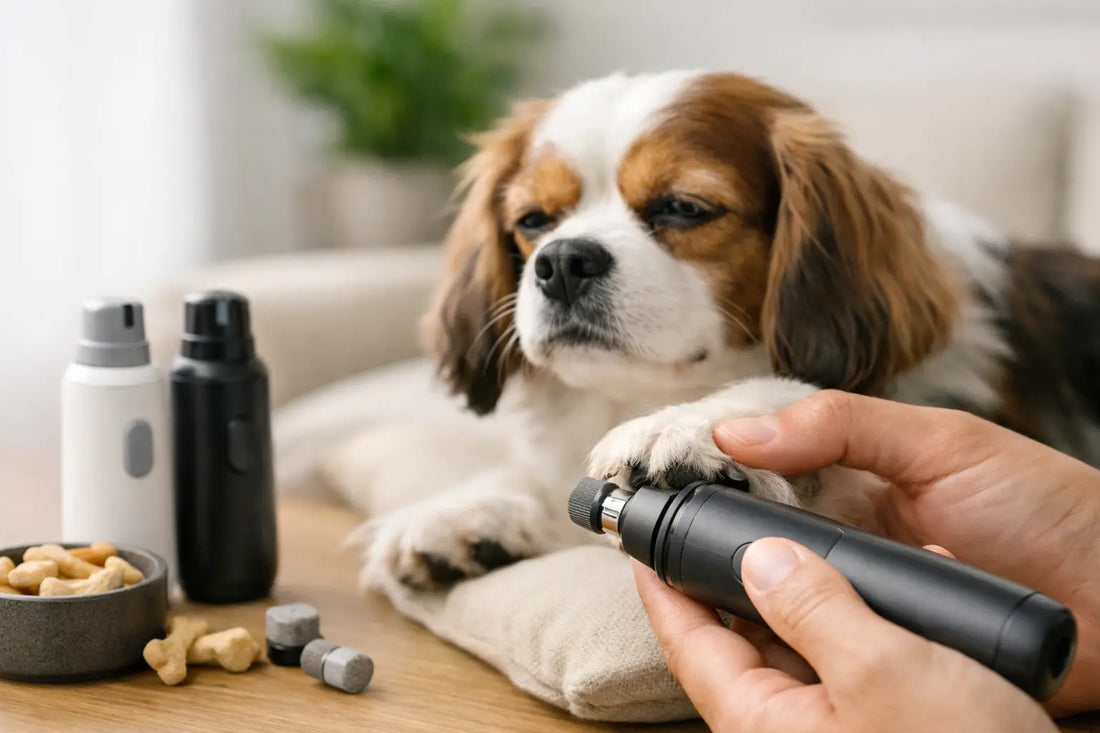
If your dog hears the grinder turn on and disappears under the table, noise is not a small detail. The best quiet dog nail grinder can turn nail care from a weekly standoff into a quick, low-stress routine that feels manageable for both of you.
Quiet matters for more than comfort. Dogs with sound sensitivity, rescue backgrounds, or little experience with grooming tools often react to the pitch and vibration before the grinder even touches the nail. In apartments and shared spaces, a lower-noise tool also makes at-home grooming easier to keep up with. That is usually the difference between trimming regularly and putting it off until nails get too long.
What actually makes the best quiet dog nail grinder
A grinder can be marketed as whisper-quiet and still feel stressful in real life. The sound itself matters, but so do vibration, motor consistency, and how the tool fits in your hand. A poorly balanced grinder may not seem loud on paper, yet the buzzing sensation can make a dog pull away fast.
The best models tend to share a few traits. They run with a steady motor instead of a high-pitched whine. They have enough power to grind smoothly without forcing you to press hard. They also feel comfortable to hold, because shaky angles and awkward grips make the process longer and noisier than it needs to be.
Safety features should be part of the quiet conversation too. A protective guard, multiple port sizes, and variable speed settings help you work in smaller, calmer passes. That means less heat, less pressure, and fewer reasons for your dog to panic.
Best quiet dog nail grinder features worth paying for
The first thing to look at is motor sound, but do not stop there. Some quiet grinders stay quiet only on the lowest setting, then become sharp and startling on higher speed. If your dog has thick nails, that trade-off matters. A genuinely useful grinder should stay relatively soft in tone while still handling medium or hard nails without bogging down.
Battery life is another quality marker. Rechargeable grinders usually feel more convenient and cleaner than battery-operated versions, especially if you groom regularly. You do not want a tool losing power halfway through a trim and forcing a second session later. USB charging is especially practical if you prefer gear that stores neatly and does not add clutter.
Dust control is often overlooked. Nail grinding creates fine debris, and some tools manage it better than others. A cleaner grind is nicer for your floors, but it also helps if your dog gets uneasy when particles kick back toward their paws. For pet parents who care about a calm routine and a tidy home, that detail is worth noticing.
Low noise is good. Low vibration is better.
Many shoppers focus on decibel claims, but dogs often respond just as strongly to vibration through the nail. A grinder with a smooth, balanced feel can be easier for sensitive dogs than one that is technically a little quieter but rattles in the hand. If your dog tolerates electric toothbrushes, clippers, or other household tools poorly, vibration control may be the deciding factor.
Speed settings change how usable a grinder feels
One-speed grinders can work for very small dogs with soft nails, but they are limiting. Variable speed gives you more control around dewclaws, dark nails, and dogs that need frequent breaks. Slower speed is helpful for introducing the tool, while higher speed can shorten the session once your dog is comfortable.
The right grinder depends on your dog
There is no single best quiet dog nail grinder for every household because coat type, size, nail thickness, and personality all affect what works. A toy breed with tiny translucent nails needs a different setup than a large breed with thick, dark nails and zero patience.
For small dogs, a lightweight grinder with a narrow port and gentle low-speed mode is usually the better choice. It gives you more precision and lowers the chance of over-filing. For medium and large dogs, power becomes more important. A grinder that stalls easily may seem gentle at first, but the longer session can create more stress than a stronger model that finishes the job quickly.
For senior dogs or dogs with arthritis, handling matters even more. You may need a grinder that works efficiently with minimal paw manipulation. Short, smooth sessions are kinder than trying to hold a stiff joint in place while a weak tool struggles through each nail.
For very anxious dogs, the quietest model is only part of the answer. The best fit is often the grinder your dog can gradually learn to tolerate. That means soft startup noise, comfortable grip, low vibration, and enough control to stop and restart without a dramatic sound burst.
When a quiet grinder is better than nail clippers
Clippers are faster for some dogs, but they are not always calmer. The pressure and sudden snip can be unsettling, especially with thick nails or dogs who have had a painful trim in the past. Grinding is slower, but it gives you more control and makes it easier to round edges instead of leaving sharp corners that scratch floors, furniture, and skin.
That said, grinding is not automatically the better choice. Some dogs hate the sound of a motor more than the brief pressure of clippers. Others do best with a combination approach, where you clip a little length first and use the grinder to smooth the finish. If your dog is already comfortable with clippers, a grinder may be more of a finishing tool than a full replacement.
How to tell if a grinder is too loud for your dog
You do not need a dramatic reaction to know the tool is not a fit. Small signs matter. If your dog licks their lips, turns their head away, stiffens when the grinder turns on, or starts resisting before the nail is touched, the noise or vibration may already be too much.
Watch what happens at each step. If your dog is calm when they see the tool but anxious when it powers on, sound is likely the trigger. If they stay calm until the grinder touches the nail, vibration or pressure may be the issue. That distinction helps you choose better. A quieter motor will not solve everything if the real problem is heat buildup or a shaky handpiece.
What a good at-home nail grinding routine looks like
The most effective routine is usually shorter than people expect. You do not need to grind every nail perfectly in one sitting. For nervous dogs, one or two nails per session is still progress. Consistency builds tolerance better than long, stressful sessions.
Start with the grinder off. Let your dog sniff it, reward calm behavior, and touch it gently to the paw without turning it on. Then turn it on across the room, reward again, and slowly close the distance over a few short sessions. Once your dog accepts the sound, keep the first real contact brief - just a second or two per nail.
Treats help, but timing matters. Reward right after calm behavior, not after a struggle. If your dog pulls away, pause before trying again. You want the grinder to predict something safe and manageable, not a wrestling match.
A few mistakes make grinders feel louder than they are
Pressing too hard creates friction and heat. Holding the nail too long in one spot makes the sensation more intense. Starting at the highest speed can spook a dog before you begin. Even your own tension shows up in the session, especially with dogs that read body language closely.
A better approach is light contact, short passes, and frequent pauses. Keep the experience predictable. Calm handling often matters as much as the product itself.
Shopping with real life in mind
If you are comparing options, ignore flashy claims and think about where and how you will actually use the grinder. In a modern home, convenience counts. A tool that stores neatly, charges easily, wipes clean, and does not sound harsh is more likely to become part of your real routine instead of getting shoved into a drawer.
It is also worth considering build quality. A pet-safe grinder built to last may cost more upfront, but cheap models often lose power, get louder over time, or feel flimsy in the hand. For something you use near paws, precision and consistency are worth paying for.
At Petmartopia, that kind of choice matters. The best products are not just functional. They make care routines easier, calmer, and better suited to everyday life with pets.
The best quiet dog nail grinder is the one that helps your dog stay relaxed enough for regular trims. Choose for sound, yes, but also for vibration, control, and fit. A calmer tool will not make every dog love nail day, but it can make the whole experience feel gentler, safer, and much easier to keep up with.