
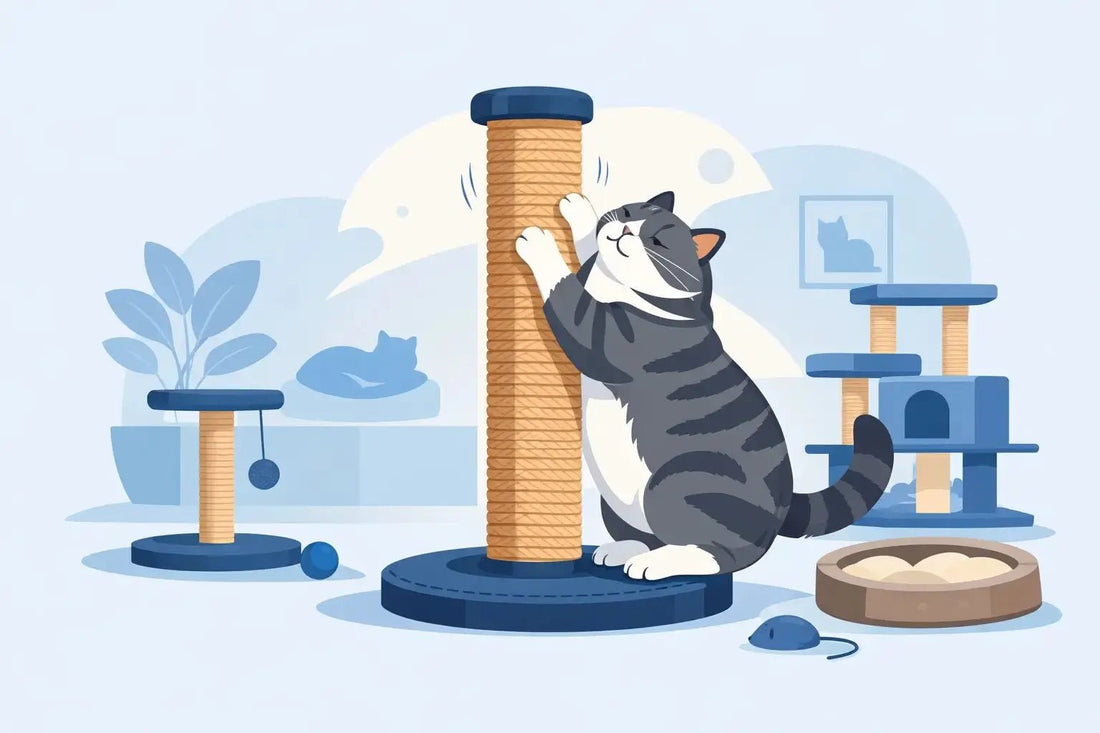
If your cat hits a scratching post and the whole thing wobbles like a bar stool with one short leg, you do not have a scratching post. You have a problem disguised as pet furniture.
Big cats scratch harder, lean heavier, and stretch longer. That changes what works. A post that is perfectly fine for a 9-pound cat can feel flimsy, too short, or downright unsafe for a 16-pound cat who likes to throw his full shoulder into every scratch session. If you are looking for the best scratching post for heavy cats, the right answer is less about cute shape or trendy color and more about structure, grip, and daily durability.
This is one of those purchases where a little more scrutiny upfront saves your sofa, your rug, and your patience.
What heavy cats actually need from a scratching post
A heavier cat does not just need a bigger version of a standard post. They need a post that stays planted while they pull downward with force, stretch to full length, and pivot without tipping the base.
That usually means the post must be tall enough for a full body stretch, thick enough to feel solid under the paws, and anchored by a base wide and heavy enough to resist movement. If the post slides, rocks, or vibrates, many cats simply stop using it. Some will keep trying, but that often turns into frustrated scratching on the couch because the couch feels steadier.
Material matters too. Most cats prefer a texture they can really dig into, with sisal rope and woven sisal leading the pack. Plush fabric may look soft, but it rarely gives cats the resistance they want. Cardboard can work for some cats, especially those who like horizontal scratching, but large cats tend to wear it down faster and can crush lighter loungers pretty quickly.
How to spot the best scratching post for heavy cats
A good post for a larger cat should feel almost overbuilt. That is a compliment.
Start with height
For most heavy cats, 32 inches is a practical minimum for a vertical scratching post, and taller is often better. A cat should be able to stand on their back legs, extend fully, and scratch without curling up or losing balance. Maine Coons, large domestic shorthairs, and chunky mixed breeds often do best with posts in the 34 to 40 inch range.
Short posts are one of the most common reasons cats ignore expensive scratchers. If your cat cannot get that full stretch, the post does not satisfy the instinct the way your upholstered armchair does.
Pay attention to base size and weight
This is where many products fail. A tall post with a tiny base is basically a physics lesson waiting to happen.
Look for a broad, heavy base that sits flat on the floor. Square and rectangular bases tend to feel more stable than small round ones, especially on hardwood or tile. If you live in an apartment with slick floors, this matters even more. Some cats will tolerate a little movement on carpet, but on hard flooring they usually want the post to stay put.
Thicker posts usually hold up better
A narrow post can technically support scratching, but larger cats often feel more secure on thicker columns. Posts around 4 inches or more in diameter tend to be better for heavy use because they offer more grip surface and less wobble.
Thin columns also wear through faster. Once sisal starts loosening, a big cat can shred the wrap in no time.
Choose scratching material your cat will actually use
Sisal rope is the safest all-around choice for heavier cats because it is durable, grippy, and satisfying. Woven sisal can look cleaner and more design-friendly in modern homes, and some cats love it just as much. The trade-off is that the quality has to be good. Cheap woven surfaces can fray early.
Carpet-covered posts are a mixed bag. Some cats like them, but carpet can confuse your cat if you are also trying to protect carpeted stairs or rugs. If your goal is to redirect scratching away from household surfaces, sisal is usually the cleaner answer.
Vertical, horizontal, or part of a cat tree?
This depends on your cat's style.
Many large cats prefer a true vertical post because it lets them stretch and mark territory at full height. But some heavy cats, especially older ones or those with joint stiffness, lean toward horizontal scratchers or angled scratch ramps. If your cat scratches rugs, mats, or the side of the sofa near the floor, a horizontal option may need to be part of your setup.
Cat trees can work well too, but only if the scratching areas are substantial. A lot of cat towers include one or two skinny wrapped poles and call it a day. For a heavy cat, that is rarely enough. If you choose a tree, make sure the scratching posts are tall, thick, and built into a stable frame. Bonus points if the tree also has large platforms and reinforced joints.
For many homes, the best solution is not one scratcher but two: a sturdy vertical post in a main living area and a horizontal scratcher where your cat already likes to dig in.
Red flags to avoid
Some products look polished online but fail fast in real life. If you are shopping for the best scratching post for heavy cats, watch for a few common weak points.
Lightweight bases are the biggest issue. A post can have great reviews from average cat owners and still be a poor fit for a big cat. Vague sizing is another warning sign. If product details do not clearly list base dimensions, total height, and materials, it is harder to judge whether the post is truly built to last.
Be careful with overly plush designs that prioritize appearance over function. Soft coverings around the base can look nice in photos, but if the actual scratching surface is small or the frame underneath is light, your cat will feel that immediately.
And if assembly hardware seems minimal, that can be a sign of future wobble. Heavy cats put repeated stress on joints and screws. You want tight construction, not decorative furniture pretending to be cat gear.
What works best in modern homes
A lot of pet parents want a scratching post that does not dominate the room or clash with everything else. Fair enough. The good news is you do not have to choose between function and aesthetics.
The best modern scratching posts for larger cats usually stick to neutral tones, cleaner silhouettes, and natural materials like sisal and wood-look finishes. Those details matter because scratching posts tend to live in visible spots - near sofas, windows, or entry points where cats naturally mark territory.
That said, design should follow stability. A sleek post with a narrow footprint may look better for a week, right up until your cat tips it over and goes back to clawing the sectional. The sweet spot is a post that blends into your home while still feeling solid, pet-safe, and built for everyday use. That is exactly the kind of balance pet parents tend to look for at curated shops like Petmartopia, where the goal is comfort for your cat without turning your living room into a pet aisle.
How to get your heavy cat to actually use it
Even the best post can be ignored if placement is off.
Put the scratching post where your cat already wants to scratch, not where you wish pet furniture would disappear. For most cats, that means near a sofa corner, a favorite nap spot, or a room transition area. Cats scratch to stretch, but they also scratch to mark territory. A post hidden in the laundry room is usually a missed opportunity.
If your cat is used to scratching furniture, place the post directly in front of the problem area at first. Yes, it may be visually annoying for a bit. It is still easier than replacing upholstery. Once your cat is using the post consistently, you can shift it a little if needed.
Catnip or silvervine can help, and so can interactive play around the post. Drag a wand toy up the side to encourage reaching and grabbing. Then let the cat discover the texture on their own. Praise helps too, especially with younger cats, but the main win is making the post feel stable and satisfying from the first touch.
It depends on your cat's body and habits
There is no single winner for every large cat because size is only part of the story. A 15-pound athletic cat who loves to climb may do best with a heavy-duty cat tree that includes extra-tall sisal columns. A stockier senior cat may prefer a lower angled scratcher and one sturdy vertical post nearby. A multi-cat home needs more scratching territory than a one-cat apartment, especially if one cat tends to claim the best spots.
That is why the best scratching post for heavy cats is really the one that matches your cat's scratching style, your home's layout, and your tolerance for visible pet furniture. But some standards do not change: taller is better, heavier is better, and sturdier is always better.
If you are choosing between a cheaper post you may need to replace soon and a more durable one that actually stays upright, the second option usually saves money and frustration. More importantly, it gives your cat a safer, more satisfying place to do what cats are wired to do.
A good scratching post should disappear into daily life in the best way. Your cat uses it constantly, your furniture gets a break, and your home still feels like home.