
Your dog flinches the moment you reach for the nail tools. Your cat bolts from the room. Nail time has become a two-person, full-restraint operation — and it doesn't have to be.
The real question most pet parents face isn't whether to trim nails. It's which tool causes the least stress for an anxious pet — and which one you can actually use confidently, without fear of hitting the quick.
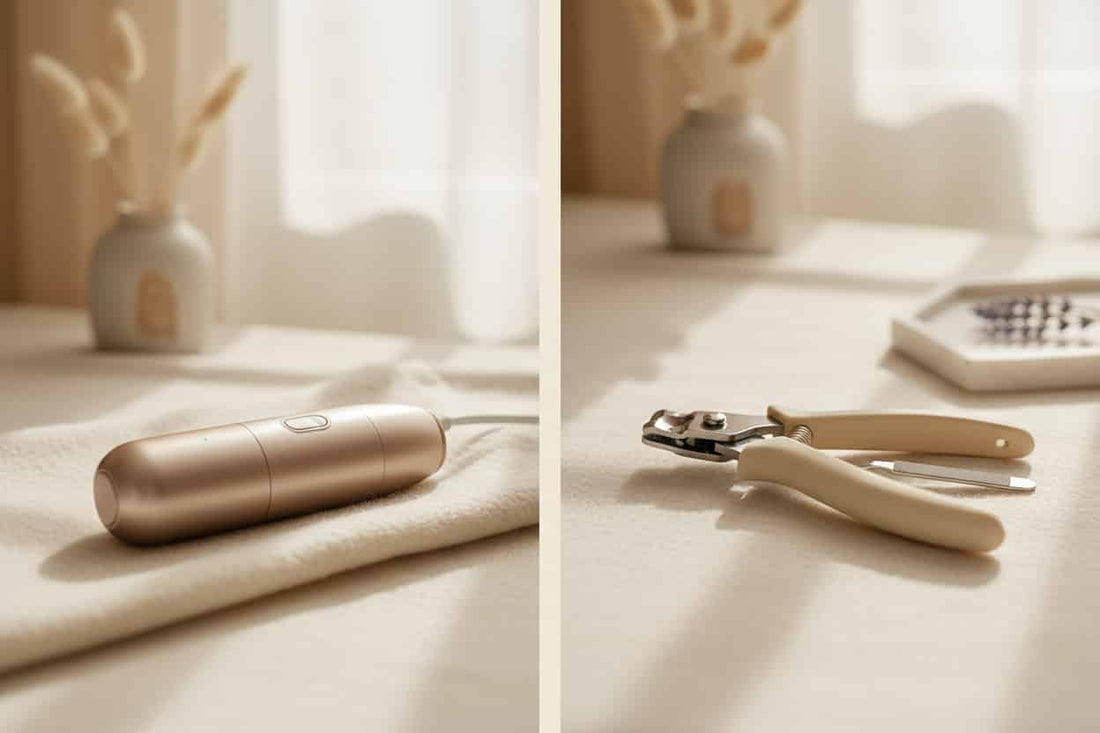
This guide compares two approaches: a dedicated electric nail grinder (gradual, quiet, smooth) versus a clipper-grinder combo (fast, precise, all-in-one). Both tools in Petmartopia's lineup are designed specifically for low-stress grooming. The right choice comes down to your pet's temperament, nail thickness, and your own comfort level.
Quick Comparison: Grinder vs. Clipper-Grinder Combo
| Feature | Electric Nail Grinder Pet Nail Grinder – Quiet Electric |
Clipper + Grinder Combo Pet Nail Clipper with File |
|---|---|---|
| Method | Gradual filing/sanding only | Clip first, then smooth edges |
| Speed | Slower — best for anxious pets | Faster — clip + smooth in one session |
| Quick risk | Very low — gradual removal | Low — sharp blade cuts cleanly in one motion |
| Noise level | Near-silent motor | Quiet motor |
| Vibration | Minimal — LED-lit for precision | Minimal |
| Best for | Highly anxious pets, first-timers, dark nails | Efficient sessions, all nail thicknesses |
| Works on | Dogs, cats, all sizes | Dogs, cats, all sizes (kittens to large breeds) |
| Price | $25.99 | $35.99 |
| Shipping | Free US shipping | Free US shipping |
The Case for an Electric Nail Grinder
A nail grinder works by gradually sanding the nail down — no sudden snap, no pressure, no risk of splitting. For dogs and cats that have had a bad clipping experience in the past, this is often the gentler reintroduction to nail care.
Petmartopia's Pet Nail Grinder – Quiet Electric Dog & Cat Nail Trimmer ($25.99) is built specifically around low-anxiety grooming:
- LED quick-finder light — illuminates the nail from behind so you can clearly see the pink quick on both light and dark nails, eliminating guesswork entirely
- Safety guard included — prevents accidental over-grinding, especially helpful for pet parents new to nail care
- Near-silent motor — the vibration and sound profile is far below traditional grinders, which is critical for noise-sensitive dogs and cats
- Works on all sizes — kitten nails through large dog claws, 16 × 4 cm form factor fits comfortably in one hand
The downside: Grinding takes longer per nail than clipping. A full session on a large dog might take 15–20 minutes. If your pet has a short patience window, this can work against you — though many owners report that the quiet, non-jarring motion actually helps pets stay calmer for longer.
Best for: Pets with clipping trauma, very dark nails where the quick is invisible, first-time home groomers, kittens being introduced to nail care.
The Case for a Clipper-Grinder Combo
Traditional nail clippers cut fast — but they leave a sharp, ragged edge that can catch on fabric, scratch skin, and split further if the nail is thick or brittle. A separate smoothing step is almost always needed. Most pet parents end up buying two tools and doing two separate sessions.
Petmartopia's Pet Nail Clipper with File – Professional Dog & Cat Nail Cutter & Grinder ($35.99) solves this by combining both steps in one electric tool:
- Sharp precision blade — cuts cleanly in a single motion without crushing or splintering, which is the primary cause of quick injury with dull clippers
- Built-in grinder — smooths sharp edges immediately after clipping, in the same session, without repositioning your pet
- Quiet motor — low-noise operation keeps anxious pets calm throughout the clip-and-smooth process
- All nail thicknesses — from thin kitten nails to thick, overgrown large-breed claws
The downside: The initial clip action — even with a perfectly sharp blade — produces a brief, decisive snap. Pets that are highly sensitive to sudden sounds or sensations may react to this. For these animals, a grinder-only approach may be the better starting point.
Best for: Pet parents who want to complete nail care efficiently, pets that have used clippers before and tolerate them, dogs with thick nails that a grinder alone would take too long to reduce.
What About Anxious Pets Specifically?
This is the question that matters most. "Anxious" covers a wide range of behaviors:
If your pet is noise-sensitive (reacts to buzzing, humming, or electric sounds): Start with the grinder. Its near-silent motor is the lowest-stimulus option available. Introduce it running but not touching the nail first — let your pet sniff and acclimate over several short sessions before actually grinding.
If your pet reacts to pressure and restraint (pulls paws away, goes stiff): The grinder's gradual approach requires less sustained contact per nail than clipping. The LED light also means you can work faster and more confidently — less hesitation means less time holding the paw.
If your pet is fine with sound but has had painful clips before (quick was nicked, nail split): The clipper-grinder combo with its precision blade is actually the safer choice here. A sharp, clean cut hurts far less and is far less likely to hit the quick than a dull clipper that compresses the nail before cutting.
If your pet has never had nails done at home before: Start with the grinder. The learning curve is gentler — for you and your pet.
The LED Quick-Finder: A Game Changer for Dark Nails
The biggest fear in home nail trimming isn't the pet's reaction — it's hitting the quick. The quick is the blood vessel and nerve running through the nail. On light-colored nails, it's visible as a pink line. On dark or black nails, it's completely hidden.
The Pet Nail Grinder's built-in LED light illuminates the nail from behind, making the quick visible even through dark pigmentation. This single feature removes the primary source of anxiety for the pet parent — which in turn makes the session calmer for the pet, because anxious handlers create anxious animals.
Neither standard clippers nor most clipper combos include this feature. If your dog or cat has dark nails and you've been guessing where to stop, the grinder is the clear recommendation.
Speed vs. Gentleness: Choosing Your Priority
These two tools represent a genuine tradeoff, not a clear winner:
If minimizing stress per session is the priority — especially for pets that have trauma around nail time — the grinder's slow, quiet, gradual approach gives you the most control and the lowest chance of a negative reaction.
If completing the session efficiently is the priority — because your pet runs out of patience quickly, or you're grooming a larger dog — the clipper-grinder combo gets the job done faster while still finishing with smooth, safe edges.
Many pet parents end up owning both: using the grinder for maintenance and touch-ups, and the combo for full trim sessions when a faster approach is needed.
Frequently Asked Questions
Is a nail grinder safer than clippers for anxious dogs?
For most anxious dogs, yes — especially noise-sensitive ones. A grinder removes nail gradually with minimal sound and no sudden pressure snap, which are the two main triggers for clipper anxiety. The trade-off is session length: grinding takes longer per nail than clipping.
Can I use an electric nail grinder on cats?
Yes. Both tools in this comparison are designed for dogs and cats of all sizes. Cat nails are thinner and grind faster than dog nails. The key is introducing the running grinder gradually over a few sessions before touching it to the nail — cats are more sensitive to vibration near their paws than most dogs.
How do I find the quick on dark-colored dog nails?
On dark nails, the quick isn't visible from the outside. The LED light on Petmartopia's electric nail grinder illuminates the nail from behind, making the quick visible as a darker shadow within the nail. Alternatively, trim in small increments and stop when you see a small dark dot appear at the center of the cut nail surface — that dot indicates you're approaching the quick.
What happens if I hit the quick?
The nail will bleed and your pet will pull away sharply. Apply styptic powder (or corn starch in a pinch) directly to the tip to stop bleeding within 30–60 seconds. Keep your pet calm. The wound itself heals quickly, but the experience can create lasting anxiety around nail time — which is why avoiding the quick matters for long-term home grooming success.
How often should I trim my dog or cat's nails?
Every 3–4 weeks for most dogs. Cats who use a scratching post may need less frequent trimming — once a month is typical. A useful indicator: if you can hear nails clicking on hard floors, they're overdue. Regular sessions also mean less nail to remove each time, which makes grinding faster and clipping safer.
Which tool is better for large dogs with thick nails?
The clipper-grinder combo is generally faster and more practical for thick nails. Large breeds like Labradors or German Shepherds can have nails that take significant grinding time. Clipping removes bulk quickly, and the built-in grinder then smooths the edge — a combination that covers the same ground in a fraction of the time.
The Verdict
Choose the Electric Nail Grinder ($25.99) if: Your pet is noise-sensitive or has clipper trauma, you're doing this for the first time, or your dog or cat has dark nails where the quick is hard to see. The LED light and near-silent motor make this the lowest-anxiety option available.
Choose the Clipper-Grinder Combo ($35.99) if: Your pet tolerates nail sessions reasonably well and you want to finish faster, or your dog has thick nails that would take too long to grind alone. The sharp precision blade means a cleaner, safer cut than most traditional clippers — and the built-in smoother finishes the job without a second tool.
Both ship free within the US and come with Petmartopia's 30-day comfort guarantee. If the tool you choose doesn't work for your pet's temperament, you're not stuck with it.