
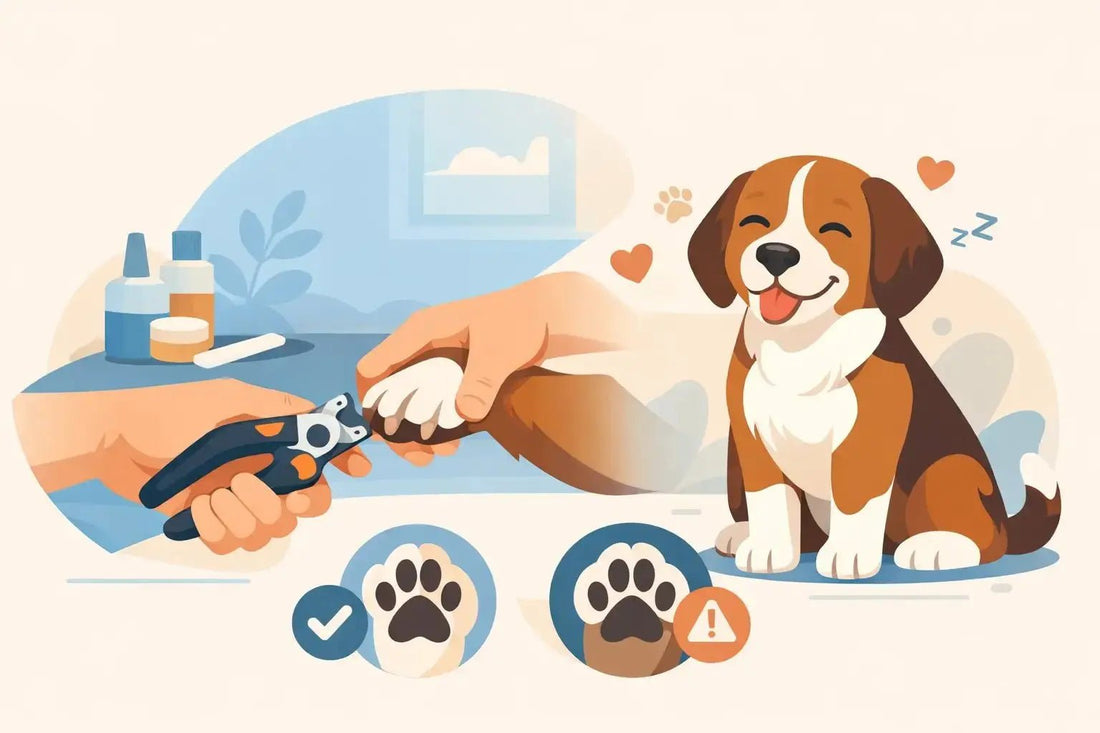
That sharp click on your floors is usually the first sign you waited a little too long. If you are wondering how to trim dog nails without stress, the good news is that it usually has less to do with bravery and more to do with setup. A calm dog, the right tool, good lighting, and a slower pace can turn nail trims from a wrestling match into a manageable home routine.
For many dogs, nail trimming is not really about the nails. It is about restraint, strange pressure on the paws, and a pet parent who is already tense before the first clip. Dogs read that energy fast. If you approach the job like something unpleasant that must be rushed through, your dog often responds in kind. If you build a routine that feels predictable and safe, most dogs improve.
Why nail trims feel so hard
Paws are sensitive. Some dogs dislike having their feet handled because they are ticklish, cautious, or simply not used to it. Others have had one bad experience, usually a quicked nail that bled, and now they brace for the same thing every time.
Breed, coat type, and lifestyle can also change the picture. Active dogs that walk on pavement may naturally wear nails down more than apartment dogs that spend most of their time indoors. Black nails are harder to trim because the quick is harder to see. Senior dogs may be less patient about standing, while puppies often have no patience at all but can learn quickly if the process stays gentle.
That is the trade-off with home grooming. It is convenient, more affordable over time, and easier to fold into everyday life, but it asks for a little skill and a lot of consistency.
The tools that make trimming easier
The best tool is the one you can use confidently and your dog tolerates well. For some pet parents, that is a standard nail clipper. For others, a nail grinder feels safer because it removes small amounts gradually.
Scissor-style clippers often work well for medium and large dogs because they give better leverage. Guillotine clippers can work for smaller nails, but some people find them awkward to position. Grinders are useful for smoothing rough edges and for dogs with dark nails, since you can shorten them little by little.
You do not need a complicated setup, but a few details help a lot: bright lighting, treats your dog genuinely loves, and styptic powder within reach in case you nick the quick. A non-slip mat or washable dog bed can help your dog feel more secure, especially on slick floors. Comfort matters. A stable surface can do as much for cooperation as the grooming tool itself.
How to trim dog nails without stress: start before you clip
The biggest mistake is bringing out the clippers only when nails are already long. If your dog only sees the tool right before an unpleasant experience, the tool becomes the warning sign.
Instead, separate preparation from trimming. Leave the clippers or grinder nearby during calm moments. Let your dog sniff them, then reward. Touch a paw, reward. Hold a paw for one second, reward. Tap the clipper gently against one nail without cutting, reward. This sounds slow, but it is usually faster than forcing a full trim on a nervous dog and making next time worse.
If your dog is especially worried, spend a few days on handling alone. Rub shoulders, legs, and paws while your dog relaxes next to you. Press lightly on each toe so the nail extends, then release. The goal is not obedience for its own sake. It is teaching your dog that paw handling does not automatically lead to stress.
The safest trimming technique
Pick a time when your dog is naturally calm, not when they are wound up from guests, hungry, or halfway through the evening zoomies. After a walk can be a good window because the edge is off.
Hold the paw gently but securely. You do not want a death grip, but you do need enough control that a sudden jerk will not send the clipper too far. Isolate one nail, look for the curve, and trim only the tip. With light-colored nails, avoid the pink quick. With black nails, take tiny amounts and check the center of the cut edge as you go. When you start seeing a pale or darker oval in the middle, stop. That usually means you are getting close to the quick.
If you are using a grinder, use short passes rather than holding it on one nail too long. Friction builds heat, and heat is uncomfortable. It also helps to trim a little fur away from around the paw if long hair keeps catching.
You do not need to finish every nail in one sitting. That is one of the most freeing mindset shifts for stressed pet parents. One paw today and the rest tomorrow still counts as success.
What if you cut the quick?
It happens, even to experienced people. If you nick the quick, stay calm. Apply styptic powder or a clotting product, add gentle pressure, and give your dog a break. The bigger issue is often emotional, not medical. If you panic, your dog learns that this really was a terrible event. If you stay matter-of-fact and kind, recovery is easier.
Afterward, do not try to win back lost time by pushing through every remaining nail. End on a calmer note and restart another day.
When a grinder is better than clippers
A grinder can be a smart choice for dogs who hate the pressure of clipping or for pet parents who feel nervous about taking off too much at once. It is especially useful for smoothing thick nails and gradually shortening overgrown ones.
That said, some dogs dislike the sound or vibration. If that is your dog, clippers may still be the easier path. It depends on what triggers the reaction. Pressure-sensitive dogs often prefer grinding. Noise-sensitive dogs often do not.
A blended approach works well for many households: clip the tip, then smooth with a grinder. That gives speed without sacrificing control.
If your dog fights every step
When a dog pulls away, stiffens, or mouths at your hand, the answer is rarely to hold tighter and move faster. That can get the trim done once, but it usually guarantees a harder time next round.
Scale the task down. Ask for one paw touch. Then one nail handled. Then one nail trimmed. Reward after each success with a high-value treat. Short sessions build trust better than marathon sessions.
Position matters too. Some dogs do better sitting beside you rather than facing you. Others relax more while lying on their side, and some are best handled by one person feeding treats while the other trims. Small dogs can feel safer in a lap if the hold is gentle and steady. Larger dogs often prefer staying on the floor.
If your dog shows extreme fear, cries before you even touch a paw, or has a history of panic, it may be worth asking your veterinarian or a qualified groomer for help. There is no prize for doing everything yourself if your dog is miserable. Sometimes the least stressful option is professional support, at least until you build better associations at home.
How often should you trim?
For most dogs, every three to four weeks is a reasonable starting point, but there is no perfect calendar that fits every dog. The right timing depends on how quickly the nails grow and how much natural wear they get.
A simple rule is this: if you hear nails tapping on hard floors, it is probably time. Long nails can affect posture and traction, which is not just a grooming issue. It can change how your dog walks and puts pressure on the joints.
Frequent small trims are usually easier than infrequent big ones. They are less stressful, safer, and helpful if you are trying to encourage the quick to recede in overgrown nails.
Creating a routine your dog can live with
The lowest-stress nail routine is the one that fits real life. That might mean trimming two nails every Sunday night after a walk. It might mean using a grinder while your dog works through a lick mat. It might mean keeping grooming tools stored neatly in one easy-to-reach place so you do not turn the whole house upside down before each session.
A well-designed routine matters because dogs notice patterns. When the environment is calm, the handling is gentle, and the rewards are consistent, grooming becomes less of an event. It just becomes part of care, like brushing or washing a water bowl.
If you want a setup that feels easier to maintain, Petmartopia focuses on pet-safe essentials that work well in modern homes, including grooming basics that do not feel like an eyesore left on the counter. That kind of convenience sounds small, but small friction is often what breaks good habits.
Nail trims may never be your dog’s favorite activity, and that is fine. The goal is not perfection. It is a calm, safe routine that keeps your dog comfortable and makes the next trim easier than the last.