
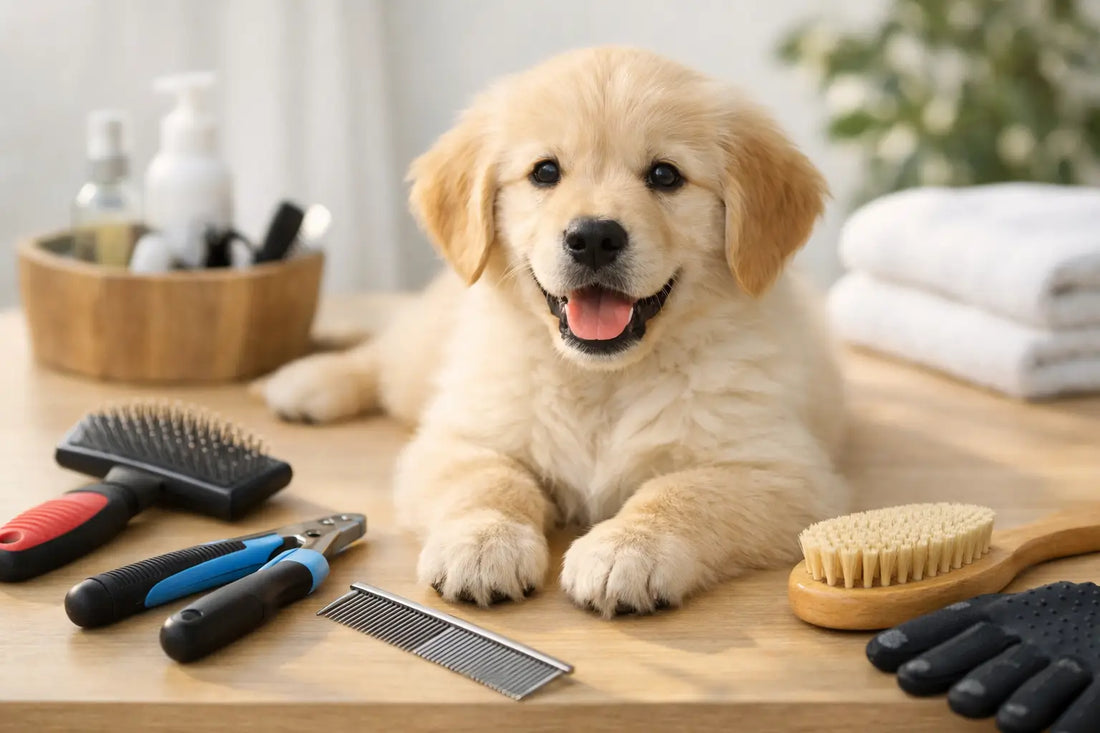
That first squirmy bath usually tells you everything: puppies do not arrive knowing how to cooperate with grooming. A good guide to puppy grooming tools is less about buying every gadget on the shelf and more about choosing a few safe, well-made essentials that help your pup feel calm, clean, and comfortable from the start.
Puppy grooming is also where pet care meets real life. You want tools that are gentle on growing skin, easy to clean, and not so bulky or unattractive that they end up hidden in a closet. The right setup makes routine care easier on your dog and much easier on your home.
What puppies actually need from grooming tools
A puppy's coat, skin, and nails are still developing, so grooming tools should prioritize softness, control, and predictability. The goal is not a showroom finish. It is building positive habits while handling shedding, dirt, loose fur, and quick nail growth before they become stressful problems.
That is why the best puppy tools usually look a little simpler than adult grooming kits. You are not chasing heavy deshedding performance or advanced trimming. You are looking for gentle contact, quiet operation, and handles that let you work quickly without wrestling your puppy.
Breed and coat type matter, but so does temperament. A fluffy doodle puppy may need daily brushing practice, while a short-haired beagle puppy may only need light weekly maintenance. A nervous puppy often does better with fewer tools and shorter sessions. If your puppy panics at vibration or sound, skip anything motorized for now.
The core guide to puppy grooming tools
If you are building a starter kit, begin with the basics you will use often. Most puppies do not need a large collection. They need the right collection.
A soft slicker brush
For many puppies, a soft slicker brush is the most useful first purchase. It helps remove loose fur, smooth the coat, and gently work through tiny tangles before they turn into mats. The key word is soft. Pins that are too stiff can scrape delicate skin and make your puppy hate brushing fast.
This brush is especially helpful for medium and long coats, but even some short-coated puppies benefit from a few light passes to remove debris and dander. Look for a brush head that is small enough for a puppy's body. Oversized grooming tools can feel clumsy and overstimulating.
A comb with wide and fine teeth
A comb does a different job than a brush. It checks your work. After brushing, run a comb through the ears, legs, chest, and tail where knots like to hide. A comb with both wide and fine spacing gives you flexibility without needing multiple tools.
For puppies with curly, wavy, or silky coats, this matters. A brush can glide over the top while small tangles stay close to the skin. A comb helps you catch them early when they are still easy to remove.
A puppy-safe nail trimmer or grinder
Nail care is where many pet parents hesitate, but starting early pays off. Puppies have tiny nails and tiny paws, so control matters more than speed. Scissor-style trimmers often work well for very small puppies, while compact clipper-style trimmers can suit medium and large breeds.
Grinders can create a smoother edge, but they are not automatically the better choice. Some puppies tolerate the sound and vibration just fine. Others find it alarming. If you choose a grinder, use short introductions first and reward heavily. If you choose clippers, sharp blades are essential. Dull trimmers crush instead of cut.
A gentle puppy shampoo
Technically this is not a tool, but it belongs in any realistic guide to puppy grooming tools because it shapes the whole grooming experience. A puppy shampoo should be mild, easy to rinse, and free from harsh ingredients or heavy fragrance. Puppies do not need frequent baths, so when bath day happens, the formula should cleanse without drying the skin.
A good bath setup also includes a small cup or sprayer for controlled rinsing and a non-slip mat. Those simple additions can make bath time feel much safer.
Absorbent towels and a low-noise dryer
You do not always need a dryer, but you do need a plan for drying. Thick, absorbent towels are often enough for short-coated puppies. For longer coats, a low-noise dryer designed for pets can help prevent dampness from lingering close to the skin.
Human hair dryers can run too hot and too loud, so they are not always ideal. If you use one, keep it on a cool or low setting and never aim it too close to the face. Heat control matters more than drying speed.
Ear and eye grooming basics
Some puppies need regular wiping around the eyes, especially light-coated breeds prone to tear staining. Others need occasional ear cleaning, particularly floppy-eared puppies who trap moisture more easily. Here, less is more. Use soft grooming wipes or a vet-approved cleaner when needed, not as a daily ritual unless your veterinarian recommends it.
Avoid cotton swabs inside the ear canal. A soft pad or cloth on the outer ear area is the safer move for home care.
How to choose tools that are actually puppy-friendly
Good grooming tools should feel gentle in your hand before they ever touch your dog. Lightweight construction, rounded edges, easy-grip handles, and simple cleanup all matter. If a brush is hard for you to maneuver, it will be hard to use confidently on a moving puppy.
Material quality matters too. Pet-safe construction is not just a marketing phrase. Cheap plastic can crack, metal edges can roughen over time, and poorly made moving parts can pinch fur. Durable, easy-clean tools tend to be the better value because you will use them often and rely on them during a stage when consistency matters most.
There is also a real home-living factor here. Grooming gear that stores neatly and cleans quickly is more likely to stay in your routine. That sounds small, but it makes a difference. A puppy brush that lives in a drawer near the leash gets used. A messy grooming kit shoved in the laundry room usually does not.
Matching the tool to the coat
Short coats are the simplest. A soft brush, grooming mitt, nail trimmer, and puppy shampoo are often enough. You are mostly maintaining skin health and removing loose fur.
Medium and long coats need more brushing support. A slicker brush plus a comb is usually the minimum. These coats can mat surprisingly fast, especially around the collar area, behind the ears, and in the armpits.
Curly and doodle-type coats need the most consistency. These puppies often look low-maintenance when they are very young because the coat is still soft and fluffy. Then the adult texture starts coming in, and matting becomes much easier. If that is your puppy's coat type, choose tools that help you line brush gently and check thoroughly with a comb.
Double coats are a little different. You want regular brushing, but you do not want aggressive tools that strip too much or irritate the skin. Gentle, routine maintenance works better than occasional heavy sessions.
What not to buy right away
It is easy to overbuy when you bring home a puppy. Full professional clipper sets, strong deshedding blades, stripping knives, and specialized finishing sprays can wait. Most puppies do not need them, and some are simply too intense for early handling practice.
The same goes for trendy multi-piece kits loaded with low-quality extras. A few reliable tools are usually better than ten mediocre ones. If your puppy eventually needs breed-specific grooming, you can add to your setup later based on coat development and how your dog tolerates the process.
Making grooming easier from day one
The best tools still depend on technique. Keep sessions short, especially at first. Let your puppy sniff the brush before using it. Touch the body with the back of the brush, offer a treat, then do a few gentle strokes and stop. That pace may feel slow, but it teaches your puppy that grooming is predictable.
Handle paws, ears, tail, and muzzle between full grooming sessions so your puppy gets used to being touched. This makes future nail trims and brushing much easier. Try grooming after a walk or play session when your puppy is naturally calmer.
If you hit a snag, do not force it. Mats, severe fear, and persistent skin irritation are situations where professional grooming or veterinary advice may be the smarter move. Home grooming should support comfort, not turn into a weekly struggle.
Building a kit that lasts beyond puppyhood
Some tools are truly starter tools, while others can stay with you for years. A quality comb, well-made slicker brush, absorbent towels, and a reliable nail trimmer often carry over into adolescence and adulthood. That makes it worth choosing pieces that feel durable, safe, and easy to live with.
For many modern pet parents, that also means selecting tools that fit the way your home works. Clean design, pet-safe materials, and simple storage are not luxuries. They help grooming stay part of everyday care instead of becoming a dreaded project.
A puppy does not need a salon cart full of supplies. They need calm handling, a few well-chosen tools, and a routine that respects both their comfort and your space. Start there, and grooming becomes less of a chore and more of a quiet habit that helps your dog feel at home in your hands.