
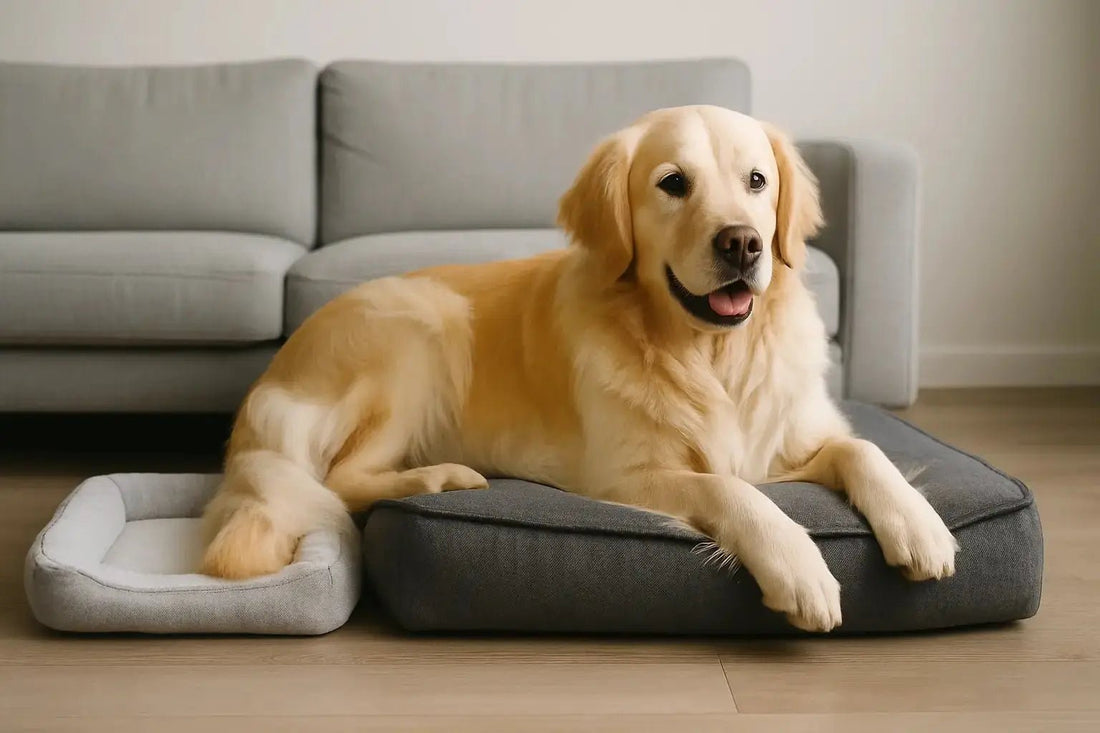
Your dog can look perfectly “fine” on a too-small bed - until you notice the nightly shuffle: paws hanging off the edge, hips pressed to the floor, or that constant circling to find a spot that doesn’t exist. A well-sized bed fixes more than comfort. It can reduce pressure on joints, improve sleep quality, and keep your home looking pulled together because the bed becomes a stable, intentional spot instead of a crumpled blanket drifting around the room.
This is the practical way to get sizing right the first time, with the few trade-offs that actually matter.
How to choose a dog bed size (start with one real measurement)
The most reliable measurement is your dog’s “sleeping length,” not their standing height or their breed label.Wait until your dog is fully asleep in their most common position. Then measure from the tip of the nose to the base of the tail. If your dog sleeps stretched out, this number is usually very close to the bed length you need. If your dog sleeps curled, it will be shorter - and that’s where style and preference come in.
Now add buffer space. For most dogs, adding 4-8 inches gives them room to shift positions without sliding off the edge. Use the smaller buffer for curlers who like a snug nest and the larger buffer for sprawlers, long-legged dogs, and anyone who tends to “sleep big.”
If you’re between sizes, it often makes sense to size up. The exception is a dog who specifically seeks tight spaces or bolsters to feel secure. Bigger is not automatically better if the bed style doesn’t support their comfort needs.
The part most people miss: measure your dog, not the label
Breed-based sizing charts can be a decent starting point, but dogs vary wildly in build. A lean 55-pound dog and a stocky 55-pound dog do not fit the same way. Weight also doesn’t reflect length - and length is what determines whether your dog can fully relax.If you want one quick cross-check after measuring: compare your dog’s sleeping length (plus buffer) to the interior sleep surface of the bed. The interior dimension is what your dog actually lies on. Bolsters, raised edges, and thick seams can shrink usable space more than you’d expect.
That “interior vs. exterior” detail matters for modern, structured beds that look great in a living room but have defined walls. They’re beautiful and supportive, but the sleep surface can be several inches smaller than the overall footprint.
Match the size to how your dog sleeps
A dog bed that’s technically large enough can still be the wrong fit if it doesn’t match your dog’s instincts.Curlers and nesters
If your dog tucks their nose into their tail, a slightly smaller sleep surface can feel comforting - as long as it doesn’t force a tight bend at the spine. Look for enough space for a relaxed curl, not a cramped one.Bolsters help here. They give your dog a “wall” to lean against, and that can make the bed feel secure even when it’s not oversized. Just remember: bolsters reduce interior space, so consider sizing up if the sides are tall or thick.
Sprawlers and “one paw on everything” sleepers
For dogs who sleep on their side with legs extended (or on their back like they pay the rent), prioritize length and width. They need room to fully extend without pressing joints into the floor.A good rule is to make sure the bed’s interior length meets or slightly exceeds their sleeping length plus buffer. If your dog routinely sprawls diagonally, width matters as much as length.
Leaners, head-resters, and edge-huggers
Some dogs like to sleep with their back against something or their head elevated. A bed can be the right size and still feel “wrong” if it doesn’t provide a stable edge.If your dog often uses your couch arm or a rolled blanket as a pillow, choose a bed size that leaves room for their body even after you account for a bolster. If the bolster steals too much space, your dog may end up half-on, half-off.
Consider age and mobility before you finalize sizing
Size isn’t just about fitting a body - it’s about how your dog gets in and out, turns around, and settles.Puppies
Puppies grow fast, and sizing up can feel economical. The trade-off is that a big, open bed can feel less secure for a small puppy, and some pups are more likely to chew or dig at extra material. If you size up for growth, choose a style that still offers structure (like a supportive edge) or add a washable insert to reduce the “empty space” effect.Seniors and dogs with joint sensitivity
Older dogs often benefit from more space than you’d think, because they reposition more carefully and can’t always tuck into a tight curl. A bed that’s too small can force awkward angles at the hips and shoulders.Also consider height. A super-thick mattress is great for cushioning, but if it’s tall and soft at the edges, some dogs struggle to step up or may slide off. For seniors, look for a stable surface and a size that lets them stretch out without needing to constantly adjust.
Dogs recovering from injury
If your dog is healing, the “right” bed is often the one that supports a consistent, neutral position. That typically means enough length for full-body support and enough width to avoid rolling into a bolster if they shouldn’t. If you’re unsure, ask your vet what sleep posture is recommended during recovery.Don’t forget your space: bed size has to work in your home
A dog bed can be premium and pet-safe, but if it blocks a walkway or constantly gets shoved into a corner, it won’t stay clean or inviting. Measure your intended spot first.Think about how the bed will sit next to your furniture. In a modern living room, a bed that’s slightly oversized can look intentional if it’s aligned with a sofa edge or tucked neatly under a console. But if you have to wedge it at an angle, your dog will feel that instability, and you’ll see it in how often they abandon the bed.
If you live in an apartment or have an open-plan layout, a well-proportioned bed can act like a “home base” zone. That’s especially helpful for dogs who get anxious or follow you room to room. The right size becomes a clear, consistent resting place without taking over your aesthetic.
Style changes the usable size (and the feel)
Two beds with the same listed size can feel completely different depending on the design.Bolster beds
Great for dogs who like boundaries. Just remember to check interior dimensions, because bolsters reduce the sleep surface. If your dog is long or broad-chested, you may need to size up to keep the interior roomy.Flat mattress pads
These maximize usable space, so you can often choose the smaller of two sizes if your dog is a curler. For sprawlers, you still may want extra width. Flat beds are also easier to fit into crates or under desks.Donut or nest beds
They feel cozy, but they can run small inside. If your dog is between sizes, go up. Also consider coat type: dogs with thicker coats may overheat in very plush, high-walled nests.Orthopedic and memory foam styles
Supportive foam is a comfort upgrade, especially for large breeds and seniors. Sizing matters here because supportive foam helps most when the whole body is on the mattress, not half on the floor. Make sure the interior sleep surface is long enough for full-body contact.A simple sizing cheat that stays honest
If you want a quick decision framework that doesn’t rely on breed stereotypes, use this:Measure your dog asleep, add 4-8 inches, then confirm that number fits within the bed’s interior dimensions. If the bed has bolsters or tall sides, lean toward the larger option. If your dog seeks tight spaces and loves curling, you can lean smaller - but not so small that the spine stays bent or paws consistently hang off.
This approach also keeps you from over-buying. Many people size way up, then wonder why their dog still sleeps on the rug. Sometimes it’s not stubbornness - it’s that the bed feels too exposed or lacks edges that signal safety.
What if your dog refuses the “right size” bed?
If the size is correct and the bed is still being ignored, the issue is usually placement, temperature, or texture.Try moving the bed to where your dog naturally rests. Dogs pick spots for a reason: proximity to you, a cooler floor surface, less foot traffic, or a wall at their back. A bed that’s perfectly sized but stuck in a loud corner won’t win.
Also consider material feel. Some dogs dislike slick fabrics that shift under them, while others overheat on very fluffy surfaces. If your dog prefers the couch, it may be the stable, upholstered feel - not the height - that they’re chasing.
If you’re shopping for a bed that’s designed to look clean in a modern space while still prioritizing pet-safe construction and easy-care materials, you can browse options at Petmartopia. The best bed is the one your dog chooses nightly, and a clear size check makes that choice much more likely.
A good fit looks simple: your dog can stretch, curl, and reposition without spilling off the edge - and the bed stays a calm, good-looking part of your home, not a nightly negotiation.