
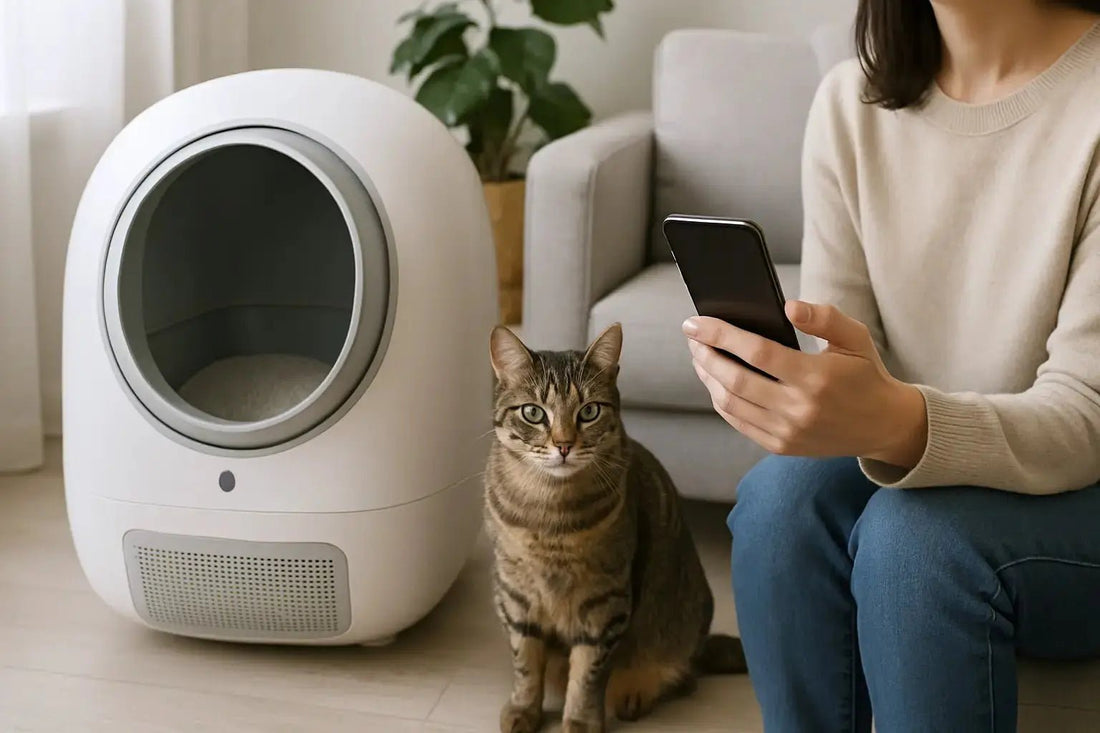
That moment when you walk into your home and catch it - the faint (or not-so-faint) reminder that the litter box needs attention. If you live in an apartment, host friends often, or just want your space to feel calm and put-together, you already know the truth: litter maintenance is not optional.
A self cleaning litter box with app is the modern answer to an old problem. It promises less scooping, a cleaner-smelling home, and a little more confidence that things are handled - even when you are busy. But the app part can sound like a gimmick until you understand what it actually helps with, where it falls short, and what features make a real difference in day-to-day life.
What a self cleaning litter box with app really changes
The self-cleaning part is easy to picture: the box detects a visit, waits a set time, then cycles to separate waste into a sealed compartment or bag. The app adds a second layer - visibility and control.
Instead of guessing whether your cat used the box today, how often they are going, or whether the waste drawer is getting full, you can check. You can also adjust settings without kneeling beside the box. For many pet parents, that is the difference between “nice idea” and “this actually fits my life.”
The biggest practical shift is consistency. A traditional box depends on human timing. A smart box runs on a routine, and the app keeps you in the loop when that routine needs your help, like changing a liner or topping off litter.
The app features that matter (and the ones that are mostly noise)
Not every app is equally useful. Some are built around everyday ownership, while others feel like they were added to a product pitch.
The most valuable features tend to be the simplest. Real-time alerts for a full waste drawer or a stuck cycle are genuinely helpful because they prevent odor and mess before it spreads. Remote cycle control can be convenient too, especially if you want the unit to run after you leave for work or right before guests arrive.
Usage tracking is where it gets more personal. If you have one cat and a stable routine, you may not check stats often. If you have multiple cats, an anxious cat, or a cat with a history of urinary issues, patterns matter. An app that tracks visits, cycle counts, and sometimes weight-based detection can give you an early signal that something changed. It is not a diagnosis, but it can prompt you to pay attention sooner.
What tends to be less useful: overly complex “scores,” generic tips that do not reflect your cat, or notifications you cannot customize. If the app pings you too often, most people eventually mute it, and then you lose the benefit.
A quick reality check on health tracking
Smart litter boxes are often marketed with health monitoring, and there is some truth there. A sudden spike in visits can hint at urinary discomfort. A drop in visits can mean your cat is avoiding the box. Weight changes can be meaningful over time.
But it depends on your household. Multi-cat homes can make individual tracking unreliable unless the box supports reliable cat identification. Even then, two cats close in weight can confuse the system. And litter type, placement, stress, and diet can all affect patterns.
Use the data like you would use a baby monitor - it helps you notice changes, but you still rely on your judgment and your vet for the actual call.
Design and placement - because it has to live in your home
If you care about modern home aesthetics, you already know why this matters. A self-cleaning unit is larger than a basic pan. It is going to be visible, and it needs airflow and access.
Look for a shape and finish that feel intentional, not like a bulky appliance you are hiding. Neutral colors, cleaner lines, and a footprint that fits along a wall can make a big difference in how your space feels day to day.
Placement matters too. Most smart boxes need a flat surface and nearby power. If you tuck it into a tight closet with no ventilation, odor control will struggle no matter how advanced the system is. A quieter, low-traffic corner often works better than the busiest hallway, especially for cats that prefer privacy.
Odor control: what comes from the box vs your setup
A self-cleaning litter box can reduce odor because waste is isolated quickly. But the app is not what fixes smell - the mechanical design and your maintenance routine do.
You will still need to empty the waste compartment on schedule, clean the unit periodically, and use a litter that plays well with the system. Some units do better with clumping litter that forms firm clumps. Others support crystals or pellets. If you use the wrong type, you can get stuck cycles, smeared waste, or a drawer that smells faster.
In a smaller home, a sealed waste drawer and a reliable cycle trigger are the biggest wins. The app helps by reminding you before things get noticeable.
The trade-offs no one puts on the product page
Smart convenience always comes with trade-offs. It is better to know them up front so you do not buy an upgrade that irritates you.
First is noise. Some units are quiet enough for a living room. Others are not. If your cat is skittish, the sound and motion can slow the transition.
Second is cleaning complexity. A basic box is easy to rinse. A smart unit has sensors, a globe or rake mechanism, and areas you cannot soak. You want parts that detach easily and surfaces that wipe clean without drama.
Third is ongoing cost. Many models use liners, proprietary waste bags, or specific filters. Even if the box saves time, it should not lock you into overpriced consumables.
Fourth is connectivity. Wi-Fi drops happen. Apps crash. A good smart box still functions safely without the app, and the app should be a convenience layer, not a requirement for basic operation.
Choosing the right self cleaning litter box with app for your cat
The best choice is the one your cat will actually use. Start with your cat’s comfort, then work outward.
If your cat is large, long-bodied, or not a fan of tight spaces, interior room matters more than fancy features. A cramped unit can lead to accidents right outside the entrance or a cat that refuses the box.
If your cat is older or has mobility issues, entry height is a big deal. An app cannot help if stepping in feels difficult.
If you have multiple cats, consider capacity and cycle timing. A unit that cycles too quickly after one cat exits can bother the next cat waiting to go in. The best systems let you adjust the delay time so clumps form properly and cats are not startled.
And if you have a cat that is sensitive to change, plan for a slower transition. Some pet parents run the smart box in “manual cycle” mode at first, letting the cat get used to it as a normal box, then turning on automatic cleaning once usage is consistent.
Safety features are non-negotiable
Any automated unit should be designed around pet safety first. Look for reliable presence detection, anti-pinch design, and a cycle that stops if a cat approaches or re-enters.
This is one of those categories where “built to last” is not just a nice phrase. A stable base, strong materials, and predictable sensors are what keep the experience calm for your cat and worry-free for you.
If you are shopping, read reviews with a specific goal: look for patterns in safety behavior, sensor reliability, and how the company handles issues. A generous guarantee and easy returns are not just customer service perks here - they reduce the risk of trying something new with a picky cat.
Who benefits most from the app-enabled upgrade
If you scoop daily and it does not bother you, you might not need an app. But there are households where the upgrade feels like it was made for them.
Busy schedules are the obvious one. If your days are packed and the litter box is always the last thing you get to, automation helps you stay ahead.
Small spaces are another. When the litter box is close to your living area, faster waste containment can change how your whole home feels.
Multi-cat homes can benefit too, mainly from keeping the box cleaner between your deeper cleanings and helping you notice changes in routine.
And if you travel or spend nights away, an app that tells you the drawer is full or the unit needs attention can prevent you from coming home to a problem.
Making it feel like part of your home, not a gadget
The best smart pet products do not ask you to reorganize your life around them. They fit into your routines and your space.
If you are already curating a cleaner, more design-forward home, treat the litter area like a real zone. Pair the unit with a tidy mat that traps litter, keep refills nearby in a container that does not look like a giant bag, and choose a location that gives your cat privacy without isolating the box in a hard-to-clean corner.
If you want to browse options that prioritize pet-safe construction and modern styling, Petmartopia at https://petmartopia.com curates smart litter solutions alongside the everyday essentials that keep the whole setup feeling intentional.
A self cleaning litter box with app is not about turning cat care into a tech hobby. It is about reclaiming a little time, keeping your home fresher, and catching small changes before they turn into bigger problems - while your cat gets a box that feels consistently clean and safe.
The most helpful way to think about it is simple: you are not buying an app. You are buying fewer “I’ll do it later” moments.