
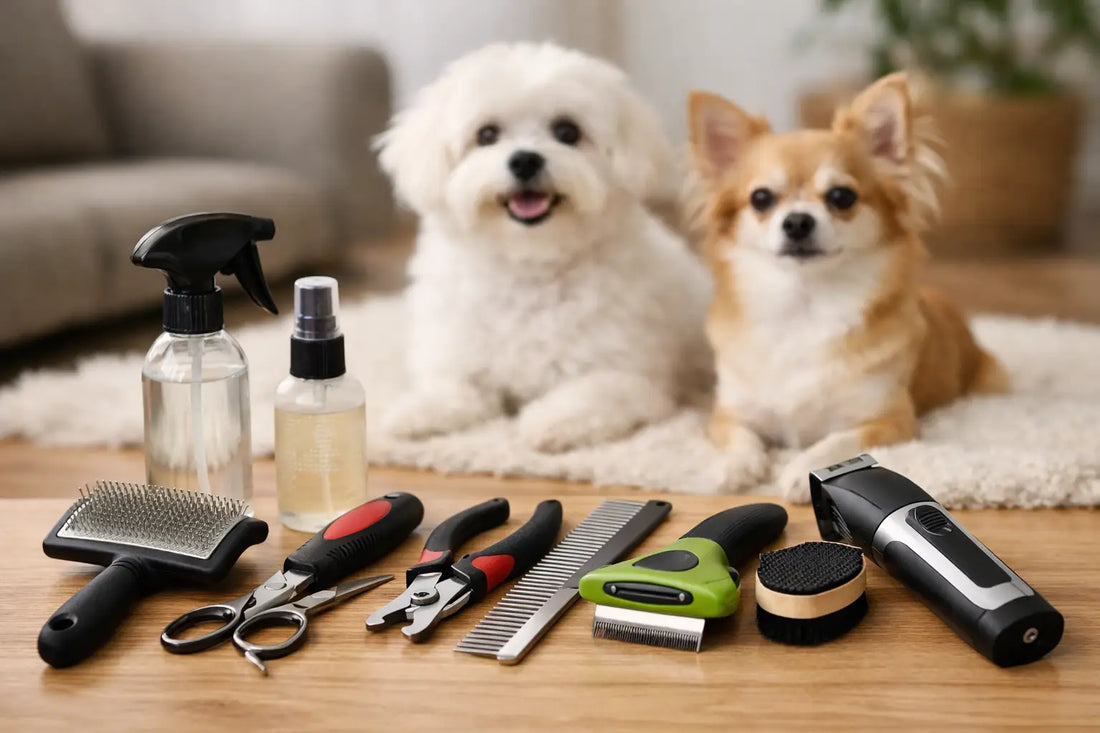
Small dogs have a talent for making basic grooming feel surprisingly high stakes. A brush that is too stiff can irritate delicate skin. Clippers that work fine on a Lab can feel bulky and loud on a Yorkie. And if you live with a dog who already thinks nail trims are a personal betrayal, the wrong tool can turn a five-minute task into a full production. That is why choosing the best grooming tools for small dogs matters more than most pet parents expect.
The right setup makes grooming safer, faster, and much less stressful for both of you. It also helps keep loose fur off your sofa, prevents painful mats, and supports healthier skin and coat between professional appointments. Small breeds often need more precision, not more power, so the goal is not to buy the biggest tool kit on the market. It is to choose tools that fit your dog’s size, coat type, and tolerance level.
What makes grooming tools right for small dogs
Small dogs need tools built for smaller bodies and finer margins. A pin brush that feels average on a larger dog can be awkward around tiny legs, ears, and underarms. A nail clipper with oversized handles may give you leverage, but less control. The best tools balance gentle contact with enough performance to actually get the job done.
Material and build quality matter too. Stainless steel blades resist rust and stay sharper longer. Rounded tips on scissors reduce the chance of accidental pokes. Non-slip handles are not just a nice extra - they are a real safety feature when you are working around wiggly paws. If you care about a clean, calm home, quieter motors and easy-to-clean designs are worth paying attention to.
The best grooming tools for small dogs by category
1. A soft slicker brush for everyday coat care
For many small dogs, a soft slicker brush is the workhorse tool. It lifts loose hair, helps prevent tangles, and smooths the coat without pulling too hard when used correctly. It is especially useful for breeds with longer or denser coats like Shih Tzus, Maltese, Havanese, and Pomeranians.
The trade-off is that slicker brushes vary a lot. Some are too sharp for sensitive dogs, especially if you brush with heavy pressure. Look for fine, flexible pins and a smaller brush head that can move easily around the chest, legs, and tail. If your dog has very thin hair or irritated skin, a bristle brush may be gentler for finishing.
2. A stainless steel comb for tangles and detail work
A comb is where you find the mats your brush skipped. It is one of the best grooming tools for small dogs because it helps you check delicate spots like behind the ears, under the collar, and in the feathering on the legs. A comb with both wider and narrower spacing gives you more flexibility.
This is not the tool to rush with. If the comb snags hard, do not force it. Use a detangling spray or work the knot apart slowly with your fingers first. On fine-coated dogs, a comb can be more revealing than a brush, which is exactly why it earns a permanent place in a home grooming kit.
3. Quiet electric clippers for sanitary trims and touch-ups
Not every small dog needs full body clipping at home, but many benefit from light maintenance between grooming visits. Quiet clippers are ideal for sanitary trims, paw pads, and tidying around the face if you are comfortable doing it. Smaller clipper bodies are easier to handle and less intimidating for nervous dogs.
Noise and heat are the two big issues here. Loud clippers can scare sensitive pets, while hot blades can become uncomfortable fast. Choose a model designed for low vibration and check the blade temperature during use. If your dog has a thick, high-maintenance coat and you are considering full grooms at home, clippers can save money over time, but they do come with a learning curve.
4. Round-tip grooming scissors for precision areas
Scissors are useful for trimming around paws, neatening the beard, or cleaning up stray hairs near the eyes. For small dogs, round-tip scissors are the safer choice because they reduce the risk of accidental nicks during close work.
They are still not foolproof. If your dog jerks suddenly, even safe scissors can be risky. Use them only when your dog is calm and you have good lighting. For many pet parents, scissors are best for minor touch-ups, not ambitious styling.
5. Small nail clippers or a nail grinder
Nail care is often the hardest part of grooming, and small dogs can be particularly dramatic about it. A compact nail clipper sized for toy and small breeds gives you more control than a large tool. Sharp blades matter because dull clippers crush rather than cut cleanly.
A grinder can be a better option for dogs who hate the pressure of clipping or have dark nails where the quick is hard to see. The downside is the sound and vibration. Some dogs prefer it, some absolutely do not. If you are not sure which camp your dog falls into, start slowly and treat the introduction like training, not a chore.
6. Pet-safe shampoo with a targeted purpose
Shampoo is still a grooming tool, just in liquid form. Small dogs often get bathed more often than large dogs because they are carried, cuddled, and exposed to indoor living more closely. A gentle, pet-safe shampoo helps remove dirt, allergens, and odor without drying the skin.
The best choice depends on your dog. Oatmeal formulas can help with dryness, while deodorizing blends may work better for dogs who get oily fast. Avoid heavily fragranced products that smell nice to humans but may irritate sensitive skin. Clean coats should feel soft, not stripped.
7. A microfiber towel that actually absorbs
If you have ever tried drying a long-haired small dog with a regular bath towel, you already know the problem. It gets damp quickly and leaves you with a cold, unhappy dog. A good microfiber towel absorbs more water, dries faster, and helps cut down on the post-bath zoomies across your furniture.
This may sound like a small upgrade, but it makes home grooming much easier. It is especially helpful for apartment living, where you want less dripping, less mess, and a quicker path from bath to done.
8. A low-noise pet dryer or gentle blow dryer setting
Some small dogs air-dry well. Others end up damp for hours, which can lead to tangles and that slightly musty coat smell. A low-noise dryer designed for pets is useful if your dog has a double coat, long hair, or a thick undercoat.
Heat is the issue to watch. Small dogs can overheat more quickly, and human dryers often run too hot at close range. A cooler setting with steady airflow is the safer call. If your dog is noise-sensitive, pairing drying with a towel first and keeping sessions short usually works better than trying to do everything at once.
9. Detangling spray for longer coats
For silky or fluffy small breeds, detangling spray can make brushing much kinder. It reduces friction, helps loosen minor knots, and lowers the chance of breakage. If your dog wears sweaters or harnesses often, it can also help with the friction tangles those create.
You do not need a heavy formula. Lightweight, pet-safe sprays are better for small dogs because they will not leave the coat greasy or weighed down. This is one of those products that feels optional until you use it consistently.
10. A grooming mat or non-slip surface
Technically, this is not a grooming tool in the usual sense, but it changes the whole experience. Small dogs feel less secure when they slide around on a countertop or slick floor. A stable, non-slip surface helps them stand more confidently, which makes brushing, trimming, and nail care easier for everyone.
It also gives your routine a designated place. That matters because dogs notice patterns. When grooming always happens in the same calm spot, many dogs settle faster over time.
How to choose the right set for your dog
You do not need all ten tools on day one. A short-coated Chihuahua needs a very different kit than a mini Goldendoodle or a long-haired Dachshund. Start with the basics that match your dog’s coat: a gentle brush, a comb, nail care, shampoo, and a towel. Then add clippers, scissors, or a dryer if your dog’s coat and your routine call for them.
Temperament matters just as much as coat type. If your dog startles easily, quieter tools are worth prioritizing. If your dog mats quickly, the comb and detangling spray may save more frustration than a fancy brush. And if you want products that look clean in your bathroom or laundry area, it is completely reasonable to choose tools that do their job well and fit your space.
At Petmartopia, that balance of comfort, safety, and modern design is part of the point. Pet gear should work hard without making your home feel cluttered or chaotic.
A better grooming routine starts with less friction
The best grooming kit is not the one with the most pieces. It is the one you will actually use every week without dreading it. Choose tools that feel manageable in your hand, gentle on your dog, and easy to store and clean. When grooming feels less like a wrestling match and more like simple care, your dog notices - and so does your home.