
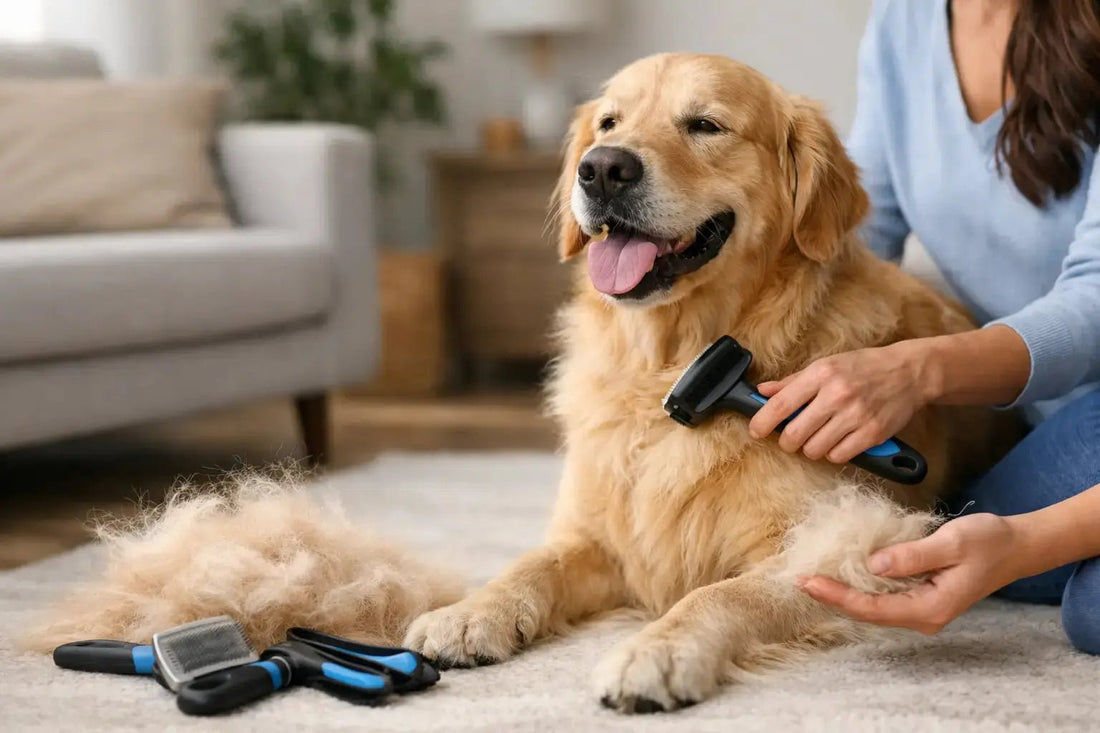
Loose fur on the couch is one thing. Fur drifting across hardwood floors, clinging to dark clothes, and collecting in corners by noon is when most pet parents start searching for how to reduce dog shedding at home without turning daily life into a full-time cleaning routine.
The good news is that shedding can usually be managed. The less fun truth is that there is no single fix. Shedding is influenced by breed, coat type, season, stress, skin health, diet, and grooming habits. If you want a cleaner home and a more comfortable dog, the best approach is a steady routine that supports both.
Why dogs shed more than you expect
All dogs shed at least a little, even breeds often described as low-shed. Hair growth happens in cycles, and old hair has to make room for new growth. Double-coated breeds like Labs, Huskies, and German Shepherds naturally release a lot more fur, especially during seasonal changes. Short-haired dogs can shed heavily too, even if the hair is less visible until it sticks to fabric.
Indoor living can also blur the usual spring and fall shedding pattern. When dogs spend most of their time in climate-controlled homes, their bodies do not always respond to daylight and temperature changes the same way outdoor dogs do. That can make shedding feel more constant year-round.
If shedding suddenly spikes, though, it may not be normal. Dry skin, allergies, parasites, stress, hormonal changes, or poor nutrition can all show up in the coat. If your dog is also scratching more, developing bald spots, or has flaky or irritated skin, it is worth talking with your veterinarian before assuming it is just a grooming issue.
How to reduce dog shedding at home with better grooming
If there is one habit that makes the biggest difference, it is brushing. Regular brushing removes loose hair before it lands on your rugs and upholstery, and it helps distribute natural oils through the coat so skin and fur stay in better condition.
The key is using the right tool for your dog’s coat. A slicker brush can work well for medium and long coats. A de-shedding tool is often more effective for thick undercoats. Rubber grooming brushes can be useful for short-haired dogs because they lift loose fur without feeling too harsh on the skin. The wrong brush can do very little or, worse, irritate the coat and make grooming stressful.
Frequency matters too. During heavy shedding season, many dogs benefit from brushing several times a week, and some need a quick daily session. Outside of seasonal coat blowouts, one to three sessions a week is often enough. Short sessions tend to work better than marathon grooming. Five to ten minutes before dinner or after a walk is easier to maintain than a long weekend battle.
Bathing helps, but only when it is done thoughtfully. A bath can loosen dead hair and wash away dander, dirt, and allergens that may be irritating the skin. What you do not want is overbathing. Too many baths, or the wrong shampoo, can dry out the skin and make shedding look worse. Use a dog-safe, gentle shampoo and follow with a thorough rinse. Any residue left in the coat can trigger itchiness.
Drying also matters. A good towel dry followed by brushing once the coat is nearly dry can remove a surprising amount of loose fur. If your dog tolerates it, a pet dryer designed for coat care can help move out undercoat more efficiently than air drying alone.
Don’t skip the small signs
Healthy shedding looks like loose hair. Unhealthy shedding often comes with clues: a dull coat, greasy patches, redness, dandruff, odor, or frequent scratching. Those signs suggest the coat routine needs to change, or that something deeper is going on.
Nutrition plays a bigger role than most owners think
A coat is often one of the first places poor nutrition shows up. If your dog’s food is missing key nutrients, fur can become brittle, dry, and more likely to shed excessively.
Look for a high-quality diet with balanced protein and healthy fats. Omega-3 and omega-6 fatty acids are especially helpful for skin barrier health and coat condition. That does not mean every shedding dog needs supplements right away. Some dogs improve simply by eating a better-formulated food consistently.
Hydration is part of the picture too. Dry skin can contribute to excess shedding, and dogs that do not drink enough water may be more prone to flaky skin. Fresh, clean water should be easy to access all day. Many pet parents notice better hydration habits when water is presented in a cleaner, more appealing setup rather than a stale bowl sitting untouched for hours.
Treats can also affect skin health more than people realize. If your dog has food sensitivities, certain ingredients may trigger inflammation that shows up as itching and coat issues. If shedding comes with licking paws, ear irritation, or digestive changes, that is a clue to pay attention to diet quality and possible sensitivities.
Your home routine matters as much as your dog routine
If you are serious about how to reduce dog shedding at home, grooming your dog is only half the job. The other half is setting up your space so loose fur does not spread and settle so easily.
Start with the places your dog spends the most time. A washable dog bed with a removable cover contains a lot of fur that would otherwise transfer to your sofa, bedding, and floors. It also gives your dog a defined resting spot, which helps localize the mess. This is especially useful in apartments or open-concept homes where pet hair seems to travel everywhere.
Vacuuming is more effective when done more often in smaller zones rather than waiting for hair to build up everywhere. Entryways, favorite nap spots, and the area around the bed usually need the most attention. Upholstery tools and pet-specific vacuum attachments can make a bigger difference than another general pass over the floor.
Fabric choice matters too. Some textiles hold onto hair relentlessly, while others release it more easily. Tightly woven throws, washable covers, and smoother upholstery can make cleanup faster and less frustrating. This is one of those trade-offs that modern pet households know well: the prettiest fabric is not always the most practical one.
Air quality can help in the background. A good air purifier will not stop shedding, but it can reduce the amount of floating hair and dander circulating through the room. That can make the home feel cleaner between grooming sessions, especially in smaller spaces.
Stress and environment can trigger more shedding
Some dogs shed more when they are anxious, overstimulated, or dealing with a disrupted routine. A move, a new pet, loud construction, travel, or being left alone longer than usual can all show up in the coat.
That does not mean every shedding issue is emotional, but stress is often overlooked. Dogs do best with predictable routines, comfortable rest areas, and enough physical and mental activity. A bored dog may not just act out. They may also overgroom, scratch more, or experience a coat change tied to stress.
Comfort matters here. Dogs that sleep poorly, overheat on the wrong bedding, or do not have a calm place to settle may be more physically tense overall. Creating a clean, supportive space for rest is not just about aesthetics. It can be part of a healthier daily rhythm.
When shedding is normal and when it is not
Some amount of hair in your home is simply part of living with a dog. If you have a Golden Retriever, Corgi, or similar double-coated breed, your goal is control, not elimination. Promises of a fur-free home are not realistic, and products that claim instant results usually disappoint.
What you should look for is improvement over a few weeks. With consistent brushing, sensible bathing, better coat support through diet, and a cleaner home setup, you should notice less loose fur collecting on surfaces and fewer dramatic tumbleweeds across the floor.
If that does not happen, or if the shedding is sudden, patchy, or paired with skin changes, get a veterinary opinion. Persistent shedding can be a symptom, not just a nuisance.
For pet parents who want practical upgrades, the best tools are the ones that fit real life: grooming tools that are easy to use, washable pet bedding, and home essentials designed to stay clean without looking clinical. That is the sweet spot Petmartopia focuses on at https://petmartopia.com - products that support your dog’s comfort while blending more naturally into your home.
You do not need a perfect house or a perfectly shed-free dog. You need a routine that is gentle, realistic, and easy to keep up with, because the habits that work every week are the ones that actually keep the fur under control.