
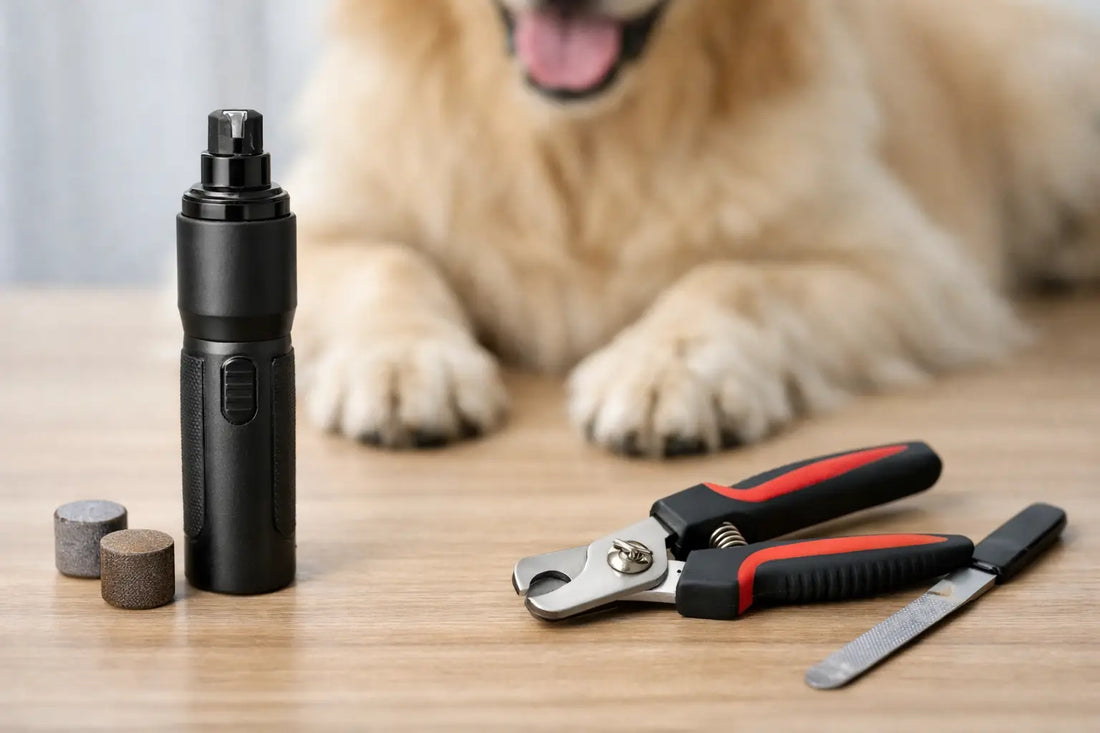
That little click-click on your floors is usually your first reminder that nail trims are overdue. When you start comparing dog nail grinder vs clippers, the real question is not which tool is better on paper - it is which one your dog will actually tolerate, and which one you will feel confident using at home.
For some dogs, clippers make trimming quick and uneventful. For others, the pressure of a cut is stressful, especially if they have had a bad experience with the quick before. Grinders can feel gentler because they file the nail down gradually, but they add sound, vibration, and a bit more time. The best choice depends on your dog’s nail type, comfort level, and your own grooming style.
Dog nail grinder vs clippers: the core difference
Clippers remove nail length in a single snip. They are straightforward, fast, and familiar to many pet parents. If your dog is calm and you know where the quick is, clippers can make regular maintenance feel simple.
A grinder works by sanding the nail down little by little. Instead of one decisive cut, you shorten and shape the nail in stages. That can lower the risk of taking off too much at once, which is why many owners like grinders for dark nails where the quick is harder to see.
Neither tool is automatically safer in every situation. Clippers are efficient, but mistakes happen quickly. Grinders give you more control, but only if your dog can handle the noise and you use the tool patiently.
When clippers are the better choice
Clippers tend to work best for dogs who are already comfortable with paw handling and do not panic during grooming. They are also practical for households that want a fast trim without adding charging, batteries, or extra cleanup to the routine.
If your dog has very long nails, clippers are often the most efficient starting point. Taking down excess length with a few careful snips can be much faster than grinding every nail from scratch. For large dogs with thick nails, a sturdy clipper can also feel more effective than a grinder that struggles to keep up.
There is another reason many pet parents stay loyal to clippers: silence. A clipper does not buzz. For noise-sensitive dogs, that matters. Some dogs will tolerate the brief pressure of a snip far better than the steady hum of a grinder near their paws.
Still, clippers require accuracy. If your dog moves suddenly or you misjudge the quick, the trim can go from routine to upsetting in a second. That does not mean clippers are a poor tool. It just means they reward confidence, a steady hand, and a dog who can stay fairly still.
Clippers are especially useful for
Clippers usually make the most sense for calm dogs, thick nails that need real length removed, and pet parents who want the fastest grooming option. They are also a strong fit if your dog dislikes buzzing tools but accepts brief handling.
When a grinder makes more sense
A grinder shines when control matters more than speed. Because it removes nail gradually, it can be easier to stop before reaching the quick. That makes it appealing for beginners, for dogs with black nails, and for anyone who gets nervous about clipping too short.
Grinders also create a smoother finish. Instead of leaving a sharp edge, they round the nail, which can mean fewer scratches on hardwood floors, furniture, skin, and fabric. If you have a dog who likes to jump up for greetings, that smoother edge is not a small benefit.
For nervous dogs, the answer is more mixed. Some dogs dislike clippers because of the squeezing pressure and do better with a grinder. Others cannot stand the sound or vibration and will resist the moment the tool turns on. This is where product quality and training matter. A quieter, pet-safe grinder and slow desensitization can make a big difference, but not every dog will become a fan.
A grinder is often best for
Grinders are a smart choice for maintenance trims, smoothing rough edges, dark nails, and owners who want a little more room for error. They are especially helpful once the nails are already close to a healthy length and just need regular upkeep.
Safety is not just about the tool
In the dog nail grinder vs clippers debate, safety usually gets framed as a product question. It is really a technique question too.
With clippers, the main risk is cutting into the quick. With grinders, the main risk is heat from holding the tool against one spot too long, or catching fur if long hair around the paws is not kept clear. Both tools can be safe when used correctly, and both can cause stress if the dog is restrained too much or rushed.
A few practical habits matter more than brand claims. Work in short sessions. Hold the paw gently but securely. Stop before your dog is overwhelmed. If you use a grinder, tap the nail in brief passes instead of pressing continuously. If you use clippers, trim tiny amounts at a time, especially on dark nails.
Styptic powder is worth having nearby no matter which method you choose. Even experienced dog owners hit the quick occasionally. Being prepared keeps a small mistake from turning into a major event.
What your dog’s nail type can tell you
Thin, light-colored nails are usually easier to clip because the quick is more visible. Thick, dense nails can be clipped too, but they may splinter if the tool is dull or low quality. In those cases, some owners clip first and then use a grinder to smooth the edges.
Dark nails are where many people switch teams. Since the quick is harder to see, a grinder can feel less risky. It lets you take off small layers while checking the center of the nail as you go.
Age and mobility matter as well. Senior dogs, dogs with arthritis, or dogs who struggle to stand comfortably may not tolerate a long grinding session. A quick trim with clippers may be kinder. On the other hand, dogs who slip on floors or have extra-long nails from limited outdoor wear may benefit from the smoother, rounded finish a grinder provides.
Which tool is easier for beginners?
Most beginners assume clippers are easier because they look simpler. Sometimes that is true. Sometimes they feel intimidating because the margin for error seems so small.
A grinder can be more forgiving, but only after you and your dog get used to it. The learning curve is not really about the mechanics. It is about pacing. You need to introduce the sound, let your dog investigate the tool, reward calm behavior, and keep the first few sessions very short.
If you are new to nail care and your dog is also unsure, the easiest path is often a combination approach. Use clippers to remove obvious excess length if needed, then use a grinder to refine the shape and keep future trims small. That balance gives you speed without giving up control.
The lifestyle factor pet parents often overlook
The right grooming tool has to fit real life. If a grinder feels too fussy to pull out every two weeks, it may sit in a drawer. If clippers make you anxious every single time, you may delay trims longer than you should.
A good home grooming routine should feel manageable in a clean, calm corner of your home, not like a wrestling match you dread. That is why well-designed, easy-to-hold, pet-safe tools matter. They do not just look better stored in a modern space. They are more likely to get used consistently, which is what actually keeps nails healthy.
For many households, consistency beats perfection. Short, frequent sessions are easier on dogs than waiting until nails are too long and trying to fix everything at once.
So, dog nail grinder vs clippers - what should you choose?
Choose clippers if your dog is calm, you want speed, and the nails need significant length removed. Choose a grinder if you want more gradual control, a smoother finish, or extra confidence with dark nails.
If your dog is sensitive, the answer may be neither tool by itself. Plenty of pet parents get the best result by combining both. Clip for length. Grind for polish. Or keep clippers as a backup and use a grinder for regular upkeep once the nails are under control.
The smartest choice is the one that keeps your dog comfortable and makes you willing to stay on schedule. A trim that happens regularly, with a tool you trust, is always better than the perfect tool you avoid using.
If you are still unsure, start by watching your dog rather than the marketing. Their reaction to sound, touch, pressure, and handling will tell you far more than the packaging ever will.