
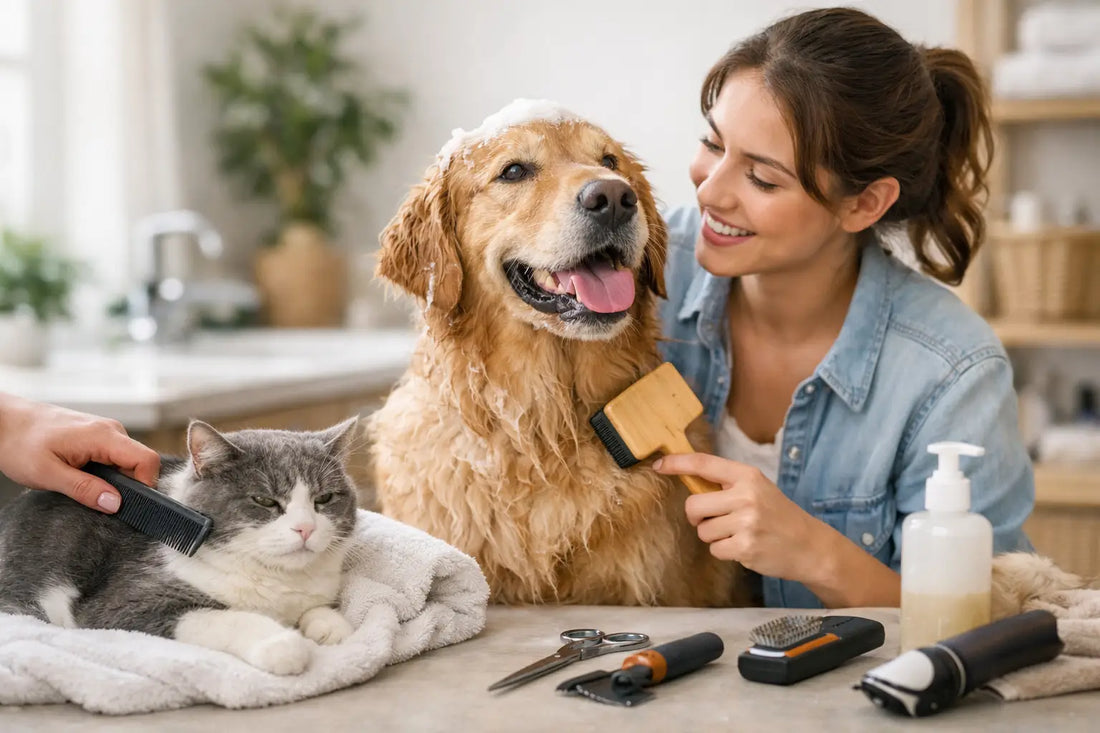
The first time you try to brush a squirmy puppy or clip a cat’s nails without a plan, it gets real fast. Grooming looks simple until fur starts flying, your pet decides the towel is the enemy, and you realize you are holding the brush backwards. The good news is that pet grooming tips for first time owners do not need to be complicated. What matters most is building calm routines, using the right tools, and knowing when to stop before a quick touch-up turns into a stressful event.
Pet grooming tips for first-time owners start with routine
The biggest mistake new pet parents make is waiting until grooming feels urgent. By then, the coat is matted, the nails are clicking on the floor, or the ears are already irritated. Grooming goes better when it becomes part of normal life instead of a rare, high-stakes project.
For dogs and cats alike, short sessions work better than marathon ones. A few minutes of brushing after dinner or a quick paw check before bed can do more for coat health and comfort than an occasional full overhaul. Pets learn through repetition. If the brush, comb, towel, and nail trimmer show up in calm moments, they stop feeling like a warning sign.
That matters even more in homes where clean floors, low-shed fabrics, and uncluttered spaces are part of the daily rhythm. Consistent grooming helps reduce loose hair, dander, and that lived-in pet look that can take over a room faster than most owners expect.
Start with touch before tools
Before you groom, teach your pet that handling is safe. Touch the paws, lift the ears, look at the teeth, and run your hands over the belly and tail for a few seconds at a time. Reward calm behavior right away.
This step is easy to overlook, but it makes everything else smoother. A dog that accepts paw handling is easier to trim. A cat that tolerates gentle ear checks is less likely to panic when you need to clean around the outer ear. The goal is not perfect stillness. The goal is comfort with being handled.
Choose tools based on coat type, not hype
New owners often buy whatever grooming kit has the most pieces. More tools do not automatically mean better results. Start with what your pet’s coat actually needs.
Short-haired dogs and cats usually do well with a soft brush or grooming mitt that lifts loose fur without irritating the skin. Medium and long coats often need a slicker brush plus a metal comb to catch tangles closer to the skin. Curly or dense coats can be trickier because surface brushing may leave hidden mats underneath. In those cases, technique matters as much as the tool.
Nail care is similar. Some owners prefer clippers, while others feel more confident with a grinder. Clippers are fast, but they can feel intimidating if you are worried about cutting too short. Grinders give more control, though some pets dislike the sound or vibration. It depends on your pet’s tolerance and your own comfort level.
If you are buying grooming tools for home use, prioritize pet-safe materials, easy-clean construction, and a design you will actually want to keep within reach. Tools that are durable and simple to store tend to get used more consistently.
Brushing should be gentle, not aggressive
When shedding ramps up, it is tempting to brush harder and longer. That usually backfires. Good brushing is about removing loose fur, spreading natural oils, and checking the skin for issues like flakes, redness, bumps, or parasites.
Work in sections and brush in the direction of hair growth unless your vet or groomer has shown you a different technique for your pet’s coat. Use your free hand to hold the fur gently at the base if you are dealing with tangles. That reduces pulling on the skin.
Mats deserve extra care. Do not yank them or cut blindly with household scissors. Skin can bunch up into the mat, especially on cats and long-haired dogs, and it is easier than people think to cause an injury. Small tangles may loosen with a comb and detangling spray made for pets. Tight mats close to the skin are often better handled by a professional.
How often should you brush?
There is no single schedule that fits every pet. A short-coated cat may only need occasional brushing, while a double-coated dog may need several sessions a week, especially during seasonal shedding. Long-haired breeds usually need more frequent maintenance to prevent tangles from turning into mats.
If your furniture is collecting fur, your pet is licking more than usual, or the coat feels rough instead of smooth, that is often a sign the brushing routine needs adjusting.
Bathing is about skin health as much as cleanliness
Most pets do not need frequent baths. Overbathing can dry out the skin and leave the coat dull. But when your dog rolls in something questionable or your cat gets into a mess they cannot clean themselves, a bath matters.
Use lukewarm water and a shampoo made specifically for pets. Human shampoo can throw off skin balance and cause irritation. Wet the coat thoroughly, avoid getting water directly into the ears and eyes, and rinse longer than you think you need to. Residue left behind can make the skin itchy.
For anxious pets, setup matters. Put a non-slip mat in the tub or sink. Keep towels within reach. Have the shampoo open before the bath starts. The calmer and more organized the environment feels, the easier it is to keep your pet settled.
Cats are a special case. Healthy cats often need little to no bathing because they self-groom so well. When a bath is necessary, move slowly and keep it brief. If your cat is highly stressed, forcing the process can do more harm than good. Sometimes spot cleaning or professional help is the better option.
Nails, ears, and teeth count as grooming too
When people think grooming, they usually picture fur. But comfort often comes down to the smaller details.
Nails that are too long can affect posture, traction, and how your pet moves around the house. If you hear clicking on hard floors, it is probably time for a trim. Take off tiny amounts at a time. For pets with dark nails, the quick is harder to see, so patience matters.
Ear care should stay simple unless your veterinarian recommends otherwise. Check for odor, redness, discharge, or heavy wax. Clean only the outer ear with a vet-approved cleaner and cotton rounds or gauze. Skip cotton swabs inside the ear canal.
Teeth are the grooming task many first-time owners avoid the longest, and that is understandable. Still, regular dental care can make a huge difference in breath, comfort, and long-term health. Start by letting your pet taste pet-safe toothpaste from your finger, then gradually introduce a toothbrush or finger brush.
Watch your pet’s body language
One of the best pet grooming tips for first-time owners is knowing when a pet is saying no. Grooming should challenge your patience a little, not your pet’s sense of safety.
If your dog starts lip licking, yawning, turning away, freezing, or trying to leave, those are early stress signals. Cats may flick the tail, flatten the ears, tense the body, or swat with little warning. At that point, shorten the session or stop altogether.
Pushing through creates a harder problem next time. A better approach is to end on a small win. Brush one side, trim one nail, or simply reward calm handling and try again later. Progress counts, even when it looks slow.
When to call a professional groomer
At-home grooming is practical, but it is not always the best answer. If your pet has severe matting, skin issues, thick undercoat blowout, extreme fear, or nails that have been overgrown for a while, professional support is worth it.
That is not a failure. It is good care. Many first-time owners do a mix of both - regular brushing and maintenance at home, with occasional appointments for difficult coat work or a reset after a busy season.
A good groomer can also show you techniques that fit your pet’s coat and temperament. That kind of guidance often saves money, stress, and trial-and-error purchases later.
Build a grooming setup you will actually use
The best routine is the one that fits your real life. Keep grooming tools in one easy-to-reach spot instead of scattering them across closets and bathroom drawers. Use washable towels, choose tools that clean up fast, and set up in a space with good lighting and stable footing.
For modern homes, that practical side matters. If your grooming supplies are compact, easy to clean, and not visually chaotic, it becomes much easier to stay consistent. Petmartopia’s approach to everyday essentials reflects that same idea - comfort for pets, convenience for owners, and design that does not fight your space.
If you are just getting started, do less than you think you need and do it more often. A calm three-minute brush, a gentle paw check, and a treat afterward can carry more value than a perfect routine you never repeat. Grooming gets easier when your pet learns that care feels safe, predictable, and part of home.