
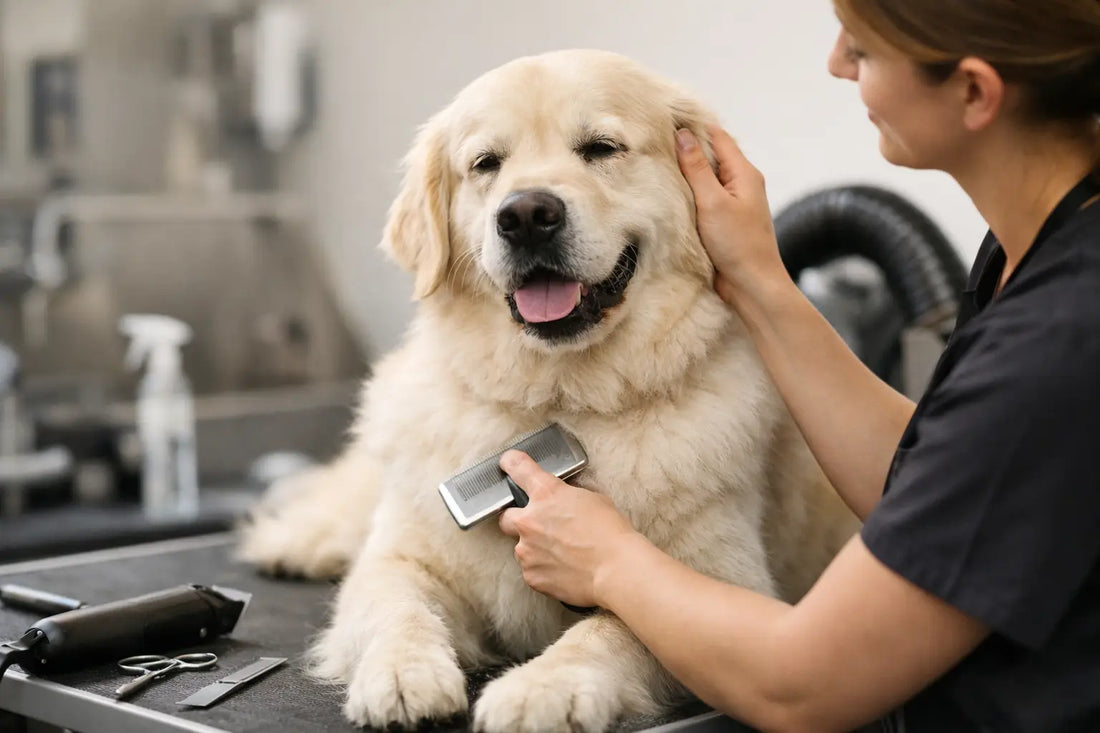
The first sign a grooming session is going sideways is usually small - a tucked tail, a stiff paw, a quick lip lick when you reach for the brush. If you are wondering how to keep dogs calm during grooming, the answer is rarely to hold them still harder or finish faster. Calm grooming starts much earlier, with the setup, the pace, and the way your dog learns what to expect.
For many dogs, grooming is not just about the brush or clippers. It is about unfamiliar sounds, restraint, slippery surfaces, and body handling that can feel invasive. The good news is that most dogs can learn to tolerate, and sometimes even enjoy, grooming when the experience feels predictable, gentle, and rewarding.
Why grooming makes some dogs nervous
A calm dog at home can still become uneasy during grooming. That does not mean they are stubborn or badly behaved. It usually means one or more parts of the process feel uncomfortable, confusing, or overwhelming.
Noise is a common trigger. Clippers, dryers, and even running water can put sensitive dogs on edge. Handling is another. Many dogs dislike having their paws touched, ears cleaned, nails trimmed, or mats brushed out. Then there is the environment itself. A hard floor, bright bathroom lighting, or a table that shifts under their feet can make a dog feel unstable.
Past experiences matter too. If a dog has had one painful nail trim or a rushed bath with water in the ears, they may start bracing for the next session before it even begins. That is why the goal is not just getting through grooming. It is building trust around it.
How to keep dogs calm during grooming at home
The best approach is to make grooming feel boring in the best possible way. Predictable. Safe. Nothing sudden.
Start with timing. Do not groom when your dog is already wound up, hungry, or desperate for a walk. A short play session or sniff walk beforehand can help take the edge off, but avoid anything so intense that your dog becomes overstimulated. Many dogs do best when they have had a chance to move, drink water, and settle.
Your space matters more than people think. Choose a quiet area with good light and secure footing. If your dog slips during grooming, even once, that can create instant tension. A stable surface with traction helps dogs feel grounded and less defensive. This is especially true for puppies, seniors, and dogs with joint sensitivity.
Then keep your tools within reach before you begin. Stopping mid-session to find a comb or towel often creates extra waiting, extra handling, and extra frustration for both of you. When the flow is smoother, dogs tend to stay calmer.
Keep sessions short at first
One of the biggest mistakes pet parents make is trying to do everything at once. Bath, blow dry, brushing, nails, ears, trim - all in one long stretch. For a nervous dog, that can feel like far too much.
Instead, break grooming into smaller wins. Brush for two minutes today. Handle paws and reward tomorrow. Wipe the face another day. If your dog can stay relaxed for a short session, end there. Stopping before they reach their limit teaches them that grooming is manageable, not endless.
This matters even more for rescue dogs or dogs new to at-home grooming. Progress can be fast, but only when trust stays intact.
Use touch that feels steady, not restrictive
Dogs usually respond better to calm, confident handling than tight restraint. If your grip says something scary is about to happen, your dog will believe you.
Use one hand to support and one hand to work. Move slowly. Let your dog see or sniff the brush before it touches them. If you need to reposition them, guide rather than wrestle. A calm voice can help, but your body language does more. If you are rushed and tense, most dogs pick up on it immediately.
When grooming sensitive areas like paws, tails, ears, or the belly, go in short increments. Touch, pause, reward. Repeat. This kind of gradual handling often works better than trying to "just get it over with."
Set up positive associations before the hard parts
If your dog only sees grooming tools right before something unpleasant, the tools themselves become a warning sign. You can change that.
Leave the brush out where your dog can see it, then pair it with treats without using it. Turn clippers on across the room and reward calm behavior. Let your dog stand on the grooming mat for a few seconds, get a treat, and hop off. These little moments seem simple, but they build familiarity without pressure.
This is one of the most effective ways to answer the question of how to keep dogs calm during grooming long term. You are not just managing behavior during the event. You are changing what the event means.
Reward the exact calm behavior you want
Treats help, but timing matters. Reward the moment your dog stands still, relaxes their body, allows a paw touch, or stays settled during brushing. That teaches them which behavior pays off.
For some dogs, food is enough. For others, praise, gentle chest rubs, or short breaks are just as valuable. High-value rewards are especially helpful for nail trims, detangling, and drying, which tend to be harder to tolerate.
If your dog is too stressed to take a treat, that is useful information. It usually means the session is moving too fast or the trigger is too intense. Step back and make it easier.
Make each grooming step more comfortable
Not every part of grooming feels the same to a dog. A few small adjustments can make a major difference.
Brushing should be methodical, not forceful. Hold the fur near the skin when working through tangles so you are not pulling with every stroke. If your dog has a coat that mats easily, frequent light maintenance is gentler than occasional heavy detangling.
Bathing is easier when water temperature stays lukewarm and the spray pressure stays low. Wet paws and legs first rather than aiming at the face or head. Use pet-safe products with mild scents. Strong fragrances can be irritating, and dogs do not need a perfumed coat to be clean.
Drying can be surprisingly stressful. Some dogs prefer towels over dryers, while others tolerate a low setting from a distance. It depends on the dog, the coat type, and how sound-sensitive they are. There is no prize for using the fastest method if it leaves your dog panicked.
Nail trimming deserves extra patience. For many dogs, it is the hardest task of all. If full trims cause major stress, try one or two nails at a time. A smoother routine done consistently is better than a full struggle every few weeks.
Watch for the signs that you need a break
Dogs rarely jump straight from calm to meltdown. They usually show smaller signals first. Yawning, lip licking, turning the head away, lifting a paw, panting when they are not hot, whale eye, trembling, or sudden fidgeting can all mean pressure is building.
When you notice those signs, pause. Give your dog a minute. Offer a reset with a treat scatter, a short walk across the room, or a drink of water. Taking a break is not giving in. It is how you prevent grooming from becoming a fight.
There is also a practical trade-off here. Pushing through might save ten minutes today, but it can make the next five sessions harder. Slowing down now often saves time overall.
When calming tools can help
Some dogs benefit from a little environmental support. A non-slip grooming mat, an absorbent towel, a quiet room, and simple, well-made grooming tools can reduce friction right away. Comfort is not just emotional - it is physical.
For dogs with higher anxiety, calming aids may help, but they should be used thoughtfully. A lick mat during brushing, a snug wrap for dogs who like gentle pressure, or vet-approved calming supplements may take the edge off. Results vary. What works beautifully for one dog may do very little for another.
Avoid anything that masks stress without addressing the cause. Sedation, restraint-heavy setups, or aversive corrections can make grooming look easier in the moment while damaging trust underneath. If your dog is truly panicking, the best next step is a conversation with your veterinarian or a qualified force-free trainer.
When to call a professional groomer or your vet
Some grooming challenges are bigger than technique alone. If your dog has severe matting, painful skin, chronic ear issues, or extreme fear around handling, professional help is often the kinder choice.
A skilled groomer can work more efficiently and notice early signs of stress before they escalate. In some cases, mobile grooming is a better fit than a busy salon because it reduces noise, waiting, and exposure to other dogs. If your dog reacts strongly due to pain, your vet should rule out medical issues before you keep training through it.
At Petmartopia, we believe the best grooming routine is the one your dog can actually feel safe in - clean tools, calm handling, and everyday comfort that fits naturally into home life.
Grooming does not have to become a weekly battle. When your dog trusts the setup, understands the routine, and gets breaks before stress spills over, calm starts to feel normal. That is where easier care begins - and where your dog starts meeting the brush with less worry each time.