
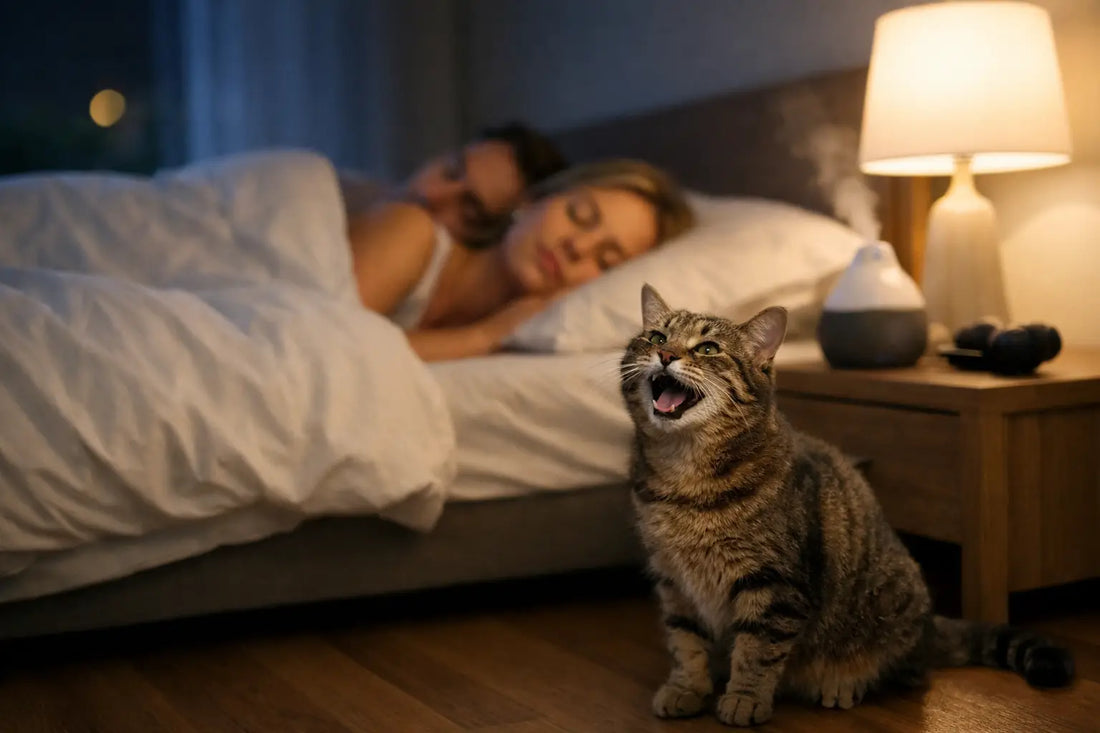
You do not really appreciate how loud a cat can be until 2:17 a.m., when the hallway turns into a personal opera house and your bedroom door is the front row. If you are looking for a humane way to stop cat meowing at night, the goal is not to silence your cat. It is to figure out what your cat is trying to tell you, then fix the reason behind the noise.
That distinction matters. Nighttime meowing is usually a symptom, not a bad habit in isolation. Cats meow after dark because they are hungry, bored, stressed, under-stimulated, uncomfortable, or simply trained by accident to expect attention at the exact wrong hour. The most effective fix is compassionate, consistent, and a little more structured than most people expect.
A humane way to stop cat meowing at night starts with the cause
Cats are crepuscular, which means they naturally feel more active around dawn and dusk. For indoor cats, that energy can spill into the middle of the night, especially if their daytime routine is quiet and their evenings are uneventful. A cat who naps all afternoon in a sunbeam may be fully ready for action just as you are trying to sleep.
Age also changes the picture. Kittens meow because they have energy to burn and less impulse control. Adult cats often meow because they have learned that vocalizing gets a response. Senior cats may cry at night because of cognitive changes, vision loss, hearing loss, or pain. The humane answer depends on which cat you have in front of you.
Medical issues should always be ruled out first if the behavior is new, sudden, or intense. Hyperthyroidism, high blood pressure, arthritis, urinary discomfort, dental pain, and sensory decline can all make a cat more vocal at night. If your previously quiet cat has started pacing and calling out, especially if they are older, a vet visit comes before any sleep strategy.
Why punishment usually makes nighttime meowing worse
It is tempting to clap, scold, spray water, or shut a cat away and hope the problem disappears. In most cases, that backfires. Punishment adds stress without solving hunger, boredom, discomfort, or confusion. A stressed cat often becomes louder, more anxious, or more persistent.
There is another problem. Any response can become reinforcement. If your cat meows, you get up, talk, open a door, offer a snack, or even say, stop it, your cat may learn that nighttime noise works. Cats do not need a big reward. Even brief interaction can keep the behavior going.
A humane plan focuses on prevention before bedtime and consistency overnight. That is how you reduce meowing without creating fear.
Reset your evening routine
If you want quieter nights, build a bedtime routine that feels satisfying to your cat. Think of it as helping them complete a natural cycle: hunt, eat, groom, sleep.
Start with active play in the evening, not just a few half-hearted wand toy swishes from the couch. Most cats need a real burst of movement. Aim for 10 to 20 minutes of interactive play that includes chasing, pouncing, jumping, and stalking. Cats who like variety often do better when you rotate toys so the play session feels fresh.
After play, offer a small meal or a portion of dinner. This can help trigger that post-meal drowsiness many cats naturally fall into. If your cat tends to wake you at 4 a.m. for breakfast, shifting more calories to the evening can help, as long as it fits your vet's guidance and your cat's overall diet.
The environment matters too. A cat that has nowhere interesting to climb, scratch, perch, or explore may turn your sleeping hours into their entertainment window. A stable cat tree, a scratching post in the right spot, and a cozy bed placed near a preferred window or quiet corner can make a noticeable difference. For many indoor cats, enrichment is not a luxury. It is behavior support.
Feed smarter, not just more
Hunger is one of the most common reasons cats start meowing before dawn. The fix is not always a bigger bowl. Sometimes it is better timing.
An automatic feeder can be especially helpful for early-morning meowers because it removes you from the reward loop. Your cat stops associating your face with breakfast arriving. If the meowing happens like clockwork at 5 a.m., setting a feeder for a slightly earlier time can reduce the pressure on you. Over time, you can gradually move the feeding time later.
For cats who eat too fast or seem restless after meals, a puzzle feeder or slow-feeding setup can extend the experience and add mental work. That said, not every cat takes to food puzzles right away. Some get frustrated if the puzzle is too difficult, so start simple.
If your cat seems ravenous despite regular meals, do not assume it is purely behavioral. Increased appetite paired with increased vocalizing can point to a health issue.
Create a calmer nighttime environment
Some cats meow because the house feels too stimulating at night. Others meow because it feels too empty. The right setup depends on your cat's personality.
For social cats, complete separation may increase distress. A comfortable sleeping station near your bedroom can help, especially if your cat wants closeness but not active interaction. Soft bedding, a nearby perch, and access to water and a litter box can make the space feel secure.
For cats who roam and yowl, narrowing the nighttime environment can sometimes help, but it should feel like a calm suite, not a punishment zone. Choose a room with essentials, comfortable textures, scratching options, and a place to settle. Keep the setup pet-safe, easy to clean, and free from anything that could create nighttime anxiety.
Background sound can help some cats, particularly in apartments where hallway noise, elevators, or outdoor activity trigger alert behavior. A white noise machine or fan may soften those cues enough to reduce vocalizing.
How to ignore meowing without being unkind
This is the hardest part for tired people. If your cat has a clean bill of health and their needs have been met before bed, you may need to stop rewarding the meowing itself.
That means no talking, no eye contact, no getting up to negotiate. Consistency is what makes this humane and effective. Mixed signals drag the process out. If you ignore the meowing three nights in a row but give in on the fourth, many cats learn to meow longer and harder.
Expect a temporary spike first. Behavior often gets worse before it fades because your cat is testing a strategy that used to work. This does not mean the plan is failing. It means your cat noticed the rule changed.
If full extinction feels unrealistic, use management. Automatic feeding, stronger evening play, and a more satisfying sleep space often reduce the behavior enough that ignoring becomes possible.
Special cases: kittens, senior cats, and anxious cats
Kittens need a gentler lens. They are still learning routine, and some nighttime calling is normal, especially in a new home. They usually do best with frequent daytime play, predictable feeding, and a warm, cozy sleep area. Expect improvement with maturity, but do not confuse baby behavior with stubbornness.
Senior cats deserve extra attention. If an older cat seems disoriented, cries into empty rooms, or vocalizes more at night than during the day, cognitive decline may be part of the picture. Night lights, easy access to litter and water, heated bedding if appropriate, and vet-guided care can help. This is not a discipline issue.
Anxious cats often benefit from more environmental support rather than less. Predictable routine, vertical territory, hiding spots, and calming evening rituals can make the home feel safer. In some cases, a behaviorist or veterinarian is the fastest path to relief for both of you.
A humane way to stop cat meowing at night in modern homes
Many pet parents want a solution that works without turning the living room into a cluttered obstacle course. That is reasonable. The best setup is one your cat will use and you will actually keep in place.
Look for enrichment pieces that blend into your home while still doing the job - a sturdy scratching surface where your cat already passes through, a fountain that encourages hydration, a perch with real stability, or an interactive toy that can hold your cat's attention before bed. Good design is not just about looks. When pet essentials fit naturally into your space, consistency gets easier.
That is where a curated approach helps. Petmartopia focuses on solutions that support comfort, safety, and cleaner everyday living, which is exactly what nighttime behavior plans need to stick.
If your cat is keeping you up, treat the meowing like information. Meet the real need, remove accidental rewards, and give the new routine enough time to work. Quiet nights usually do not come from one magic fix. They come from a home that feels more satisfying for your cat and more livable for you.