
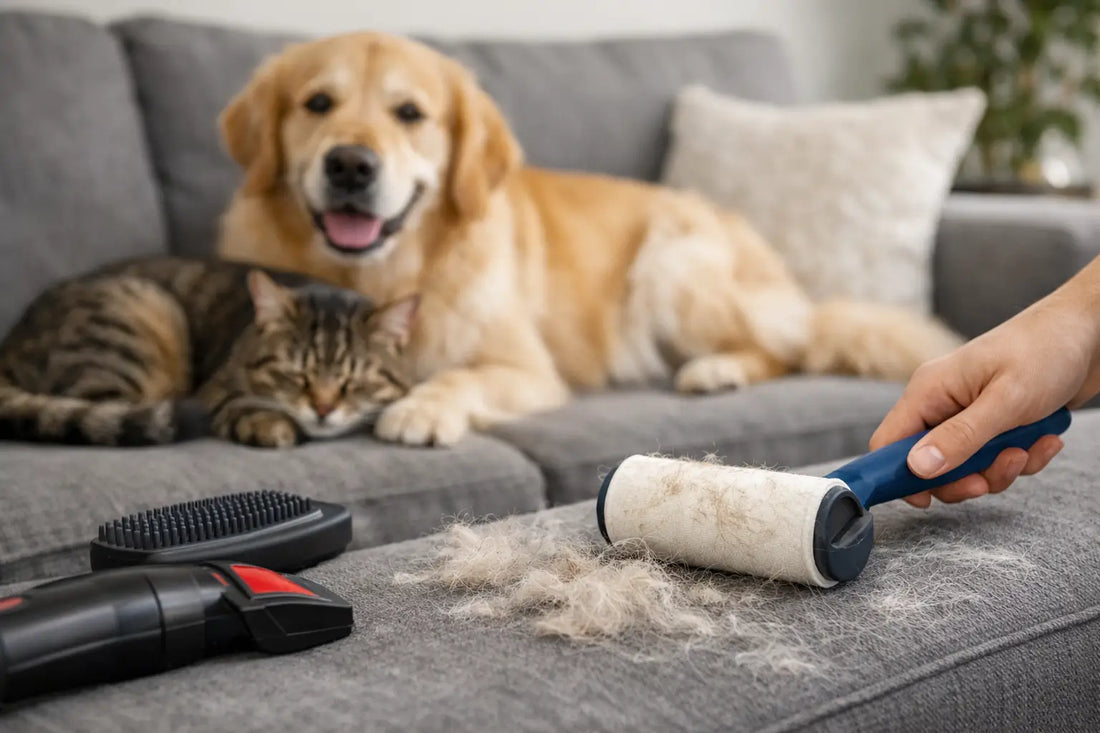
That layer of fur on the sofa did not appear overnight, and it usually does not leave with one quick pass of a lint roller either. Good pet hair removal is less about scrubbing harder and more about matching the right method to the right surface. When you do that, your home looks cleaner, your fabrics last longer, and daily cleanup feels a lot less endless.
If you live with a heavy shedder, you already know the real challenge is not just the hair you can see. It is the fine undercoat tucked into upholstery, the tumbleweeds under the bed, and the fuzz woven into throw blankets and clothes right before you head out the door. The fix is usually a system, not a single miracle tool.
Why pet hair removal feels harder than it should
Pet hair behaves differently depending on your pet, your home, and your materials. Cat hair tends to cling to woven fabrics and soft throws. Short dog hair can be worse because it acts like a tiny needle, working itself into car seats, rugs, and couch cushions. Add static, textured upholstery, and dry indoor air, and hair practically locks itself in place.
That is why one tool can feel amazing on stairs and useless on bedding. The most effective approach accounts for friction, fabric type, and how deeply the hair has embedded itself. Smooth leather, for example, usually needs a soft cloth and regular upkeep. A boucle chair or plush pet bed needs something with more grip.
Start with less hair in the house
The easiest pet hair to remove is the hair that never lands on your floors and furniture. Regular grooming makes a bigger difference than most people expect, especially during seasonal shedding.
For dogs and cats with double coats, a deshedding brush or undercoat tool used consistently can dramatically cut down what ends up in the home. For short-haired pets, a rubber grooming mitt often works well because it lifts loose hair without feeling too harsh. The key is consistency. Five minutes a few times a week often works better than one long grooming session after the shedding has already taken over.
Bathing can help too, but it depends on the pet and coat type. Some pets benefit from occasional baths with pet-safe grooming products that loosen dead fur. Others do better with brushing alone. If your pet has sensitive skin, overbathing can create a different problem.
A washable pet blanket on the couch or bed also helps contain the mess. It is not glamorous advice, but it works. It is much easier to clean one dedicated layer than an entire sectional.
Pet hair removal for furniture and upholstery
Furniture is where pet hair becomes both visible and stubborn. Soft upholstery catches fur deep in the weave, and once body heat and pressure get involved, the hair settles in.
For everyday upkeep, a rubber-bristle brush or pet hair remover designed for upholstery usually works better than a standard lint roller. Rubber creates friction that gathers hair into clumps, making it easier to lift away. This is especially useful on sofas, accent chairs, and fabric headboards.
For more embedded hair, lightly dampened rubber gloves can help. Run your hand across the fabric in one direction, and the hair will start to ball up. This method is simple, inexpensive, and surprisingly effective on textured materials. The trade-off is time. It is better for targeted cleanup than for doing a whole living room every day.
Vacuum attachments matter here. A vacuum with a motorized upholstery tool or a tool specifically made for pet hair removal will save time and pull out what surface tools leave behind. If your current vacuum struggles, the problem may not be suction alone. It may be the brush design, the filter, or the attachment shape.
If your furniture is delicate or design-forward, avoid aggressive scraping tools unless the manufacturer says the fabric can handle them. Some pet hair removers work brilliantly but can rough up boucle, velvet, or loosely woven upholstery over time.
What works on hardwood, rugs, and carpet
On hard floors, pet hair often collects along baseboards, under furniture, and in corners. A vacuum designed for homes with pets is usually the fastest option, but dry dust mops can be excellent for quick passes between deeper cleans. They catch loose fur without blowing it around the room.
For rugs and carpet, technique matters as much as the machine. Go slowly, and vacuum in overlapping passes from different directions. That second pass often pulls up the hair the first one missed. On low-pile rugs, a rubber broom can be surprisingly effective before vacuuming. It pulls out hair that has wrapped around carpet fibers and lifts it to the surface.
High-pile rugs are trickier. They can trap hair deeply, and some tools are too harsh for them. In those cases, a vacuum with adjustable height settings is safer than a stiff rake-style tool. If your rug is decorative and expensive, gentler cleaning done more often is usually the better choice.
Pet hair removal for clothes and bedding
Clothing cleanup is often about speed. You notice the fur right before leaving the house, and you need it gone now. A quality lint roller is still useful, especially for smooth fabrics and quick touch-ups, but it is not always enough for fleece, knits, or textured coats.
Reusable pet hair removers can be a better long-term choice if you go through adhesive rollers too quickly. They create less waste and often work better on larger surfaces like comforters or throw blankets. For clothes already in the laundry, tossing them in the dryer for a short air-only cycle before washing can loosen pet hair and move it into the lint trap. That one step can noticeably reduce how much fur stays stuck after the wash.
Bedding needs a little extra attention because hair mixes with dander and daily oils. Washing pet blankets, your pet's bed cover, and any shared bedding regularly keeps buildup from becoming harder to remove later. Choose washable materials when possible. Good design should still be easy to live with.
The surfaces people forget
Car interiors, curtains, and corners of pet beds are often the last places pet parents clean and the first places hair builds up. Car upholstery is especially frustrating because the fabric is dense and the space is tight. A compact handheld vacuum paired with a rubber tool usually works best there.
Curtains can hold onto floating hair more than you might think, particularly in sunny rooms where static builds up. A quick pass with a fabric-safe attachment or a lint tool every week can keep them from becoming a hidden source of dust and fur.
Pet beds deserve special mention. If your dog or cat spends hours there every day, that bed is one of the biggest collection points in the house. Removable, washable covers are worth it. They make routine care easier and help the bed look fresher in your space.
Build a routine that keeps hair manageable
The cleanest homes with pets are rarely cleaned in one big marathon. They are maintained in small, repeatable steps. A few minutes of brushing, quick vacuuming in high-traffic zones, and washing pet blankets on a regular schedule will do more than an occasional deep clean done out of frustration.
It also helps to keep the right tool where the problem happens. Store a furniture hair remover near the couch, a lint tool near the closet, and a compact vacuum where you handle daily shedding. Convenience changes habits.
If you are trying to keep your home looking polished without turning it into a full-time cleaning project, choose materials with real life in mind. Tighter weaves, washable covers, and pet-safe finishes are easier to maintain than fussy fabrics that trap everything. That is part of modern pet living too - products should work for your pet and your home.
At Petmartopia, that balance matters. Pet essentials should feel safe, comfortable, and built for everyday use, but they should also make your space easier to care for, not harder.
Pet hair will always be part of life with dogs and cats, and that is not a sign you are doing anything wrong. With the right mix of grooming, washable layers, and surface-specific tools, pet hair removal stops feeling like a losing battle and starts feeling like a routine you can actually keep.